You’re not really packing a box. You’re sealing a time capsule that nobody opens again until September, and whatever you do in the next twenty minutes is the only chance you get to protect what’s inside it.
That’s the honest version of what’s happening on move-out day. It’s also good news, because it means the two things that actually ruin stored belongings over a long summer are entirely in your control, and neither one takes much extra effort to get right.
Packing today and short on time? Jump straight to the air-gap rule and the 20-minute check before you close the door.
Already packed and worried you got it wrong? Skip to the damage-cause table and check your unit against the five patterns before you leave.
Parent packing for your student? Go to what to expect while it’s in storage for the honest answer on access and checking in.
Sharing a unit with flatmates? Head to weight order and labelling so nobody’s stuff ends up crushed at the back.
Why a Storage Unit Behaves Like a Time Capsule Over Summer
A unit packed for the summer holidays gets no human intervention for eight to twelve weeks. Nobody opens the door, nobody notices a box starting to sag, nobody moves a damp towel before it turns musty. Whatever is slightly wrong on packing day only gets worse, never better, which is why the small decisions you make today matter more than they would for a weekend house move.
Two things actually go wrong when items sit untouched that long: trapped moisture, and crushing or instability from poor stacking. Everything else in this guide is really just the detail behind fixing those two.
If you’ve used student storage before and something came back damp, creased or squashed, it wasn’t bad luck. It was one of those two mechanisms, and both are fixable at the packing stage.
If this is your first time, that’s genuinely useful news rather than something to worry about. You don’t need special equipment or a professional pack. You need to know where the two failure points are and check for them once before you leave, which is what the rest of this guide walks through. And if a parent is doing the packing, or helping load the car, the same two checks apply whether it’s a student’s box of textbooks or a family heirloom going in alongside them.
The Air-Gap Rule: The Single Biggest Fix for Damp and Mould

The single most important thing you can do is leave space. The Self Storage Association UK, the trade body for the self-storage industry, puts it plainly in its customer guidance: “Do not stack anything against the walls and think about leaving gaps between items to allow air to circulate.”
That one line does more to prevent damp and mould than any amount of “keep things dry” advice, because the real cause usually isn’t damp items going in. It’s still air. When boxes and furniture are packed solid against the walls and each other, there’s nowhere for moisture to go, so it sits, and over eight to twelve weeks that’s long enough for a musty smell or a patch of mould to take hold on fabric or wood that went in perfectly dry.
In practice, that means a visible gap between every item and the unit’s walls, not just a token inch in one corner. Don’t let anything touch all four sides of the space. If you can walk right around your stack with a hand’s width to spare, you’ve got it right. It costs you nothing but slightly tighter packing elsewhere, and it’s the difference between opening the door in September to fresh boxes or a smell you notice before you see anything.
Weight Order and Labelling: Packing So You Can Still Find Things in August

Load order and honest labels do two jobs at once: they stop things getting crushed, and they mean you’re not unpacking half the unit to find one thing. Put what you’ll need least, or won’t want again until next year, at the bottom and the back. Keep whatever you might need mid-summer near the front, close to the door.
Here’s the nuance most packing advice misses. A cardboard box that looks perfectly sturdy on the day you pack it is not guaranteed to hold that same stack in a month, or by the time you’re back for term. The SSA UK is direct about this: “Cardboard boxes can soften and lose their strength over time, so something that looks sturdy enough when you pack the unit, may not be in a month or years’ time.” That’s a time-dependent risk, not a one-off decision, and it’s exactly why the “just use good boxes” advice you’ll see elsewhere isn’t the whole answer. Pack for the last day of storage, not the first: keep stacks a few boxes high at most, put heavier items low, and don’t rely on a box holding indefinitely just because it looked fine when you taped it shut.
Labelling matters just as much, and the advice is simple: write what’s actually in the box. Not “kitchen stuff”, but “mugs, kettle, two pans”. If you’re sharing a unit with flatmates, this alone prevents the argument in August about whose box is buried under everyone else’s.
Sharing works best when you agree the layout together before anyone starts loading, rather than each person just fitting their own boxes in wherever there’s a gap. Pick one wall each, or one half of the unit, and label boxes by name as well as contents. It takes five minutes at the start and saves a much longer argument in freshers’ week when someone’s trying to find one specific box in a unit three people packed separately.
What Goes Wrong and the Fix: The Damage-Cause Table

Before you leave, check your unit against these five patterns. If you recognise any of them, fix it now, because this is the last chance you’ll get.
| What goes wrong over the summer | Why it happens | The fix (do this on packing day) |
|---|---|---|
| Damp smell or mould on fabric or wood | Items packed solid against walls or each other; no air movement for weeks | Leave a visible gap between every item and the unit walls; don’t pack anything touching all four sides |
| Boxes collapse and crush what’s underneath | Cardboard softens over weeks even if it looked fine on day one | Put least-needed, heaviest items at the bottom; keep box stacks no more than a few boxes high; check nothing top-heavy |
| Clothes or textiles come back creased or musty | Vacuum-packed or tightly wrapped for months with no airflow | Use breathable covers or bags for fabric, not sealed plastic, for anything staying more than a few weeks |
| Can’t find anything without unpacking the whole unit | No labelling system, or vague labels like “kitchen stuff” | Write the actual contents on each box, and put anything you’ll need mid-summer at the front near the door |
| Something at the back gets damaged unnoticed | Solid wall-to-wall packing with no access path | Leave a narrow path down the middle or side so you can see and reach items without a full unpack |
Materials: Boxes, Bags and What Not to Vacuum-Pack
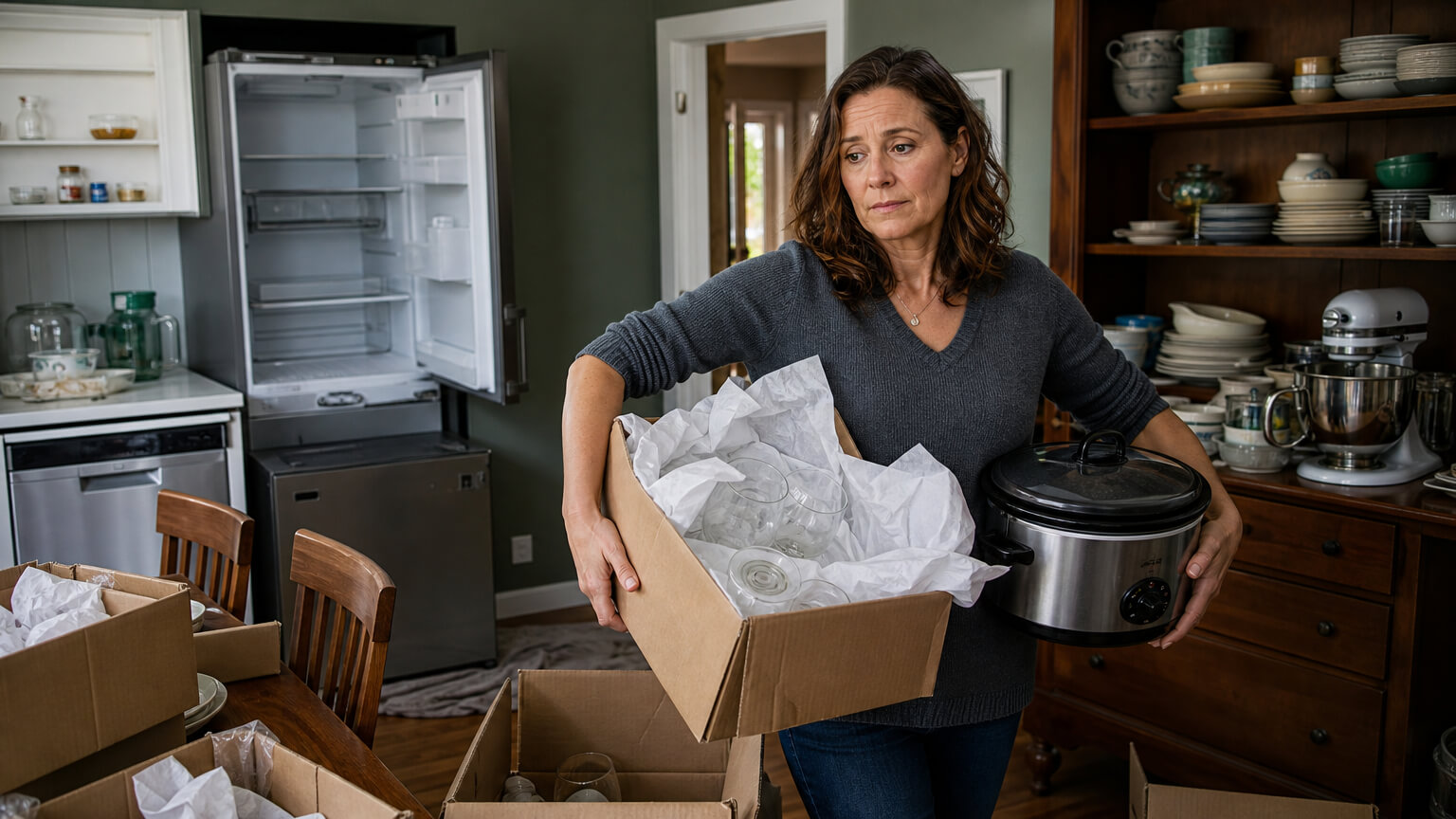
For anything staying in storage more than a few weeks, breathable covers beat sealed plastic almost every time. Vacuum bags are brilliant for saving space on a short trip, but seal something away for the whole summer with no airflow and you risk exactly the trapped-moisture problem the air-gap rule is designed to prevent, especially with anything that wasn’t completely bone dry going in.
Cardboard boxes are fine for most things, provided you respect the softening point above: don’t stack them too high, and don’t ask a box to hold weight it wasn’t built for over three months. Sturdy plastic bins are worth the extra cost for anything heavy, fragile, or that you’d be gutted to lose, since they don’t soften the way cardboard does over time.
For clothes and textiles specifically, a breathable garment bag or a simple cotton sheet over the top does more good than a tight vacuum seal. If in doubt, ask whether the item is completely dry before it goes anywhere near plastic, and lean towards more air rather than less.
The 20-Minute Packing Pass: Your Last Check Before You Close the Door

This is the only intervention you get before term starts again, so give it twenty minutes and do one final lap of the unit before you tape the last box.
Ask yourself four questions:
- Is anything touching a wall on all sides, with no gap for air?
- Is anything stacked more than a few boxes high?
- Is anything sealed in non-breathable plastic that isn’t already completely dry?
- Can you actually walk to the back of the unit without moving three things first?
If any answer is wrong, fix it before you leave. This isn’t a guarantee against every possible problem, but it removes the two mechanisms that cause almost everything that goes wrong in long-term storage, and it takes less time than the average lecture.
Once your unit’s sorted, getting a price for the space you need takes about as long as that final check. Get a quote and you’ll have the practical side settled before you’ve even left the car park.
What to Expect While It’s in Storage (Honestly)

Wigwam sites are open seven days a week, 6am to 10pm, with smart entry rather than a member of staff on the gate. That means you can get to your things within those hours whenever you need to, but it also means nobody on site is checking your unit for you while you’re away.
The SSA UK recommends visiting your unit roughly once a month if you can, opening the door to let air circulate and giving your things a quick look over. That’s genuinely good advice, and if you’re local enough to swing by, it’s worth doing. But it’s something you’d be doing yourself, not something Wigwam does on your behalf, so don’t rely on a mid-summer check happening unless you’re the one making the trip.
If you’re a parent who paid for the unit but can’t easily check on it yourself, this is usually the part that causes the most worry, more than the packing itself. The honest answer is that the same twenty-minute check on packing day matters far more than any inspection later, precisely because nobody, including Wigwam, is opening that door until your student is back. Get the packing right in June and there’s very little left to worry about in August.
One thing that isn’t optional: contents insurance is a required part of storing with Wigwam, either through the policy offered at the point of booking or by confirming cover you already hold elsewhere. It won’t undo a packing mistake, but it’s the safety net behind everything above, and it’s worth sorting at the same time as your unit rather than as an afterthought.
Ready to Book Your Summer Storage
What you do in the next twenty minutes is what you’ll find again in September: gaps left where they should be, weight ordered sensibly, boxes labelled honestly, and a unit you can actually get to when you need it. Follow the air-gap rule and the packing pass above and you’ve dealt with almost everything that causes damage over a long, unattended summer.
Find your nearest Wigwam Storage location to check unit sizes and access hours, or go straight to get a quote and get the practical part done today.
Frequently Asked Questions
Yes, provided it’s completely dry and you leave space around it rather than pushing it flat against a wall. A breathable cover is better than tight plastic wrap, since a mattress needs airflow just as much as any fabric item to avoid damp over a long stay.
Sturdy boxes or plastic bins for most items, with breathable covers rather than sealed plastic wrap for anything textile. Wrap can be useful for protecting surfaces during the move itself, but leaving something wrapped tight for the whole summer works against the airflow you actually need.
The SSA UK suggests roughly monthly, if it’s practical for you to get there. Wigwam sites are accessible seven days a week, 6am to 10pm via smart entry, so the option is there, but no one on site checks your unit for you while you’re away.
Only if they’re sealed without airflow or packed against the walls. Dry clothes in a breathable bag, with a gap left around the box, come back the same as they went in. It’s trapped moisture that causes the musty smell, not the length of time alone.
Yes, as long as you agree an access-order layout before you start, with each person’s least-needed items at the back and anything either of you might want mid-summer near the front. Clear labelling matters even more when it’s not just your own things in there.