You are carrying a wardrobe down the stairs and you have lost track of where she is. Not for long. Ten seconds, maybe. But that ten seconds is the whole feeling of moving day when you have a young child in the house: not tiredness, not mess, but the low hum of where even is she right now. Everyone tells you moving day is stressful. Nobody quite tells you it is the day your house is at its most hazardous, at the exact moment you have the least attention to give it.
If moving day is this week and you have not thought about a safe room yet: jump straight to the moving-day hazard map.
If you are not sure what should go to storage and what should stay with you: jump to what stays out of storage.
If movers or a courier need site access and you are not sure how that works at an unmanned site: jump to access and logistics.
Why moving day is riskier for young children than an ordinary day
Moving home is named directly by the UK’s leading accident prevention charity as a recognised risk factor for child accidents, in the same breath as stress, bereavement and chronic illness. That is not a parenting worry dressed up as a fact. It is a documented pattern, and it makes sense the moment you say it out loud: routines break, adults are distracted, and the house itself is temporarily full of things that are normally locked away or kept off the floor.
What RoSPA actually says
The Royal Society for the Prevention of Accidents puts it plainly in its accidents-to-children guidance: “Factors such as stress, death in the family, chronic illness, homelessness or moving home increase the likelihood of the child having an accident.” The same page notes that “some happen when the usual routine is changed or when people are in a hurry” and that “distractions and inadequate supervision are often the cause of accidents.” Read RoSPA’s home safety guidance. RoSPA has not published a bespoke moving-day protocol. What it has done is name moving home, specifically, as one of the household disruptions that raises the odds of an accident. That is enough authority to take seriously.
Why supervision, not tidiness, is the real risk
The instinct on moving day is to worry about mess. The more useful thing to worry about is supervision. A tidy-looking hallway with a box left on the third stair is still a hazard. A slightly untidy room with nothing on the floor and one adult free to watch a child is safer than either. This section is not a general guide to the age at which moves are hardest, or how long children take to settle into a new home; those are real questions, but they are a different article. Here, the point is narrower and more useful: on the day itself, supervision is what protects a child, and supervision is what gets used up first when adults are also managing boxes.
This is general safety information drawn from RoSPA’s public guidance, not professional childcare, removals-safety or medical advice. If anyone in your household has specific mobility, medical or behavioural needs, please take advice from a professional who knows your circumstances.
What storage actually does on moving day (it is not about months of stuff)
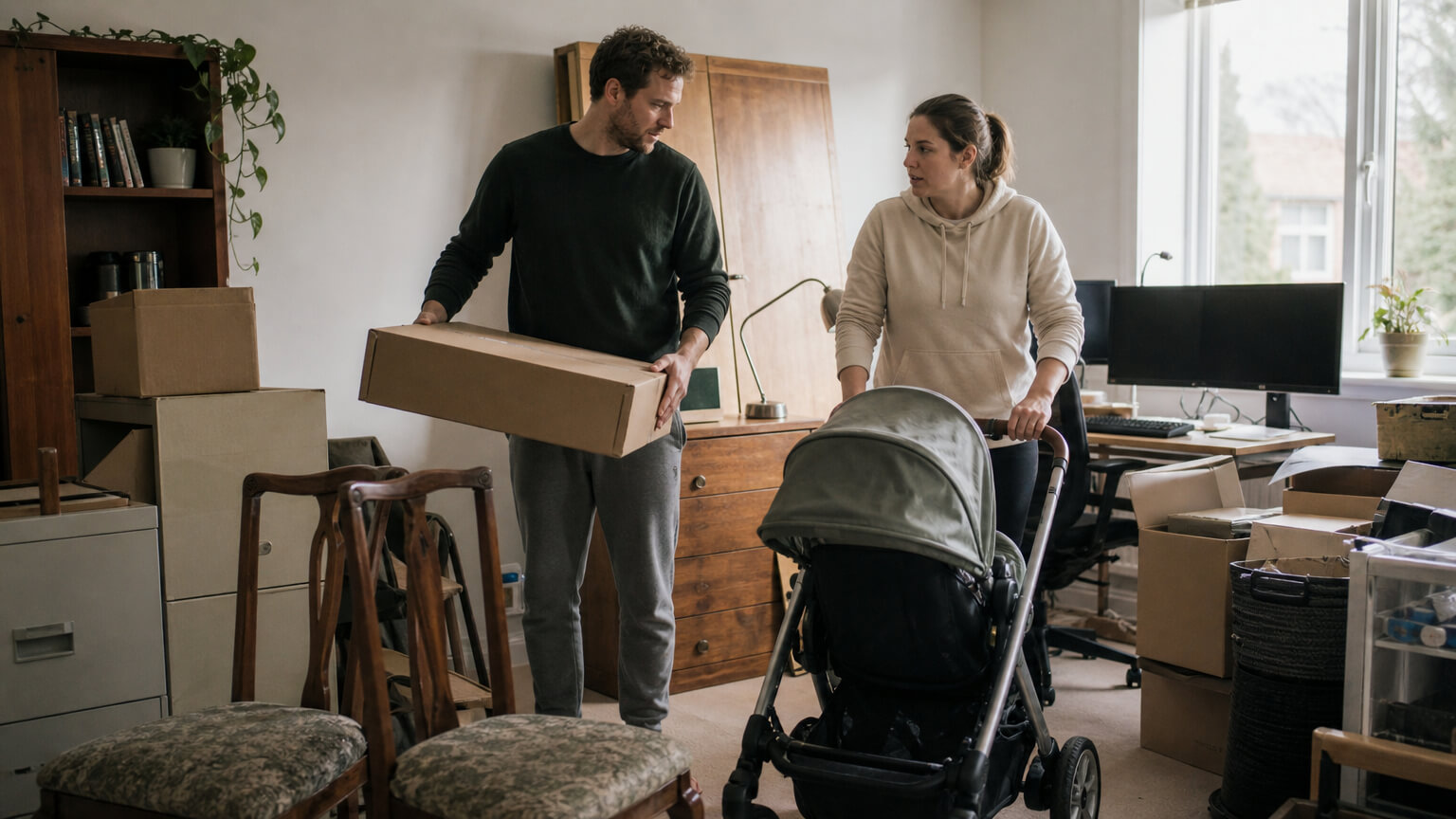
Self storage on moving day is not about clearing out a loft you have been avoiding for years. Its job on this specific day is much smaller and much more useful: it physically clears the floor plan, so that the rooms your family actually moves through are not also an obstacle course. The picture worth holding onto is a cleared room, one space in the house that stays genuinely empty because the boxes that would have filled it went into storage first, not into a corner.
The floor-plan-clearance idea
Think of it less as “storing your things” and more as “removing hazards from the route your family will walk on the busiest day of the year.” Every box, cable, cleaning product and roll of bubble wrap that leaves the house before moving day is one less thing on the stairs, in the hallway, or near a toddler’s hands on the day itself.
Storage as safety margin, not a clutter fix
There is nothing wrong with using storage to solve a decluttering problem, and plenty of families do. But on moving day specifically, storage earns its keep as a safety margin: a way of buying back a supervising adult, rather than a way of hiding things you have not decided about yet. Both uses are valid. This article is about the first one.
The moving-day hazard categories, named plainly

RoSPA groups home accident risks into recognisable categories, and moving day concentrates several of them at once: falls on stairs and landings, poisoning from chemicals and medicines left mid-transit, choking and strangulation risks from loose packing materials, hazards in the kitchen while it doubles as a thoroughfare, and exits left open for movers coming and going. Naming them here matters more than entertaining a child for the day; the practical answer to “how do I keep moving day smooth” starts with removing the hazard, not distracting from it.
The moving-day hazard map
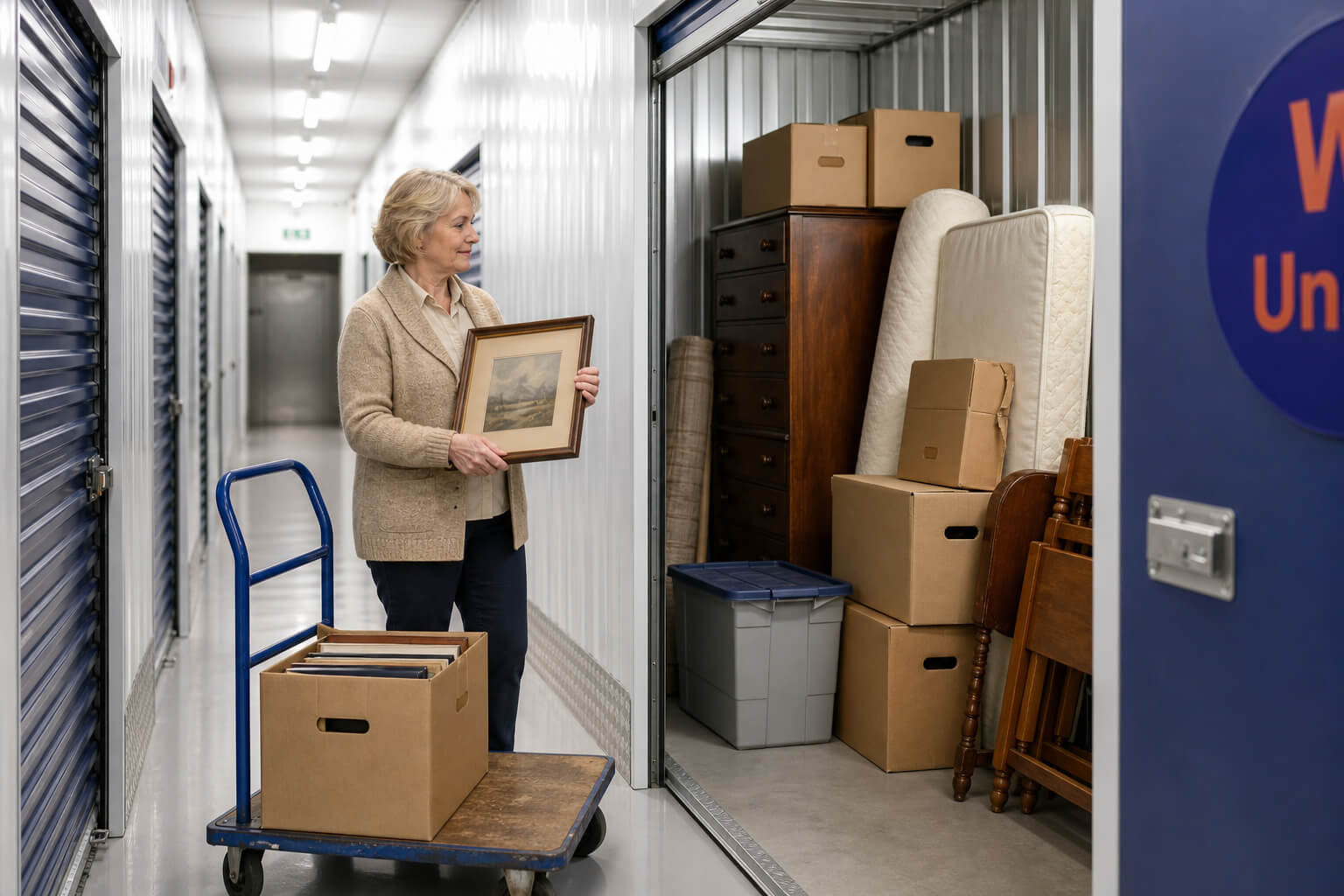
Here is the same idea made concrete: a before-and-after view of what is normally still in the house on moving day, against what has already gone to storage in the days before, mapped against each hazard category above. The single clearest outcome of doing this well is a “one safe room,” a space with nothing in it, kept that way on purpose.
This table is illustrative guidance based on RoSPA’s published hazard categories and Wigwam’s own storage terms. It is not a guarantee against accidents, and it is not a substitute for your own judgement on the day.
| Hazard category (RoSPA) | Left on the day (without storage) | Cleared first (with storage pre-move) |
|---|---|---|
| Falls (stairs and landings) | Boxes stacked on stairs and landings while movers work | Non-essential boxes moved to storage days before; stairs stay clear |
| Poisoning (chemicals and medicines) | Cleaning products and medicines mid-transit, often in an open box near the door | Non-immediate chemicals and medicines boxed and stored in advance; only a day-of kit stays in the house |
| Choking and strangulation (packing materials) | Loose packing straps, bubble wrap and plastic sheeting within reach | Bulk packing materials for non-day-one items go to storage with the items they wrap |
| Kitchen | Boxes and appliances moving through the kitchen while adults cook or carry | Non-essential kitchen equipment stored ahead so the working kitchen stays one clear zone |
| Exits and doors left open | Front and back doors propped open for movers, more chances to wander outside | Fewer trips in and out, because fewer non-essentials are moving through the door that day |
| “One safe room” | No spare room exists; every room has boxes in it | A pre-cleared room, a nursery or spare room, kept genuinely empty for one adult and child to retreat to |
The “one safe room” concept
A safe room is simply a room with nothing to trip on, nothing to reach for, and one door that closes. It does not need to be the nursery, though that is often the natural choice. What makes it safe is not the room; it is that it was cleared on purpose, ahead of time, specifically so it would still be empty on the day everything else is in motion.
The contrast case
Picture two families moving the same week. One boxes everything up in the final days before the move: every room, every hallway, every doorway has something in it by the morning of. There is no safe room to retreat a toddler into, and the adult carrying the sofa is also the only supervision available. The other family sends the non-essentials to storage one to two weeks ahead. They arrive at moving day with a genuinely clear room and a lighter load-in, which means one adult can be assigned solely to the children rather than splitting attention between a child and a stack of boxes. Same move, same house, very different day.
Ready to see what is nearby? See current locations.
How far ahead to send non-essentials to storage

As a rule of thumb, one to two weeks ahead of moving day is usually enough time to clear the floor plan properly, without turning it into a same-day scramble. This is not a rigid checklist, just a sensible window: enough time to sort what can leave the house now, without trying to guess months in advance what you will need. If you have moved before with a younger baby and found this time round harder with a mobile toddler underfoot, that is a common pattern, not a failure of planning; a slightly earlier start this time closes the gap.
What should stay out of storage (the day-one essentials)
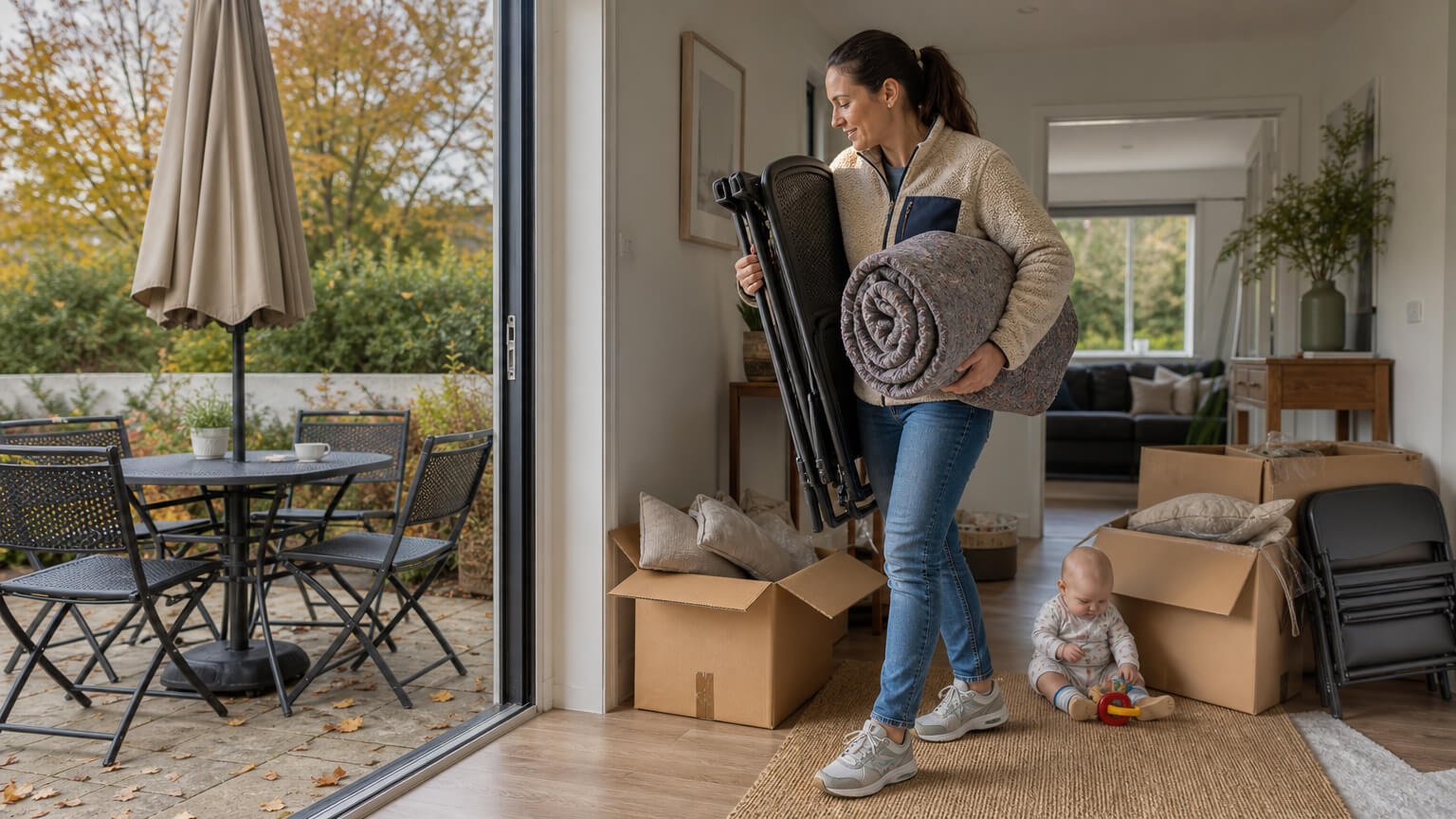
None of this works as advice to box up everything. Keep a day-one essentials box entirely separate from anything going to storage: medicines currently in use, a change of clothes for everyone, chargers, and a comfort item or favourite toy for each child. The point of clearing the floor plan is that nothing you actually need that day is buried inside a storage unit you cannot get to until next week.
The practical side, access, unmanned sites, and moving-day logistics
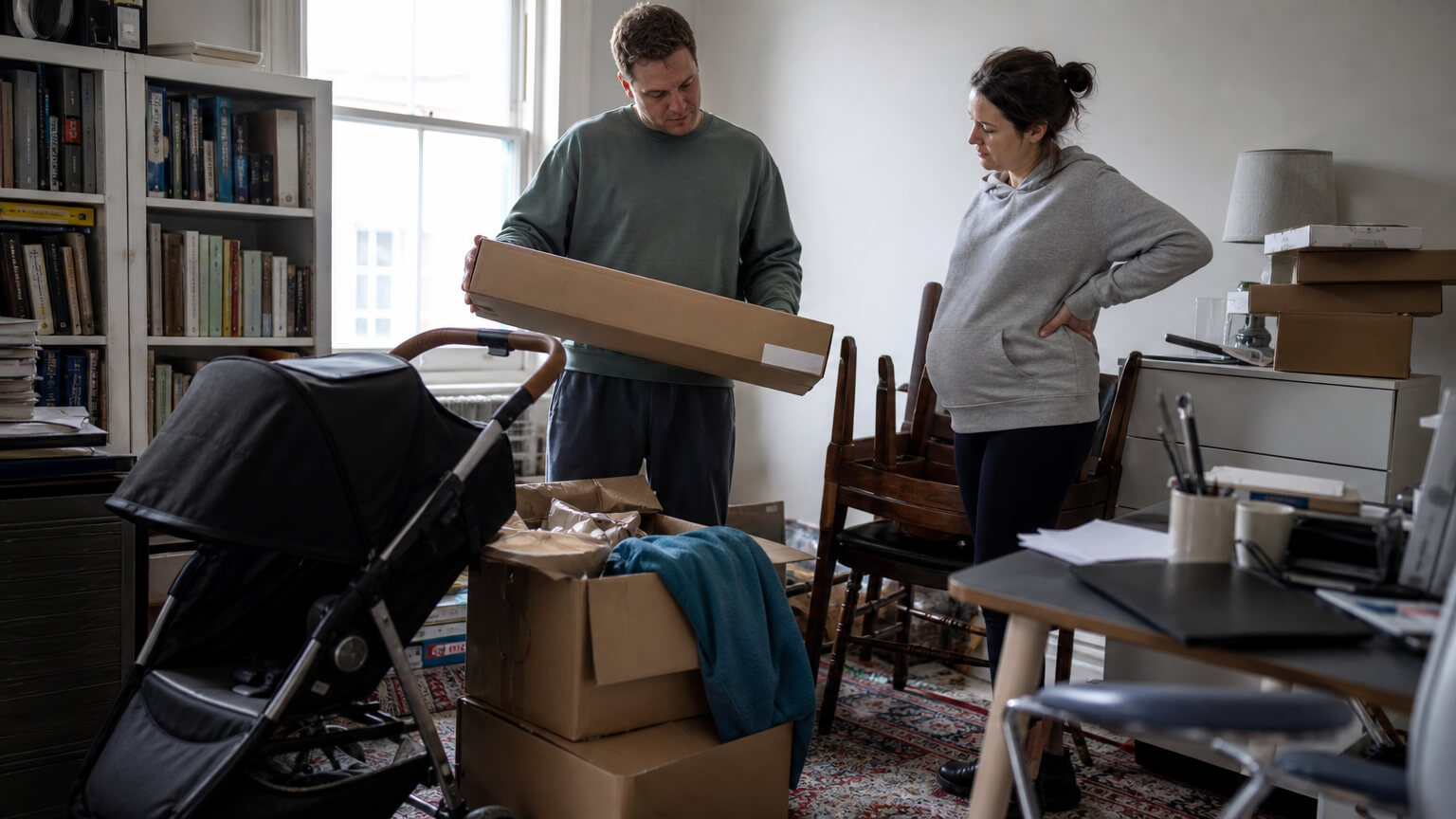
Wigwam’s sites are open from 6am to 10pm, seven days a week, using smart entry rather than a member of staff meeting you at the gate. Most sites are unmanned, which matters for one specific moving-day scenario: if movers or a courier need to get into your unit and you are not there yourself, someone from your side needs to be present to let them in, because there is no on-site team to do that for you.
Smart entry and access hours
Smart entry means you come and go using your own code or access method within the 6am to 10pm window, not around the clock. It is a real, useful window for a moving day that starts early and can run late, but it is not 24-hour access, and nothing here should be read as implying it is.
Why unmanned matters for a moving-day decision
For a day already built around timing, an unmanned site with a short minimum term is a relief rather than a limitation. There is no on-site staff to wait for, which suits a moving day where every hour is already accounted for. A two-week minimum term suits a single moving-day window rather than committing you to months you do not need, and units described honestly as clean, dry and secure mean one less thing to worry about for what is going in, without any promise of climate control, because that is not something Wigwam offers.
Making moving day safer, not just tidier
The goal was never a tidy house by lunchtime. It was a house where one adult can watch the children properly, because there is less to manage, not because anyone is trying harder. Clear the floor plan before the day starts, and the room that stays empty is not a coincidence; it is the reason the day is survivable and supervisable at all.
If your household has specific mobility, medical or behavioural needs, this general information is not a substitute for advice from a professional who knows your circumstances, or from your removals company directly.
On cost, the honest answer is that it depends on unit size and how long you need it, which is exactly why we would rather point you to current figures than quote one here that might be out of date by the time you read this: see how much self storage costs in the UK. When you are ready, get a quote.
If your moving-day storage question is less about the day itself and more about what to sort in the weeks before, our related piece on what to store when life feels chaotic mid-move covers that decision-paralysis problem directly.
Frequently Asked Questions
There is no single hardest age; a mobile toddler brings different risks to the day (reaching, wandering, climbing) than an older child who understands more but may feel more anxious about the change. What matters most on moving day itself is supervision, whatever age your child is, which is why clearing hazards ahead of time helps across the board.
The most effective single step is removing hazards from the floor plan before the day starts: stairs clear of boxes, chemicals and medicines out of reach or already in storage, and one room kept genuinely empty so a toddler has somewhere safe to be while adults are carrying furniture. Constant supervision by one adult, freed up from managing boxes, is what RoSPA’s own guidance points toward.
Many families find it easier to have someone dedicated to the children on the day, whether that is a partner staying free of lifting duties, a relative, or paid childcare, precisely so that supervision does not have to compete with moving furniture. Whether that is right for you depends on your household, and if anyone has specific needs, a professional who knows your circumstances is better placed to advise than general guidance can be.
Keep a day-one essentials box out of storage entirely: medicines you are currently using, a change of clothes for everyone, chargers, and each child’s comfort item or favourite toy. Everything else that is not needed on the day itself is a reasonable candidate for storage ahead of time.