Moving day looks organised on a spreadsheet and never quite feels organised in the hallway. There’s always a pile that doesn’t fit any box, the school certificates, the toy that’s outgrown but still loved, the furniture that might fit the new house or might not, and a child watching what happens to it. Here’s what actually helps with that pile.
Already started sorting and hit something you can’t decide on? Jump to the triage table below. Move booked but haven’t started sorting yet? Jump to what “not yet” storage actually looks like. Your child needs something back mid-move? Jump to access and retrieval.
Why the “Decide Later” Pile Is a Normal Part of Moving With Children
Almost every family move produces a pile of things nobody has decided about yet. That’s expected, not a sign of poor planning.
What actually ends up in the pile
Furniture that might not fit the new place, seasonal items, and anything with sentimental weight tend to land here, because they’re genuinely harder to sort quickly than the rest of the house. Everything else on the moving list has a fairly obvious answer, keep it, bin it, sell it, but this small category resists that treatment, and trying to force it usually just slows the whole move down.
Why it feels worse with children in the house
You’re not just triaging your own belongings, you’re managing a child who notices what happens to theirs. That adds a layer generic moving advice never accounts for, because most packing guides are written as if the only thing at stake is logistics, not a child watching to see what happens to something that matters to them. A parent under pressure on moving day is making a hundred small decisions an hour, and a child’s keepsake pile is exactly the kind of decision that deserves more than the ninety seconds it’s likely to get in the middle of everything else.
Why It’s Harder to Decide Quickly About a Child’s Things Mid-Move
Moving disrupts a child’s sense of routine, and children lean on specific possessions as anchors during that disruption, which is exactly why rushed decisions about those possessions are harder to get right than they look.
What the evidence actually says, and doesn’t say
A GOV.UK review on children’s mental health notes that “frequent changes in residence during childhood have been found to be associated with emotional and behavioural problems and poor academic attainment in children.” This is general wellbeing context, not child-psychology or medical advice, and it isn’t a claim that a single house move causes lasting harm. It simply explains why the pressure to decide fast about a child’s things is real.
Why rushing a keepsake decision backfires
Nobody wants to be the parent who threw something away in a rush that mattered to their child. Giving that decision a bit more time, rather than forcing it into moving week, is usually the better call, and it’s a genuinely different thing from indecision. It’s recognising that some calls are better made once the dust has settled, not during the one week everything else is also demanding a decision.
The False Choice Self Storage Actually Removes

The real problem is a false binary, decide right now under pressure, or it stays in the way indefinitely. Short-term storage dissolves that binary by making “not yet” a genuinely time-bounded answer.
Storage as a bounded pause, not a permanent habit
It’s a pause with a known, flexible end point, not an open-ended way to avoid the decision altogether. The two-week minimum term matters here specifically because it makes “not yet” a genuinely short commitment, not a vague promise to deal with it eventually.
What this is not
This isn’t “put it all in storage and forget it.” It’s a place to hold the genuinely undecided items until you can sort them properly, once the move itself isn’t competing for your attention.
The Decide-Later Triage Table

Here’s the practical answer: which categories need a decision now, which are safe to buffer, and how our terms fit the waiting period.
| Category | Decide now or not yet? | Why, and how our terms fit |
|---|---|---|
| Furniture earmarked for the new house, unmeasured | Not yet | Our two-week minimum covers a short “does it fit” window, with no penalty if it takes a little longer |
| Children’s sentimental items (certificates, outgrown but loved toys, keepsake boxes) | Not yet, by design | Individually alarmed, clean, dry and secure units mean not deciding yet is safe, not neglectful |
| Seasonal or occasional household items | Not yet | Low-stakes, straightforward, easy to store and forget about productively |
| Paperwork and admin needed for the move itself | Decide now, keep with the family | Not a storage candidate, this is what to keep close, not store |
What can safely wait
Furniture, sentimental items and seasonal boxes are all genuinely safe to buffer while you take proper time over them.
What should not go into storage
Anything you need for the move itself, solicitor documents, school transfer forms, stays with you, not in a box.
Our Actual Terms, and the Fear They Answer

The fear behind the growing pile is usually “how long will I even need this for.” Our terms answer that directly, rather than reading like a generic features list.
Why a two-week minimum, not months
You’re not committing to months of storage for a pile that might only take a fortnight to sort.
Why finishing early isn’t penalised
There’s a 14-day notice period, and if you sort things faster than planned, any unused paid days are refunded once notice is given and the unit is vacated.
Why “not deciding yet” is safe, not neglectful
Individually alarmed, clean, dry and secure units mean the item is protected, not lost to a rushed decision made under pressure. That distinction matters more than it sounds, because a box left in a damp garage “for now” tends to actually get damaged, while a box in a proper unit is genuinely just waiting.
See space near you, or get a quote once you know what you need.
Getting Back Into Your Unit When Your Child Needs Something

Smart entry and daily access mean you can retrieve a specific keepsake on your own schedule, not office hours, if the timing matters, before a birthday, say.
Access on your own time
Access runs 6am to 10pm, seven days a week, via smart entry.
If a courier or removals company needs access
Sites are unmanned, so someone from your family needs to be present. Staff won’t receive deliveries or sign for anything on your behalf.
What This Looks Like in Practice: A Wigwam Self Storage Bath Example

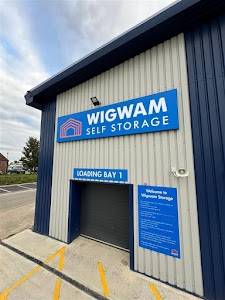
Wigwam Self Storage Bath is one real setting where this plays out.
The setting
It’s at 4 York Place, London Road, just off the road near Bath’s city centre, with free on-site parking, a large lift to the upper floors, trolleys provided, and over 15 unit sizes from 10 sq ft up to 300 sq ft. That combination matters more with a child in tow than it sounds, a parent carrying a box up a flight of stairs while also watching a toddler is a genuinely different job than doing either alone.
The worked example
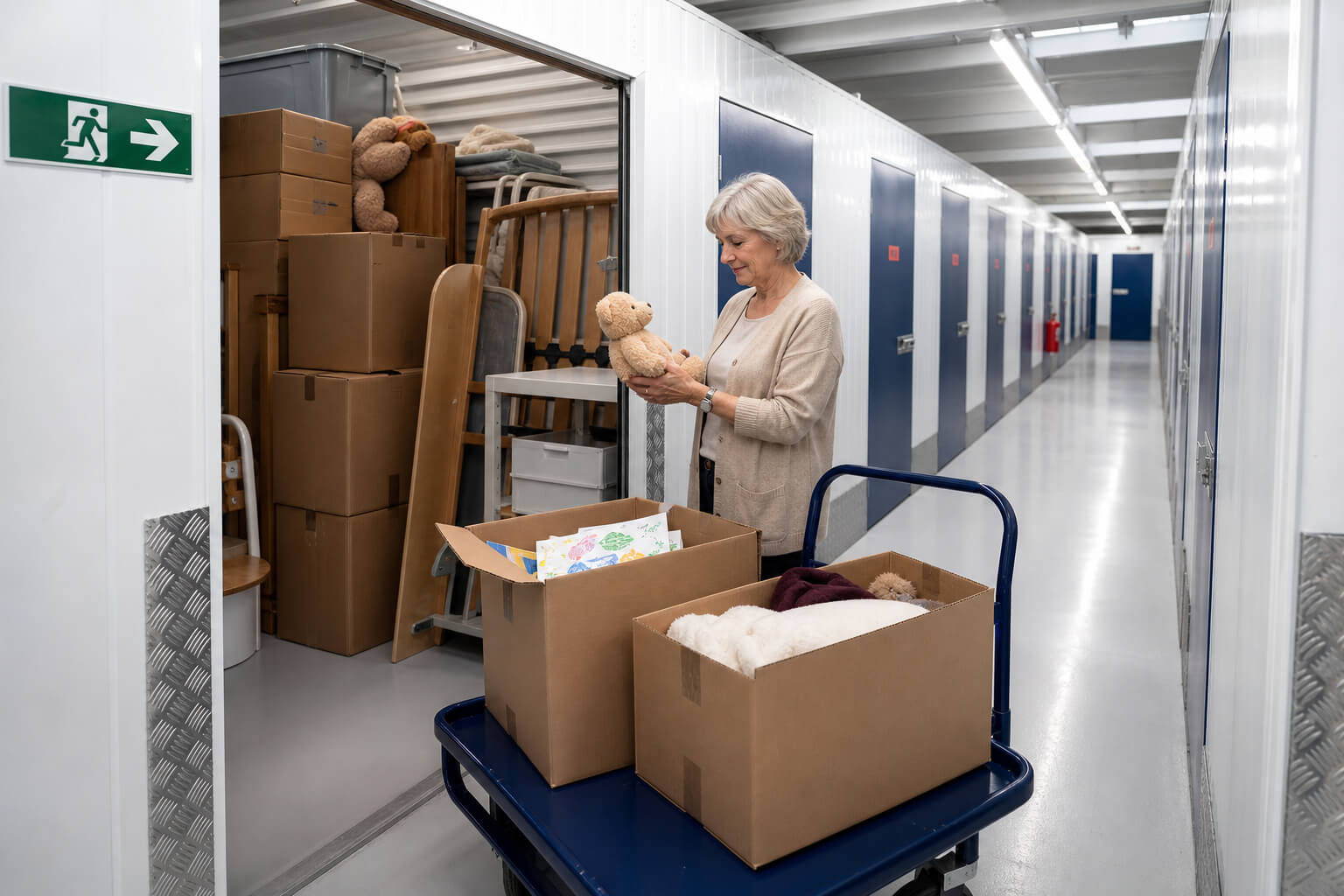
A family stores a box of a child’s drawings and school artwork for a fortnight while the new bedroom is sorted, using the on-site trolleys to move it in without wrestling boxes up stairs with a child in tow, and retrieves it before a specific family event once the room is ready. Nothing about that fortnight required a rushed decision on moving day itself, and nothing sat in a damp garage getting worse while the family settled in.
What This Doesn’t Solve, and Who Else Can Help
This is general practical and wellbeing context, not child-psychology or professional decluttering advice. Storage buys time to sort things properly, it doesn’t replace the sorting itself.
When to get outside support
If the emotional side of the move is genuinely hard for your family, it’s worth speaking to someone who can properly support that, rather than trying to solve it through storage alone.
What to do next
The not-yet box gets a bounded, flexible home. If that’s useful right now, see space near you or check current pricing.
Frequently Asked Questions
Our minimum term is two weeks, and if you finish sorting sooner, any unused paid days are refunded once you give 14 days’ notice.
Yes. Access runs 6am to 10pm, seven days a week, so you can go back for something on your own schedule.