The car is packed. The date is circled on the calendar. And somewhere around week two of loading boxes, it hits you: your halls won’t take you a day early, and your tenancy doesn’t start until it starts. Nobody warned you there’d be a gap between “we’re on our way” and “the door is actually open.” Think of what you need for those days as a holding room: somewhere calm and secure that exists purely for the length of your own gap, then closes itself out the moment you don’t need it any more.
Not sure where you stand? Pick your line:
- My travel date is before my allocated arrival slot: go straight to the section on why the gap exists.
- My family can only drive me down on a day that doesn’t match my hall’s arrival day: jump to the gap calculator below.
- I’m not even sure yet if I have a gap: start with checking your actual dates first, right here.
Check Your Actual Dates Before You Assume You Need Storage
Before you book anything, spend two minutes confirming your own allocated arrival slot or tenancy start date. Most readers can rule this problem in or out before they’ve finished their coffee, and it costs nothing to check first.
Your allocated slot sits inside your accommodation portal, not in a general email. University of Reading students book their arrival slot through the RISIS portal, alongside a compulsory e-induction that opens in mid-August. Do that first: it tells you the exact day you’re expected, not a rough week.
If your own travel date genuinely falls earlier than that slot, or your family can only make the trip on a day that doesn’t line up, that’s the moment to look at short-term storage. It isn’t a step you take on instinct. It’s a step you take once you’ve confirmed there’s an actual gap to fill.
Why Reading’s Move-In Actually Has a Gap Built Into It

Reading doesn’t run one single move-in day. The University allocates arrival slots that vary by hall and by course start date, some students get an earlier slot if their course starts sooner, and everyone else is spread across the main arrivals period, exactly which day depends on your own accommodation offer. If your journey down happens to land before your own allocated slot, that’s the gap this article is about.
Always check your own arrival slot on your accommodation portal rather than relying on a general date here: Reading’s own arrival system and policies can and do change year to year, and this article can’t replace checking the actual dates on your own portal or asking your accommodation office directly whether an early drop-off is possible for your hall.
The reassuring part is that this gap has a shape. It’s dated at both ends: you know your travel date, and once you’ve checked the timeline above, you know your arrival day. That turns a vague worry into a countable number of days, and a countable number of days is a problem you can plan around rather than one that follows you into the first week of term.
The Gap Calculator: Working Out How Long You Actually Need

Most gaps are short. Not months, not an open-ended “however long it takes”, but a handful of countable days that you can size before you book anything.
Take a fresher whose halls arrival slot is confirmed for a specific date, but whose family has booked travel down a week earlier because it’s cheaper or fits around annual leave. That’s roughly a 7-day gap. Or take a fresher whose family can only drive down a few days before the allocated slot. That’s a 2 to 4 day gap depending on the exact dates involved.
| Your situation | Typical gap length | How the terms fit |
|---|---|---|
| Earlier course-start student, family travelling early for cost or leave reasons | Around 7 days | Two-week minimum term covers it comfortably; 14-day notice and refund of unused days mean you’re not paying for a month you didn’t need |
| Standard-cohort fresher, family driving down before the allocated day | 2 to 4 days | Same minimum-term booking; close it out with notice once you’ve moved into halls, deposit and unused days refunded |
| Returning student into a private house-share, tenancy start slightly later than travel plans | 1 to 3 weeks | Booked for as long as the actual gap runs, then closed with notice the same way |
These are illustrative examples built from real dates, not a prediction of your own gap. Check your own accommodation offer or tenancy agreement for your exact dates before you size yours.
What actually makes this work is the alternative most people default to: leaving boxes in the car, or asking a friend to hold a bag “for a bit.” Neither has an end point. A dated booking does. You know when it starts, you know it closes the moment you give notice, and you get back what you didn’t use. That’s what makes it the calmer option over an undated favour, not the more complicated one.
If your gap looks like any of the rows above, get a quote for that exact length rather than a generic one: get a quote.
What Storing With Wigwam Reading Actually Looks Like

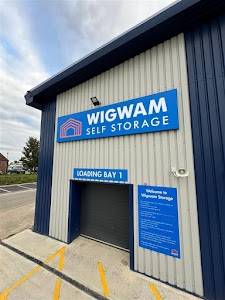
Practically, it looks like this: a secure unit at 7 Bridgewater Close, Reading, RG30 1JT, accessible from 6am to 10pm every day, opened with your own smart entry rather than a member of staff on a desk. That’s worth being upfront about, because Wigwam Self Storage Reading is an unmanned site: nobody will be there to greet you or your family when you drop boxes off, even outside those hours it’s simply closed to everyone.
For a parent driving a carful of boxes down before term starts, that’s usually a relief rather than a worry once you know what to expect. The site is alarmed, monitored, and yours to access on your own schedule within opening hours, using your own smart entry rather than sharing a key or waiting on someone else’s timetable. You come and go as your gap requires, not as a shop counter allows.
Is a Storage Unit Overkill for Just a Few Days?

It doesn’t feel that way once you’ve seen the terms. The two-week minimum, 14-day notice and refund of unused days from the gap calculator above mean you’re never locked into paying for months you don’t need. You book for the gap, you give notice when halls open their doors, and what you didn’t use comes back to you.
Compare that with the alternative cost of getting the timing wrong: an extra hotel night booked at short notice because there’s genuinely nowhere else for the boxes, or a first week of term spent anxious about a friend’s spare room rather than settling in. A short, dated storage booking is usually the cheaper and calmer choice next to either of those, not the expensive extra. For general pricing mechanics rather than a fixed figure (Wigwam’s current promotions change, so check what’s live when you get your quote), see the self storage pricing pillar.
What to Bring, What to Store, and What Not to Store

Keep day-one essentials with you rather than in a unit: bedding for the first night, toiletries, chargers, any paperwork you’ll need for your induction or tenancy check-in, and anything you’d hate to be without for even a day.
Everything else that’s making the gap awkward, clothes for the term ahead, bedding you won’t need until you’re actually in your room, boxes of books, an ordinary bike, spare bags, can go into storage for the length of the gap. Units are kept clean, dry and secure, so ordinary household items are safe there for a short stay without any special handling on your part.
If You’re Not a Student but Starting Fresh in Reading This September

The same calendar mismatch catches anyone moving to Reading for a new job or a new tenancy in September, not just students. If your start date and your accommodation date don’t quite line up, the same gap-calculator logic above applies just as directly.
Book Storage for Your Gap, Not a Moment Longer
The gap has a date. Plan for the date, and the rest of it stops being a worry. Check your allocated slot or tenancy start first, size the gap using the calculator above, and if it’s real, book a holding room that shuts itself down the moment you don’t need it any more, through the 14-day notice and refund of unused days and deposit.
Do check your own accommodation offer or tenancy agreement for your exact dates before you book, since these are specific to your year and your hall. When you’ve got them, get a quote for your gap and turn up in September with one less thing to think about.
Frequently Asked Questions
It varies, and policies can change year to year, so check with your accommodation office directly rather than assuming either way. If early drop-off isn’t offered for your hall, or your travel date still doesn’t line up, short-term self storage is built to bridge exactly that gap.
Wigwam’s minimum term is two weeks, even if your actual gap is shorter. Give 14-day notice once you no longer need the space, and any unused days and your deposit are refunded, so a short gap doesn’t turn into paying for a month you didn’t use.
Contents insurance is required for anything you store. You can take Wigwam’s own cover or prove you already have suitable insurance elsewhere. For the details of what’s covered, speak to the team when you book rather than relying on general assumptions.
For a gap like this, most readers need far less than a full-term storage unit, think a small run of boxes and bags rather than furniture. Get a quote and describe what you’re storing; the team will size it to a short, boxes-only gap rather than a full house-share move.