There’s a moment every East Hampshire mover recognises. The lorry noses off the main road, the driver slows to a crawl, and somewhere behind the hedge line someone says it out loud: “how wide is the actual lane?” It’s not a question with a good answer if nobody asked it before booking day. If that’s the moment you’re dreading, here’s the good news: the lane isn’t the problem. The vehicle is. And that’s the one thing you get to choose.
Not sure where to start? Pick your situation:
- Moving day is booked and the lane’s untested. Jump straight to Scout before you book.
- You’ve already had a vehicle struggle, stall, or get stuck. Jump to Shrink the vehicle, not the move.
- You’re on a tight completion date and can’t risk a delay. Jump to Stage the move through storage.
What actually happens when a removal lorry meets an East Hampshire lane
A standard van is roughly 2.1 to 2.15 metres wide across the body, more once you count the mirrors, and plenty of East Hampshire lanes are, by their own legal definition, only wide enough for one vehicle at a time, with passing places dotted along the route rather than a continuous verge to pull into. Put a lorry sized for a motorway on a lane sized for a tractor and you’ve got a mismatch. It’s common, it’s known about, and it’s checkable in advance, which is the part that actually matters.
Why “wide enough for one vehicle” isn’t a number you can look up
Here’s the part that catches people out: there’s no official figure for how wide a single-track lane is. It’s defined by what it does, not by a measurement, which means the only way to know if your lane will take a given van is to check the actual lane, not the postcode.
The moment it goes wrong
Picture it: a lorry meets a tractor at a blind bend, neither can pass, the passing place is thirty yards back, and now both drivers are reversing while the clock on the whole day’s schedule keeps running. That’s the scenario the rest of this method exists to avoid.
The rule that actually governs this (and the one everyone skirts)
The Highway Code is plain about single-track lanes, and it’s worth reading in full because it’s the whole basis for why vehicle choice, not lane width, is what you control. Rule 155 says: “These are only wide enough for one vehicle. They may have special passing places. If you see a vehicle coming towards you, or the driver behind wants to overtake, pull into a passing place on your left, or wait opposite a passing place on your right. Give way to road users coming uphill whenever you can. If necessary, reverse until you reach a passing place to let the other vehicle pass.” It also reminds drivers to slow down for pedestrians, cyclists and horse riders. You can read the full section on GOV.UK’s Highway Code.
Rule 155, in the Highway Code’s own words
Notice what it doesn’t say. No metric width, no minimum figure, nothing to plug into a satnav. It’s a functional rule: if only one vehicle fits, that’s a single-track lane, whatever its actual measurement happens to be.
Rule 156 and the trap of parking in the passing place
The adjacent rule matters just as much on moving day: “do not park in passing places.” A removal van left idling in the one spot built for passing traffic turns a normal lane into a blocked one, for you and for everyone else trying to get past.
This is offered as context for planning your move sensibly, not as driving instruction or a substitute for the removal firm’s own risk assessment on the day.
This is just how this part of Hampshire works
If your lane turned out narrower than you expected, that says nothing about your homework. Every incomer meets this the same way, and every villager who’s moved house within the area has had to work it out too. There’s no shortcut past it, only the method.
What locals already know that incomers don’t yet
Ask anyone who’s lived around Chawton, Selborne, Medstead, Bentworth or Lasham for a while and they’ll tell you the same thing without missing a beat: you don’t fight the lane, you match the vehicle to it. Around here, that’s simply what a well-planned move looks like.
Scout before you book
Before you commit to a lorry, walk or drive the actual lane it will use, not just the main road that leads to your postcode. Find the tightest point, the sharpest bend, and where the passing places sit. That turns “will it fit” from a guess into a fact you’ve checked yourself.
What to check, and who can help you check it
Note the pinch points and tell your removal firm exactly what you found, in their own terms. If storage is part of your plan, a quick call to check availability and access hours is useful too, though staff can only speak to sizing, availability and access, never to your route or your legal position. That’s a question for your removal firm or your own judgement on the ground.
Shrink the vehicle, not the move
Instead of booking one large lorry for the whole journey, book a smaller van, or two, for the lane-to-house leg. Move the full load in stages rather than betting everything on one attempt that either fits or doesn’t.
The shuttle principle in practice
Bring the load to a point the lane can comfortably take, then shuttle it in on smaller vehicles, typically over two metres wide even before mirrors, so treat that as a guide rather than an exact figure for any specific van you book.
| Approach | Fits a typical single-track lane? | Single-point-of-failure risk | Best suited to |
|---|---|---|---|
| One large lorry, one attempt | Rarely, without a scouted route | High, the whole move rests on one vehicle | Wide, well-checked access only |
| Two or more smaller vans, staged | Usually | Lower, spread across several trips | Most East Hampshire village lanes |
| Storage as a staging point | Always, the lane never sees the full load | Lowest, decoupled from moving day entirely | Tight completion dates or untested lanes |
Stage the move through storage, the step no one else offers
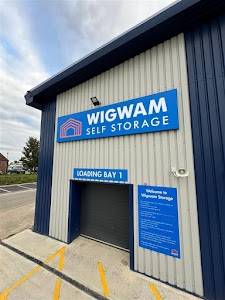
Rather than timing an entire house’s worth of belongings to arrive down one narrow lane in one lorry on one day, move everything into Wigwam Self Storage Alton first. The site itself has drive-up access with no lane constraint to worry about, and smart entry means you’re not relying on anyone being on hand to let you in when you come back for the next load. You bring your things home afterwards in smaller loads, on your own schedule, over as many trips as your lane needs.
Why decoupling moving day from lane day removes the single point of failure
This is the difference that matters most: your move no longer depends on one oversized vehicle getting down one lane on one specific day. If the lane’s awkward, that’s a problem for a Tuesday shuttle run, not for the one day everything else in your move also has to go right.
For the seller on a completion date
If you’re moving out against a completion date you can’t shift, staging absorbs the lane-day risk without touching the date itself. Everything leaves the house on schedule into storage, and the lane becomes something you deal with at your own pace afterwards, not something riding on the same clock as the sale. The Alton site is open seven days, 6am to 10pm, so checking what’s available before your date is a five-minute job, not a diary problem.
What not to do on moving day
Three mistakes account for most narrow-lane moving-day trouble: booking a lorry too big without walking the actual lane first, trusting the satnav’s route as if it’s already been driven by something the size of a removal van, and parking in a passing place, which the passing-place rule exists specifically to prevent.
Three traps, and the ten-second check that avoids each
Each one is avoided by the same habit: check the lane yourself, in the vehicle you’re booking, before the day it matters. It costs ten minutes. It saves the whole schedule.
Bringing it back to your own village, on your own terms
The lane was never the obstacle. It’s simply the local condition this part of Hampshire has always asked movers to work around, and now you know the method: scout the lane, shrink the vehicle, and stage the load through storage if the timing’s tight. Whether you’re moving in, moving locally, or racing a completion date, that’s the same method, just at a different starting point.
Where to check availability near you
If the small-lanes method fits your move, get a quote at quote.wigwamstorage.co.uk and check what’s available at the Alton site before moving week arrives.
Frequently Asked Questions
Sometimes, but not reliably, and not without checking first. Many East Hampshire lanes are only wide enough for one vehicle by definition, so whether a specific lorry fits is a fact you confirm on the ground, not something you can assume from the postcode.
A passing place is a widened spot built into a single-track lane for vehicles to pull into or wait opposite when they meet oncoming traffic. Rule 155 does say to reverse to the nearest passing place if that’s what it takes to let the other vehicle through, and Rule 156 adds that you shouldn’t park in one, since that defeats its purpose for everyone else.
Scout the lane before booking, choose a vehicle sized for what you actually find, and avoid leaving any vehicle standing in a passing place. If the lane genuinely won’t take a full-size lorry, staging the move through smaller vans, or through storage, avoids blocking the lane at all.
Yes. Moving everything into storage first, then bringing it home in smaller loads on your own schedule, is exactly the method this page describes, and it’s particularly useful if your lane is untested or your completion date is fixed.