There is a moment every growing business hits: the stockroom is full, the spare bedroom is full, the corner of the shop floor you promised yourself you would not fill again is full. And the instinct that follows is almost always the same panicked leap: “I need a proper warehouse.” Most of the time, that instinct is wrong, and it is an expensive thing to get wrong. The good news is you do not have to guess. Five straightforward questions, answered honestly, tell you which one you actually need.
Quick self-check:
- Not sure what to call this yet, just know you have run out of room? Read the difference below.
- Wondering whether to sign a warehouse lease? Skip straight to the five questions.
- It is just Christmas or event stock, not an everyday problem? Jump to the seasonal section.
- You already know you need pick-pack-ship or pallet handling done for you? Go straight to the warehouse signpost.
The Real Difference Between a Storage Unit and a Warehouse
A storage unit is passive, self-service space: you bring your own stock in, you organise it, you take it out again, on your own schedule. A warehouse is an active, staffed operation, run by people whose job is to manage, organise and move inventory for you, including picking and packing customer orders and handling freight. That is the whole distinction, and it matters more than size.
Storage means you do the work yourself
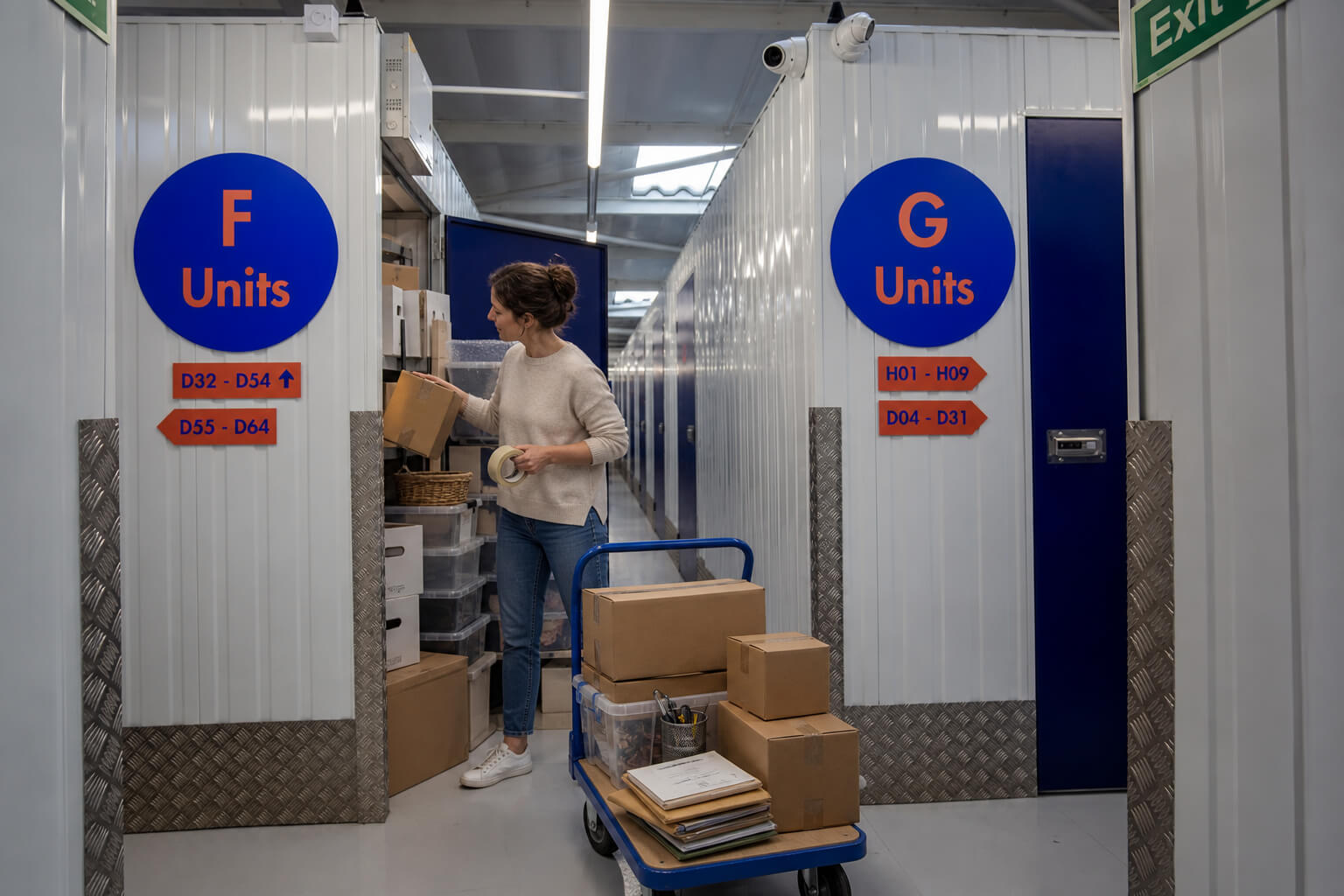
If you are the one carrying boxes in, checking what you have got, and carrying boxes out again, you are describing storage, however much stock is involved. That is what Wigwam offers: space you control, not a service someone else runs on your behalf.
A warehouse means someone runs the logistics for you
A warehouse earns its name by doing things a storage unit was never built to do: picking and packing individual customer orders, kitting and assembly, receiving and dispatching pallet freight at a loading bay, running inventory-management systems, with staff on site to do all of it. Wigwam does not offer any of that. We are a storage operator, not a logistics one, and this article only works if we are honest about which side of that line we sit on.
Five Questions That Settle It
Answer these honestly and you will know which side of the fork you are on in under two minutes. Most businesses, once they actually run the numbers, find they are still a storage case.
| Question | Storage signal | Warehouse signal |
|---|---|---|
| Do you pick, pack and ship customer orders yourself, or does someone else need to do it? | You do it yourself | Someone else needs to |
| Does your stock arrive or leave by the pallet, needing a loading bay or forklift? | No, boxes or cases you carry by hand or trolley | Yes, pallet-scale freight |
| Would everything fit in roughly 300 sq ft, or a couple of combined units? | Yes | No, you need thousands of square feet |
| Do you need self-service access on your own schedule, or staffed hours with on-site personnel? | Self-service is enough | You need staff managing it |
| Is this a temporary or seasonal surge, or a permanent step-change in how you operate? | Temporary or seasonal | Permanent step-change |
Storage across most or all five rows points to Wigwam business storage. Warehouse across most or all five points to the section below on what to look for instead.
If your answers point to storage, here is the next step: get a price for your size and nearest town.
When It’s Just a Seasonal Spike, Not a Step-Change

A Q4 stock surge or a pile of event kit can feel like proof you have outgrown storage for good. Usually it is not. A flexible unit scales up for a busy season and scales back down again afterwards; a warehouse lease does not know how to do that.
Why a busy Christmas doesn’t mean you need a warehouse lease
This is exactly what question five in the table above is testing for. If the surge is temporary, seasonal storage on a flexible term is almost always the right-sized answer, even when the volume in front of you right now looks alarming. Committing to years of warehouse space to solve eight weeks of extra stock solves a problem you will only have once a year, permanently.
What Wigwam Business Storage Actually Offers

If the five questions pointed you towards storage, here is what you are actually getting.
Access and security, on your terms
Unlimited access, six in the morning until ten at night, seven days a week, at a smart-entry site with no staff on the gate. Units are individually alarmed and sites are covered by CCTV. One thing worth knowing because sites are unmanned: if you are expecting a courier delivery, someone from your business needs to be there to receive it, since there is no one on site to sign for it on your behalf.
Sizes and terms that flex with you
Units range from 10 sq ft up to 300 sq ft, so you rent the space your business actually needs, not the space a landlord decided to build. The minimum term is as short as 14 days. No deposit is taken when you sign up. You give 14 days’ notice to end your agreement, with a refund for any paid days you did not use. There are no fixed prices published on this page; the right price depends on your size and your town, so the honest next step is a live quote rather than a guess.
Wigwam near you
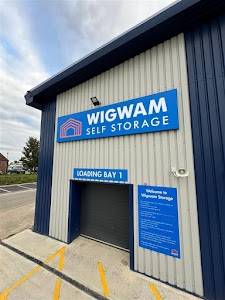
We operate 15 self-storage sites across UK market towns, including Wigwam Self Storage Reading and sites in towns such as Bath, Marlow and Cheltenham, all running on the same access, security and term structure described above.
If You Genuinely Need a Warehouse, Here’s What to Look For

Not every reader here needs storage, and if your five answers came back pointing the other way, the honest thing to do is tell you what you are actually looking for.
What a warehouse or 3PL actually provides
Look for dock-level loading and pallet access, staffed order fulfilment so someone else is picking, packing and shipping for you, proper inventory-management systems, and a commercial lease structured for that scale of operation. That is a different product, a different cost category, and usually a different length of commitment to what storage offers.
Why Wigwam won’t pretend otherwise
We are a storage operator, not a warehouse or a third-party logistics provider, and we would rather tell you that plainly than sell you space that will not do the job you actually need done. If that is where your five answers point, this page’s job is done: go and find the right fit with a clear idea of what to ask for.
A Real Example: The Business That Nearly Over-Committed

Picture a homeware seller trading out of Wigwam Self Storage Reading, whose spare bedroom stockroom gave out just before Black Friday. She was on the verge of enquiring about warehouse space until she ran the five questions herself. She still packs and posts every order by hand, so no fulfilment needed. Everything arrives by courier van in boxes, never on a pallet. Her whole autumn and winter stock fits comfortably in a single mid-size unit, well under the 300 sq ft ceiling. She is happy to collect and repack stock on her own schedule, and the surge itself was seasonal, not a permanent shift in how her business runs. Every answer pointed the same way: a flexible storage unit she could scale down again in January, not a warehouse lease that would have tied her in for years.
This is an illustrative example built from real Wigwam access, size and term figures, not a named customer case study, but it is exactly the pattern the five questions are built to catch.
Getting Started With Business Storage

If you have worked through the five questions and landed on storage, the next step is simple.
Get a price for your size and town
Prices are not fixed or published here, because the right unit depends on your size and your nearest town, so the fastest honest answer is a live quote rather than a guess on the page. You can get a price at quote.wigwamstorage.co.uk, or see the full business storage details first if you want to check sizes and terms before you ask for a number.
The Right-Sized Answer, Not the Biggest One
Most growing businesses that think they have outgrown storage have actually just outgrown their spare room, garage or shop corner, not the function a storage unit performs. Only a real minority genuinely need a warehouse, and the five questions above tell you honestly which one you are.
If that is you, get a price for your business storage and get the space sorted this week, not next quarter. If your answers pointed the other way, the signpost above still stands: go and find the warehouse or 3PL partner that does what you actually need.
Frequently Asked Questions
No, not as a registered business address or retail premises. A storage unit is space for stock, equipment or archives, not somewhere you can legally trade from or list as your business’s registered address.
It depends entirely on what you are storing, which is why Wigwam offers sizes from 10 sq ft up to 300 sq ft rather than one fixed size. A few boxes of archived files might suit the smallest units; a season’s worth of stock for an online shop might need something closer to the middle of that range. The safest way to get this right is a quick chat through the quote tool, which will match a size to what you actually need to fit.
Yes, but someone from your business needs to be there to receive it. Wigwam sites are unmanned, so there is no one on site to sign for a delivery on your behalf.
Almost certainly, but the comparison is not really about price, it is about what you are buying. A storage unit is space you manage yourself on a flexible term; a warehouse is a staffed logistics service on a commercial lease, a fundamentally different cost category. Wigwam does not publish fixed prices for storage, so the honest way to compare is a live quote for your size, weighed against what a genuine warehouse or 3PL contract would cost for the fulfilment service itself.