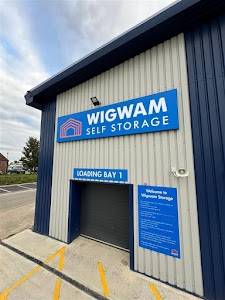
You are about to hand over things you cannot watch over yourself. A parent’s belongings after a move you did not want to make. A house between sales. Furniture pulled out mid-renovation. “Is self storage safe” is not really the question. The real one is: what, specifically, is protecting my things? Safety here is not one feature, it is a net of small, verified facts, and this article names every thread.
In a hurry?
- Worried about a break-in? Jump to what happens if someone tries.
- Worried about fire, storm or a leak? Jump to what the policy pays out.
- Storing something irreplaceable? Jump to the contrast case.
Is self storage actually safe? The short answer is a four-layer stack
Yes, when the layers are real and named, not just claimed. At Wigwam, protection works as four layers: who can get to your unit, what stops forced entry, how the building keeps things clean and dry, and what happens financially if something still goes wrong. Each does a specific job and has a limit. The rest of this page walks through all four, honestly, including where they stop.
Layer one: who can actually get to your unit
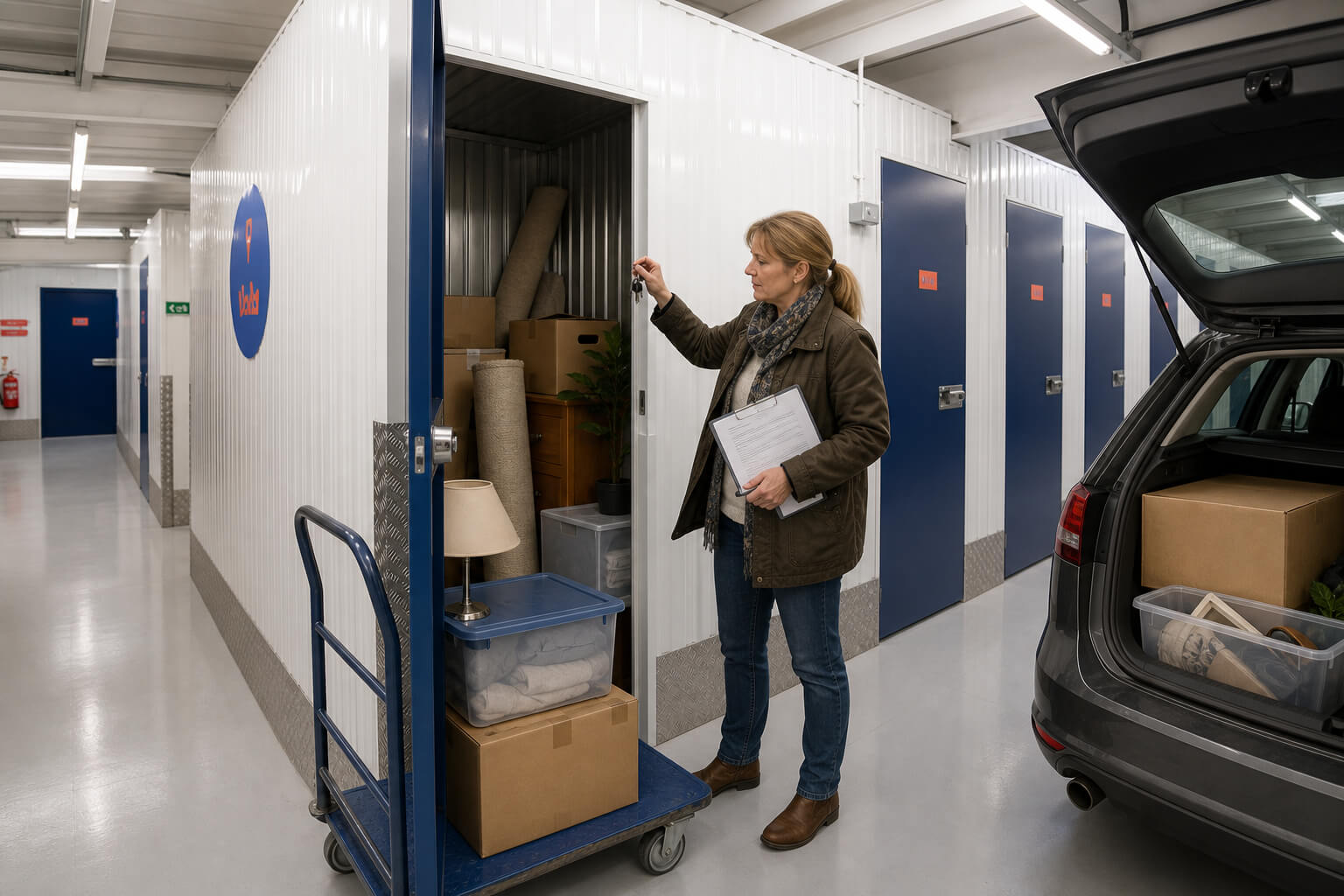
Access at Wigwam is unlimited, 6am to 10pm every day, through a mobile smart entry system, no physical keys or padlocks to lose or copy. This layer controls casual or opportunistic access during open hours. It does not tell you what stops someone once they are near your unit, or mean staff are watching in person the whole time.
Layer two: what actually happens if someone tries to break in (and who’s watching)
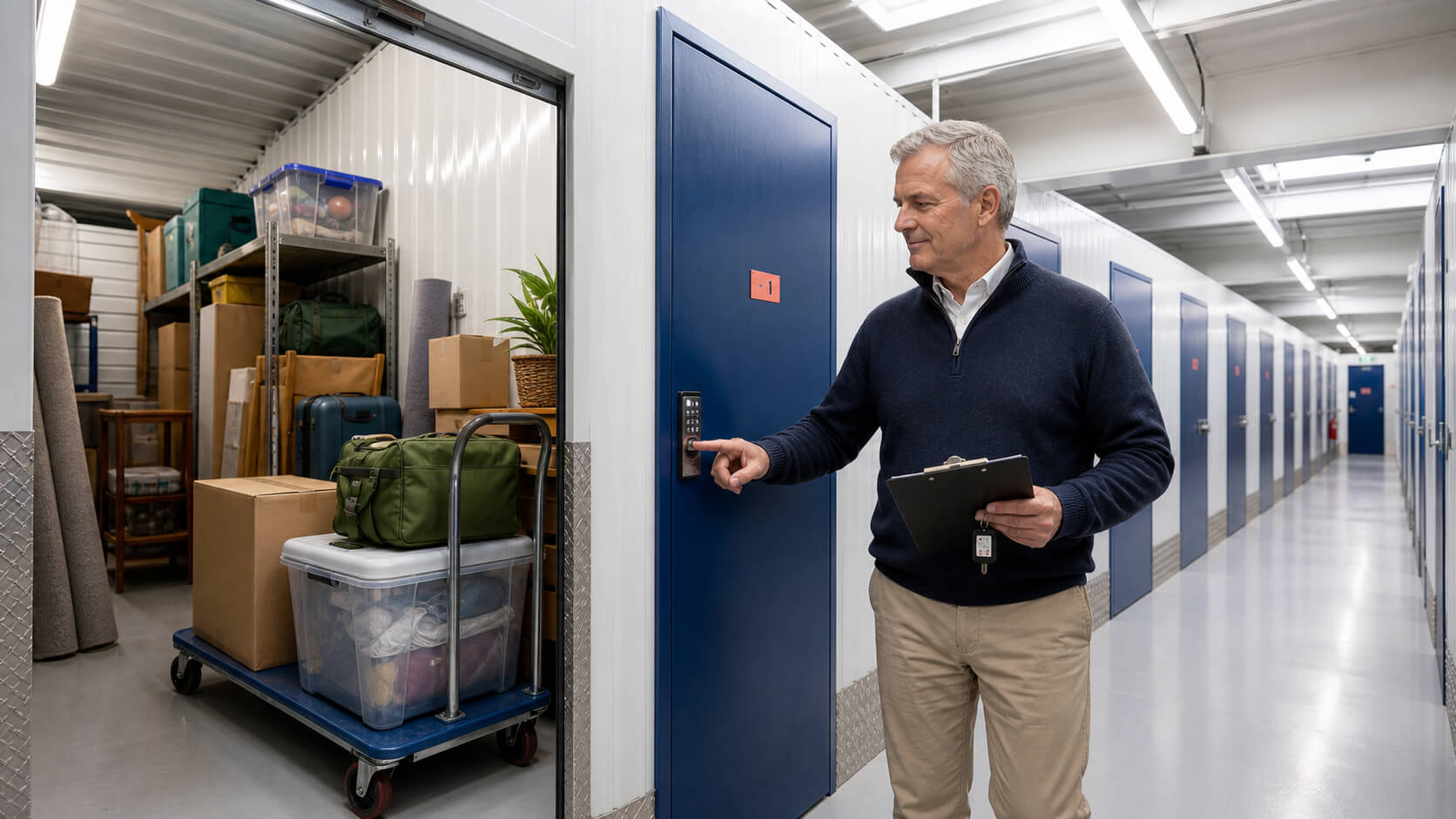
Each unit is individually alarmed, and the site runs 24/7 monitored CCTV. If someone attempts forced entry, the alarm signals the monitoring centre straight away. That is the real protective mechanism, and it is worth being precise, because this is where a misleading claim tends to creep into storage marketing.
Monitored vs staffed: the distinction that matters
“24/7 monitored CCTV” means the cameras and monitoring never switch off. It does not mean a person is on site around the clock. Wigwam sites are unmanned outside office hours, which vary by location (Tewkesbury’s, for example, run Monday to Friday 9am to 6pm, Saturday 9am to 2pm, closed Sunday). The honest answer to “is someone watching” is: the cameras and alarms are, continuously, staff are not, outside those hours. Knowing which one you are getting matters more than a line that blurs the two.
Layer three: why “clean, dry and secure” matters more than climate control

Wigwam does not offer or advertise climate control, and this page will not pretend otherwise. What it does offer is clean, dry, weatherproofed storage, the right level of protection for ordinary household and business goods.
What damp, temperature and pest risk actually looks like
If you are storing something genuinely temperature or humidity sensitive, a standard unit is not built for that, and no honest storage company should tell you otherwise. For the far more common case, boxed possessions, furniture, business stock, a dry unit is exactly what keeps damp and pests out.
Why storm and leak damage are still covered regardless
Storm damage and burst-pipe or water-leakage damage are both named perils under Wigwam’s contents protection policy, covered the same as any other listed risk. Environmental honesty and financial cover are different layers, and this is where they meet.
Layer four: what the contents protection policy actually pays out
This is the layer that closes the gap when the first three cannot help. Wigwam’s Contents Protection settles claims new-for-old, names its covered perils clearly, and states plainly what falls outside cover.
| Layer | What it is at Wigwam | What it protects against | What it does NOT cover |
|---|---|---|---|
| 1. Access control | Unlimited access 6am-10pm daily via mobile smart entry, no keys or padlocks | Casual or opportunistic access by non-customers during open hours | Staff presence around the clock, see Layer 2 |
| 2. Unit-level physical security | Individually alarmed units plus 24/7 monitored CCTV | Forced or attempted forced entry, triggering an alarm to the monitoring centre | A person watching in real time on site; sites are unmanned outside office hours |
| 3. Environmental honesty | Clean, dry and secure, no climate control offered | Storage of ordinary household and business goods in a dry, weatherproofed unit | Temperature or humidity sensitive items |
| 4. Financial backstop | Contents Protection: new-for-old basis, or proof of an equivalent named policy within 14 days | Financial loss once a named covered peril has occurred | Uninsured loss (capped at £100), theft without forced entry, underinsured claims |
What’s actually named as covered
Named perils include fire, lightning, explosion, earthquake, storm, riot, strike, civil commotion, malicious damage, impact by vehicles or aircraft, burst pipes and water leakage, and vermin damage from outside the unit. The table carries the crisp version; the full policy detail sits here if you want it in full.
The forced-entry nuance, and why it matters
Theft cover requires evidence of forcible entry or exit. Contents going missing with no sign of forced entry is a materially weaker claims position than a break-in with obvious damage to the door or lock. Worth knowing now, not after.
If you already have your own insurance
You do not have to take Wigwam’s cover. Prove an equivalent policy within 14 days of moving in and the Contents Protection charge is refunded in full. The catch, a common one, is that the policy must specifically name Wigwam and your storage address as a covered location. Plenty of home contents policies quietly exclude goods kept off your own premises, so check before you rely on it, not after.
General information about Wigwam’s own policy as understood at time of writing, not insurance advice. An excess applies; confirm current terms with Wigwam or your own insurer.
If cover is what’s weighing on you, especially with things that cannot be replaced, talk to us about what’s covered before you book. No hard sell, just an honest answer.
The worked claim scenario: covered vs not covered
Whether a claim gets paid usually comes down to one thing: was the right layer in place before the loss happened. Two versions of the same event.
Scenario A: the layer working as designed
A leak from a neighbouring unit damages a customer’s boxed electronics. They have Wigwam’s Contents Protection in place and declared an accurate replacement value. Water and leak damage is a named covered peril, so the claim is assessed and settled new-for-old, subject to the excess.
The contrast case: relying on a policy that doesn’t name Wigwam
Same leak, same damage. This time the customer relied on their home contents policy instead, and never checked whether it named Wigwam and the storage address as a covered location. The claim is refused or heavily capped, not because the facility failed, but because the insurance layer was never actually in place. That is the exact gap the financial backstop exists to close.
Every claim is assessed on its own facts. Speak to Wigwam or your own insurer about your situation.
Where Wigwam actually is, and why flexible terms are protection too
The full footprint
Wigwam runs sites across a wide spread of English counties, not one or two towns. Rather than list a partial handful, see the full list of locations, including Tewkesbury Self Storage, to check what’s nearest you.
Flexible terms as reassurance, not just access
Safety is not only about theft, fire and damp. It is also about not feeling trapped by the terms. Wigwam’s minimum stay is two weeks, unused days are refunded rather than kept, and access is unlimited between 6am and 10pm, every day. If your plans change, you are not locked into paying for space you no longer need.
Checking properly beats trusting a brochure line

“Is self storage safe” was never really answered by a slogan. It is answered by four layers you can check: access control, unit-level physical security, environmental honesty, and the financial backstop. Each does a specific job, each has an honest limit, named above rather than glossed over. When you are ready, get a quote, or read the contents protection detail first if you would rather see the cover before you book.
Frequently Asked Questions

Sometimes, but do not assume it. Many standard home policies exclude or cap goods kept off your own premises. If you plan to rely on your own insurer rather than Wigwam’s Contents Protection, check that your policy specifically names Wigwam and your storage address as a covered location, and that you can prove this within 14 days of moving in.
Without Contents Protection or proof of an equivalent named policy, Wigwam’s own liability for your goods is capped at £100. For most people storing anything of real value, that is a gap worth closing before you move in, not after.
Fire and storm damage are both named covered perils under Wigwam’s Contents Protection policy, along with burst pipes and water leakage. This is general information about the policy as understood at the time of writing, not insurance advice; confirm current terms with Wigwam or your own insurer.
Not around the clock. The CCTV and alarm monitoring run continuously, but Wigwam sites are unmanned outside office hours, which vary by location. If a unit alarm is triggered, the signal goes to the monitoring centre regardless of whether staff are on site at that moment.