You know the moment. The tree comes down, and the boxes go back up into the loft, except there is no room, because the tent is already up there from September, and the garden chairs are wedged in front of it from October. Every year it is the same argument with yourself in the same cramped space, just with a different box on top.
It is not really three problems. It is one problem, wearing three different seasonal costumes.
In a hurry? Start here.
- Just took the tree down and the loft is already full: skip to “Getting Christmas Decorations Ready to Store.”
- Digging the tent out and it smells musty: skip to “Getting Camping Gear Ready to Store.”
- Garden furniture is coming out rusty or mouldy: skip to “Getting Garden Furniture Ready to Store.”
- No loft or garage at all, and this happens every season regardless: skip to “Your Alton Answer.”
One Loft, Three Seasons, One Recurring Argument
Christmas decorations, camping gear and garden furniture are not three separate storage headaches. They are the same headache, arriving at three different points on the calendar. A home has one finite shelf of dry space, and every season a different category has to fight the other two for room on it. The tree comes down and fights the tent for loft space. The tent gets dug out and fights the furniture for shed space. Whatever is losing that fight ends up somewhere damp, and that is where the real damage happens.
Why Home Storage Actually Fails (The Damp Mechanism)

The reason a loft, shed or garage ruins seasonal items has nothing to do with which item it is. Mould, mildew and corrosion all trace back to the same cause: trapped moisture and poor air circulation. A space that cannot breathe will damage whatever sits in it long enough, whether that is a cardboard box, a nylon tent or a steel chair frame. Get the space clean, dry and ventilated, and every one of these items survives the season intact.
You do not have to take our word for this. Three completely unconnected authorities, none of them talking to each other and none of them talking about self-storage, describe the exact same mechanism from three different angles.
What the RHS says about garden furniture. The Royal Horticultural Society’s guidance on maintaining garden seats and tables confirms that damp storage accelerates rust on metal furniture, that softwood needs protecting from damp before it is put away, and that plastic furniture is generally better off in a garage or shed over winter than left outside, where prolonged exposure makes it brittle. The common thread: furniture needs to be dry, and off wet ground, before it goes into storage at all.
What the Camping and Caravanning Club says about tents. Their tent-care guidance is direct: a tent must be stored clean and completely dry, with reasonable air circulation around it, because mildew is the biggest risk of packing one away even slightly damp. Once mildew takes hold, the Club’s own remedy is a vinegar or mild-steriliser treatment, which tells you how much easier it is to prevent than to reverse.
What GOV.UK says about damp and mould. Government guidance on damp and mould in housing confirms that cold, poorly ventilated, damp spaces are the structural cause of mould growth, regardless of what is stored inside them. The space itself is the problem, not the contents.
Three experts, three fields, one identical finding. That convergence is the whole story here: a clean, dry, secure space solves the failure mode for all three categories at once, without needing a different fix for each one. Note what we are not claiming. Wigwam units are not climate-controlled and we do not sell them that way. Clean, dry and secure is the honest claim, and it is the one that actually matches what these three sources say prevents the damage.
The Same-Room Test (One Table, Three Categories)
Line up what ruins each item at home against what each one actually needs, and the pattern jumps out immediately. Every “what it needs” column says the same three things: clean, dry, some airflow.
| Item | What ruins it at home | What it needs |
|---|---|---|
| Christmas decorations | A damp loft or garage causes mould on fabric wreaths, tarnish on metallic baubles and warped cardboard boxes | Clean and fully dry before boxing, in sturdy lidded boxes, ideally plastic rather than cardboard if the space has any damp risk |
| Camping gear (tent, sleeping bag) | Packing it away even slightly damp causes mildew, a musty smell and loft insulation | Completely dry before storage, with airflow around it, and not compressed tightly for long periods |
| Garden furniture (metal, softwood, plastic, cushions) | A damp shed causes rust on metal, rot on softwood, brittleness on plastic and mildew in cushion foam | Clean and dry before storage, off the floor, with some ventilation and not sealed in non-breathable wrap |
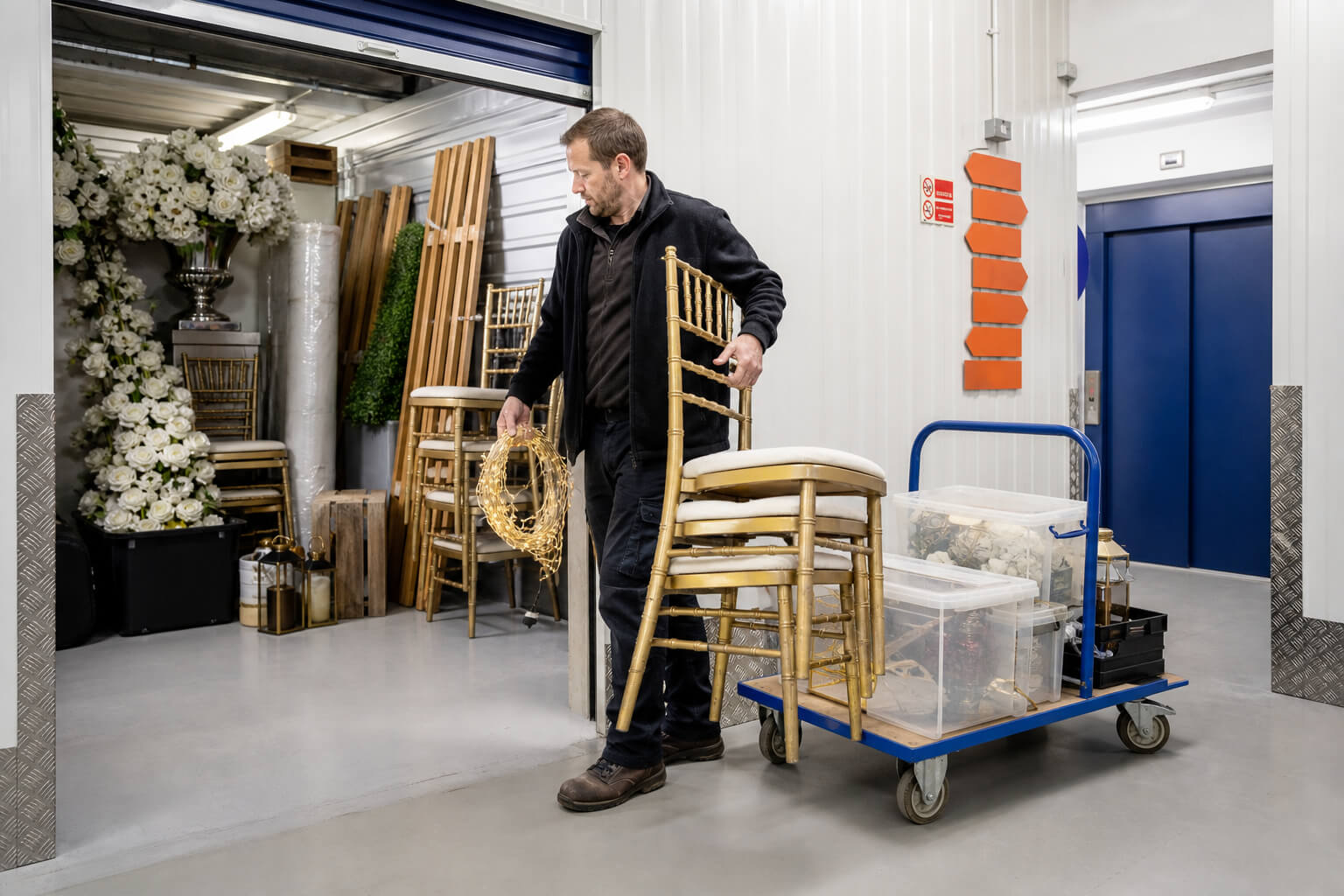
The one thing all three have in common: none of them need a special fix. They all need the same ordinary conditions, which a home loft or shed usually cannot give them for months at a time. A single Wigwam unit in Alton gives all three that condition at once, rather than needing three separate workarounds around the house. You can see current unit sizes and pricing on the Wigwam Self Storage Alton page, where pricing and offers are kept current.
Getting Christmas Decorations Ready to Store

Decorations survive storage fine as long as they go in clean, fully dry and boxed properly before they meet any damp air.
Fabric wreaths and metallic baubles. Fabric holds moisture more than most people expect, so let wreaths and any fabric trim dry out fully before boxing. Metallic baubles tarnish in damp air the same way any untreated metal does, so keep them wrapped individually and away from direct contact with a damp box wall.
Cardboard vs plastic boxes in a damp space. Cardboard is the weak link. It absorbs moisture from the air around it and can pass that damp straight on to whatever is inside, even if the decorations themselves went in dry. Lidded plastic boxes are the safer bet anywhere the storage space itself might not be bone dry, which is exactly the situation a loft or garage puts you in most winters.
Getting Camping Gear Ready to Store

The Camping and Caravanning Club’s guidance is unambiguous here: a tent has to be completely dry before it is packed away, with air able to circulate around it.
The mildew risk of packing a tent away damp. Even a tent that looks dry after a weekend away can hold enough residual moisture to mildew in storage. Pitch it, or at least hang it out, until you are confident it is properly dry, not just dry to the touch, before it goes into a bag for months.
Sleeping bags and loft insulation over long storage. Down and synthetic fill both lose loft, the fluffiness that keeps you warm, if they are compressed tightly for long stretches. Store sleeping bags loosely if you can, in a breathable bag rather than a vacuum-sealed one, and keep them somewhere the same clean, dry, ventilated conditions apply.
Getting Garden Furniture Ready to Store

Garden furniture needs to go into storage clean and dry, off the floor, with some ventilation, and never sealed in wrap that cannot breathe.
Metal furniture and rust. Metal is the most damp-sensitive of the three material types here. Damp storage accelerates rust noticeably faster than damp use outdoors, because the moisture sits against the metal without the drying effect of open air and sun. Clean off any dirt, dry thoroughly, and store metal pieces where air can move around them.
Softwood, cushions and parasols. Softwood needs protection from damp before storage, so treat or cover it appropriately rather than assuming storage alone will do the job. Cushions and parasol fabric hold moisture in their padding and seams, so make sure both are properly dry before they go away, or mildew sets in exactly the way it does in a damp tent.
The hardwood exception. Not everything needs to come in. Well-maintained hardwood furniture can often stay outdoors year-round without harm, so storage here is an option rather than a requirement. If your set is softwood, metal, plastic, or has cushions and a parasol, storage solves a real problem. If it is hardwood you already look after, leaving it in the garden is a legitimate choice too.
What Not to Store Together (Watch-Outs)

Most seasonal items store perfectly well side by side. The one exception worth flagging is fuel and gas canisters from camping stoves, which need separate, careful handling rather than being boxed in with everything else, in line with general safety guidance on storing flammables. If you are unsure how to store fuel or gas canisters safely, check the manufacturer’s instructions or your local fire safety guidance rather than guessing.
One quick recap from the section above: hardwood furniture may not need storage at all if it is already well maintained, so do not feel obliged to bring in everything from the garden just because everything else is going into the unit.
Your Alton Answer
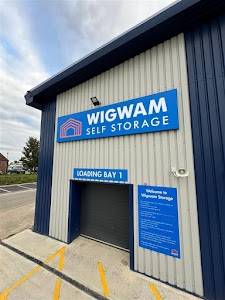
Wigwam’s Alton site, 2 Newman Lane, Alton, Hampshire, GU34 2QR, gives Alton households one clean, dry, secure unit for Christmas decorations, camping gear and garden furniture together, with access seven days a week, 6am to 10pm.
Address, access and unit sizes. Because unit sizes and pricing move with demand and season, the most reliable current figures live on the Wigwam Self Storage Alton page itself rather than repeated here, where they would go out of date. The Alton storage cost guide breaks the current pricing down further, and the UK self storage cost pillar is useful if you are comparing Alton against storage elsewhere. Entry is by smart entry, so there is no key to lose track of between visits, and because the site is largely unmanned, if you are ever expecting a courier or removal firm to drop garden furniture or camping kit at the unit for you, make sure someone from your own side is there to meet them.
Booking for just one season. You do not need to commit indefinitely to solve a seasonal problem. The minimum term is two weeks and vacating the unit needs two weeks’ notice, two separate terms worth knowing on their own rather than as one blurred phrase, so if you only want the space for the months between taking the tree down and camping season starting, that is a perfectly workable plan. Full detail on notice, minimum term and the insurance requirement (either your own cover or Wigwam’s, whichever suits you) is on the Wigwam FAQs page. If Alton is not your nearest option, the full self storage locations list covers the rest of the country.
None of this needs to be complicated. Get a price for an Alton unit at quote.wigwamstorage.co.uk, or call 0800 245 5585 if you would rather talk it through first. One unit, clean and dry, is a fourth shelf that never has to fight the other three for room.
Frequently Asked Questions
No. Decoration boxes alone rarely need more than a small unit. Where it starts to make more sense to size up is once camping gear and garden furniture join the same unit across the year, which is exactly the three-category case this article is about. The Alton page shows current size options so you can match the unit to what you are actually storing.
Yes, as long as it goes in completely dry with some airflow around it, per the Camping and Caravanning Club’s own guidance. What causes long-term damage is not the length of storage itself, it is packing a tent away even slightly damp, or compressing it so tightly that no air reaches it.
For most households, storing it is worth it. Prolonged outdoor exposure makes plastic furniture brittle over time, according to the RHS, so a dry off-season unit extends its life considerably compared with leaving it outside year-round. The exception is well-maintained hardwood, which can often stay outdoors without the same risk.
The minimum term is two weeks, and ending your booking needs two weeks’ notice to vacate, two separate terms rather than one. That makes a single-season booking, say from January through to camping season, or from September through winter, straightforward to plan around. Full terms are on the Wigwam FAQs page.