There’s a shed somewhere near March right now with a mower wedged against a stack of tarpaulins, and whoever owns it already knows which one is winning this week. That’s not disorganisation. It’s a household running two kits through the same small space without a name for what it’s doing. Name it, tidy the handover between the two, and the shed stops being a weekly negotiation.
What “seasonal storage rotation” actually means here
Seasonal storage rotation is simply moving your garden kit and your wet-weather kit in and out of the same space as the year turns, so whichever one you need is at the front and whichever one you don’t is out of the way. Most Fenland households already run a rough version of it without calling it anything: the mower goes to the back of the shed in October, the wellies come forward, and the whole thing swaps back again in spring. Giving it a name and a proper handover just makes the swap deliberate instead of accidental, something you decide rather than something that happens to you halfway through a wet weekend.
Why the Fens genuinely run on a wet/dry seasonal pattern
This isn’t a marketing hook built around the weather. The Fens have a documented, structural seasonal water pattern, and March sits inside it.
What the Environment Agency’s own data says
The Environment Agency’s Fens 2100+ programme states plainly that “87% of the Fens is below 3.9m AOD (MHWS) and at risk of permanent inundation if we walked away.” The same programme sets out the region’s seasonal balancing act in its own words: “seasonal extremes add further complexity; winter rainfall demands rapid drainage; summer requires water retention to support navigation and irrigation.” That’s the real basis for thinking about the year here in two halves rather than one continuous stretch, a wetter half that needs managing and a drier half that needs holding on to water. There’s no defined “flood season” with fixed dates in that document, and we’re not inventing one here either. It’s a working pattern, described by the people who manage the land, not a calendar entry.
Where March itself sits on the government’s own risk map
March isn’t a bystander to that pattern. The government’s own Check for Flooding service lists the town directly: “You may be at long term flood risk from rivers, the sea, surface water or groundwater.” That’s a stable, long-term classification. Current conditions on that page change day to day, so if you want to know what’s happening this week, the live service itself is the place to check, not this article.
The two-season swap, kit in / kit out
Once you accept that the Fens run on a genuine wet-dry rhythm, the practical answer is straightforward: two clear kits, swapped over twice a year.
Season A: the growing season
Through spring, summer and into early autumn, the kit that needs to be out and within reach is the mower, strimmer and hand tools, hose reels and watering cans, outdoor furniture, and anything for the garden that gets used weekly. This is the stretch where wet-weather kit you’re not using yet, along with any off-season heaters or dehumidifiers sitting idle, can go into storage instead of eating into the shed space the growing season actually needs.
Season B: the wetter months
Through autumn and winter, into early spring, the kit that earns its place at the front is wellies, tarpaulins, a wet/dry vac, torches, and anything you own for wet weather, including sandbags or flood boards if you have them. What you keep at home versus what you store is worth working through with your own insurer and the Environment Agency’s guidance rather than a fixed rule handed down here. The mower and the rest of the growing-season kit, cleaned and properly dried first, take its place in storage.
| Season A: growing season | Season B: wetter months | |
|---|---|---|
| Stays out and to hand | Mower, strimmer, hand tools, hose reels, outdoor furniture | Wellies, tarpaulins, wet/dry vac, torches, owned sandbags or flood boards |
| Goes into storage | Wet-weather kit not currently needed, idle heaters/dehumidifiers | Mower and summer kit, cleaned and dried first |
The households who feel the benefit most have usually lived the alternative: a wet autumn where the mower is blocking the sandbags, or a dry spring where the sandbags are blocking the mower. Small, recurring friction rather than a crisis, and exactly the kind of thing a straightforward swap removes for good.
When the swap is a genuine necessity, not a preference
For some households this is a nice-to-have. For others it’s the only way both kits fit at all.
The small-yard/older-property problem
A terraced house or an older Fenland cottage often comes with a shed that was never built to hold a full growing-season kit and a full wet-weather kit side by side. There’s no third space to absorb the overflow, so one kit is always sitting somewhere it shouldn’t: blocking a doorway, crammed against a fence, eating into the one bit of dry floor space the bikes need. Here the swap isn’t about tidiness. It’s the difference between having room for what the season needs and not having it, and a single unit sized to whichever kit is currently off duty solves that without a shed extension or a weekend spent deciding what to throw away.
What this article is not: flood advice or insurance advice
To be clear about what’s being offered here: this is general household-organisation information, not flood-defence or insurance advice. We’re not going to tell you what to keep in your home in the event of a flood, or how to read your policy. For anything safety-critical, the Environment Agency’s own service and your own insurer are the right authorities, and pointing you to them honestly beats guessing on our part. Our support team can help with sizing a unit and checking availability, access and booking, but they won’t discuss your household’s or business’s plans in detail, and they don’t give legal, insurance or flood-preparedness advice. That’s not a gap in service. It’s a boundary worth knowing before you call, not discovering halfway through one.
Doing the swap at the March site
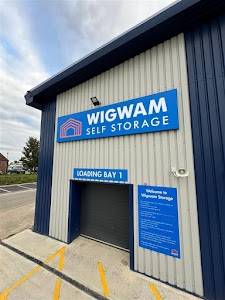
If you’re weighing this up locally, here’s what it looks like at Wigwam Self Storage March.
Access and hours
Storage access runs 6:00am to 10:00pm, every day. Office hours are Monday to Friday 9 to 6, Saturday 9 to 2, and closed on Sunday, for anything that needs a person rather than your own access to the unit.
Getting in
Getting into your unit is smart entry, no reception desk to check in at. The site itself is unmanned, so if anyone other than the account-holder is doing the physical swap for you, a partner shifting the kit across, or someone from your own business dropping off or collecting, someone from your household or business needs to be there in person. There’s nobody on site to let a courier in on your behalf.
The March site is close enough to make a twice-yearly swap a straightforward errand rather than a project, and a unit sized to whatever you’re rotating beats guessing at a fixed size and hoping it fits. Get a quote and we’ll size it against what you’re actually moving in and out.
Where this fits into the wider Fenland storage picture
The two-season swap is one thread in a household’s broader relationship with storage, not something that starts and stops with flood risk. If you want the general version of this idea, applied beyond the Fens and without the local flood-risk detail, our seasonal storage guide covers the wider picture of rotating kit through the year. This piece exists because the Fens’ own geography gives March households a sharper reason to get the timing right than most.
Keeping the rhythm going
Do the swap once and it stops being a decision. It becomes a habit, twice a year, timed to your own garden and your own weather-watching rather than a date on a calendar. Nobody needs to make a performance of it. It’s just the rhythm this land runs on, and a household that’s sorted it stops thinking about the shed and gets on with everything else.
If the current setup at home has run out of room for both kits at once, get a quote and let’s find a size that works.
Frequently Asked Questions
No, there’s no formally defined flood season with fixed dates. The Environment Agency describes a general seasonal pattern, wetter winter months against drier growing months, but not a named season with a start and end date. We use general seasonal language for the same reason.
That’s a decision for you and your insurer, guided by the Environment Agency’s own advice, not something prescribed here. What we can help with is making sure whatever you decide to store has room, and that what stays at home isn’t fighting your garden kit for space.
Twice a year works for most households, once as the growing season slows down in autumn and once as it picks up again in spring. There’s no fixed date. Let your own garden and the weather set the week.