You’ve sailed through the easy stuff. The chipped mugs, the clothes that never fit, the cables for gadgets you don’t own any more, all gone without a second thought. Then you open one particular box, and everything stops. It might be a wedding album, a child’s first wobbly drawing, or a desk that used to be your dad’s. Suddenly you can’t move a single thing forward.
That isn’t a failure of willpower. It’s a well studied, entirely normal snag, and there’s a name for what’s happening. You’re never really deciding about a box of paper or a piece of furniture. You’re deciding how much of a whole web of memory and relationship you need to keep holding in your hands, and how much you can hold just as safely in a photograph or a story instead. Once you see it that way, letting something go stops feeling like a loss and starts feeling like a choice.
The four-question triage, at a glance
If you’re reading this on your phone in the middle of a clear-out, here’s the shortcut. Ask these four questions about the item in front of you, in order, and stop as soon as one fits.
- If it brings you joy the second you see it, keep it, on display.
- If it’s tied to someone but you don’t actually enjoy having it around, pass it on, or photograph it and let it go.
- If you’re only keeping it because throwing it away feels wrong, photograph it, note the story in one line, and let it go without guilt.
- If you genuinely can’t decide yet, box it, date it, and store it for now.
That’s the whole framework in miniature. The rest of this guide walks through where it comes from and how to apply it to the two boxes that trip people up most: a parent’s or relative’s belongings, and children’s artwork.
Why sentimental clutter is the hardest kind to clear
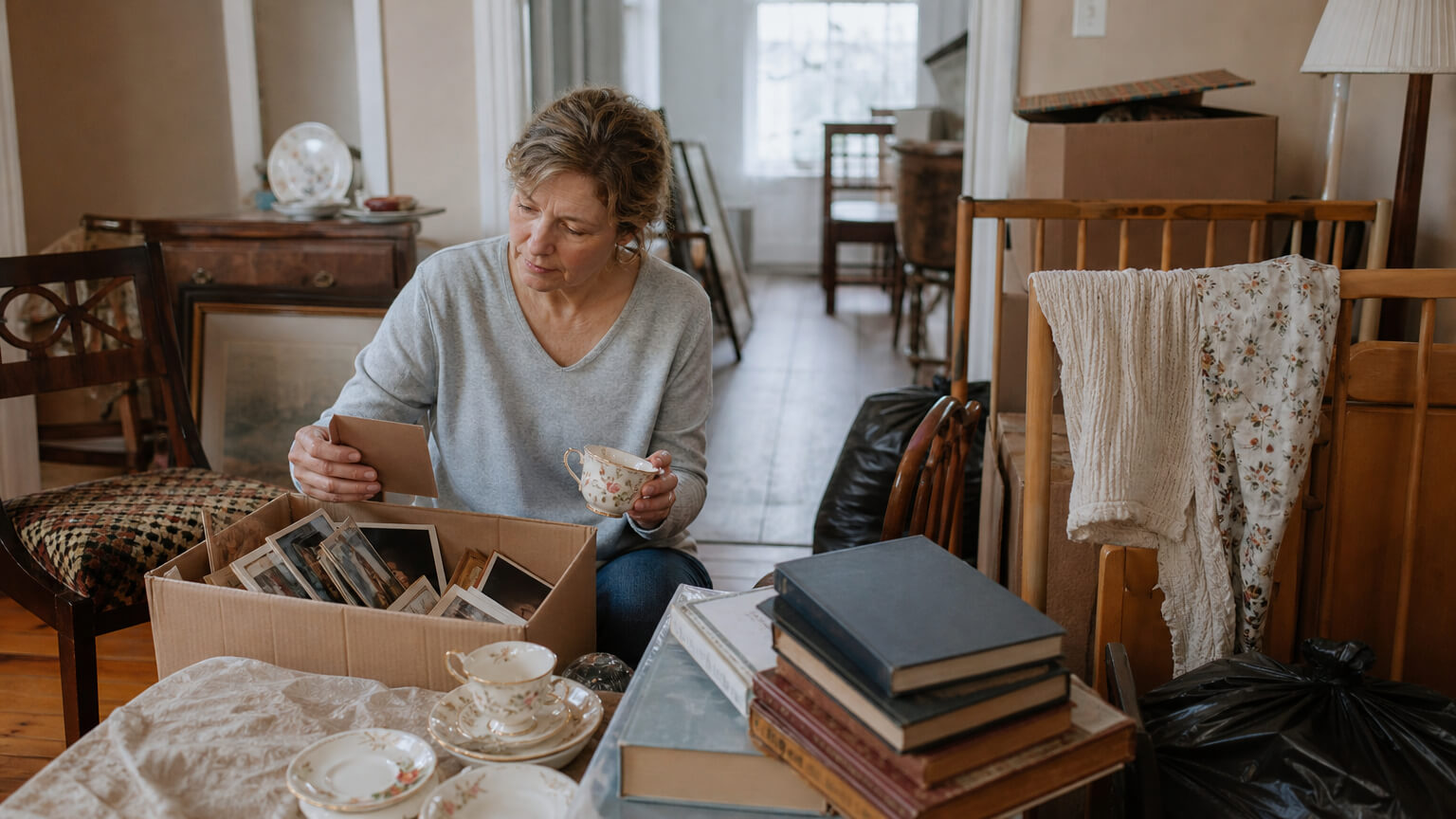
Here’s the plain answer: you’re not sentimental about the object, you’re sentimental about the person, place or time it represents, and that single reframe is why ordinary decluttering advice (“do you use it, does it spark joy”) falls apart on this particular pile. A tea towel is easy. Your grandmother’s tea towel is not, because it was never really about the tea towel.
It’s not the object, it’s what it’s standing in for. Clinical psychologist Jennifer Baumgartner, whose insight is cited in APDO’s own guidance on sentimental paperwork, puts it simply: we infuse ordinary things with the spirit of a moment, associating the tangible object with something intangible that matters far more. That’s why a stranger could look at the same box and feel nothing, while you feel everything.
Why this pile survives every other clear-out. It’s also, by most accounts, the single hardest category to get through when decluttering anything else, whether that’s a whole house or one overstuffed drawer. Every other category has a rule you can apply quickly. This one asks you to make a judgement about love, loyalty and memory, one item at a time.
You don’t have to decide everything in one sitting
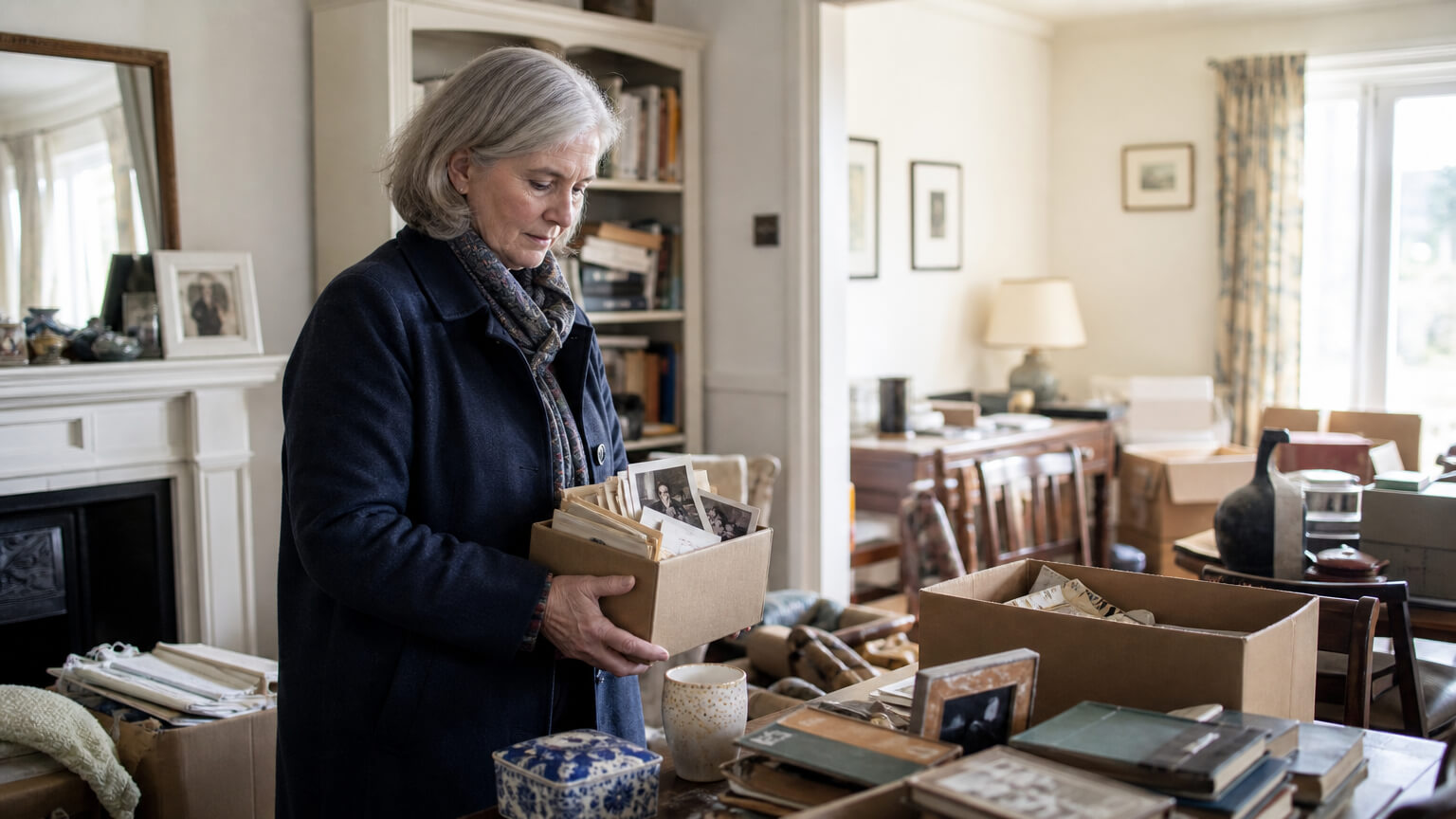
Here’s the permission most people never give themselves: you’re allowed to do this in stages. Professional guidance for exactly this situation suggests keeping around half of what you’re looking at on a first pass, and coming back to the rest later, rather than forcing a single verdict on every item today.
Permission to go slowly, especially after a loss. If you’re clearing a parent’s or relative’s home, there’s no prize for finishing in a weekend. Grief and decision fatigue are a poor combination, and a slower pace produces better decisions. Put the “maybe” pile somewhere out of the way and set a date to come back to it.
A first pass, then a second look. If you’ve tried this before and ended up putting everything back in the box, that’s not a personal failing either. It usually means you tried to finish in one go. A first pass that removes only the obvious “let go” items, followed by a calmer second look weeks later, works for almost everyone who’s stalled the first way round.
The Keep / Pass On / Let Go framework
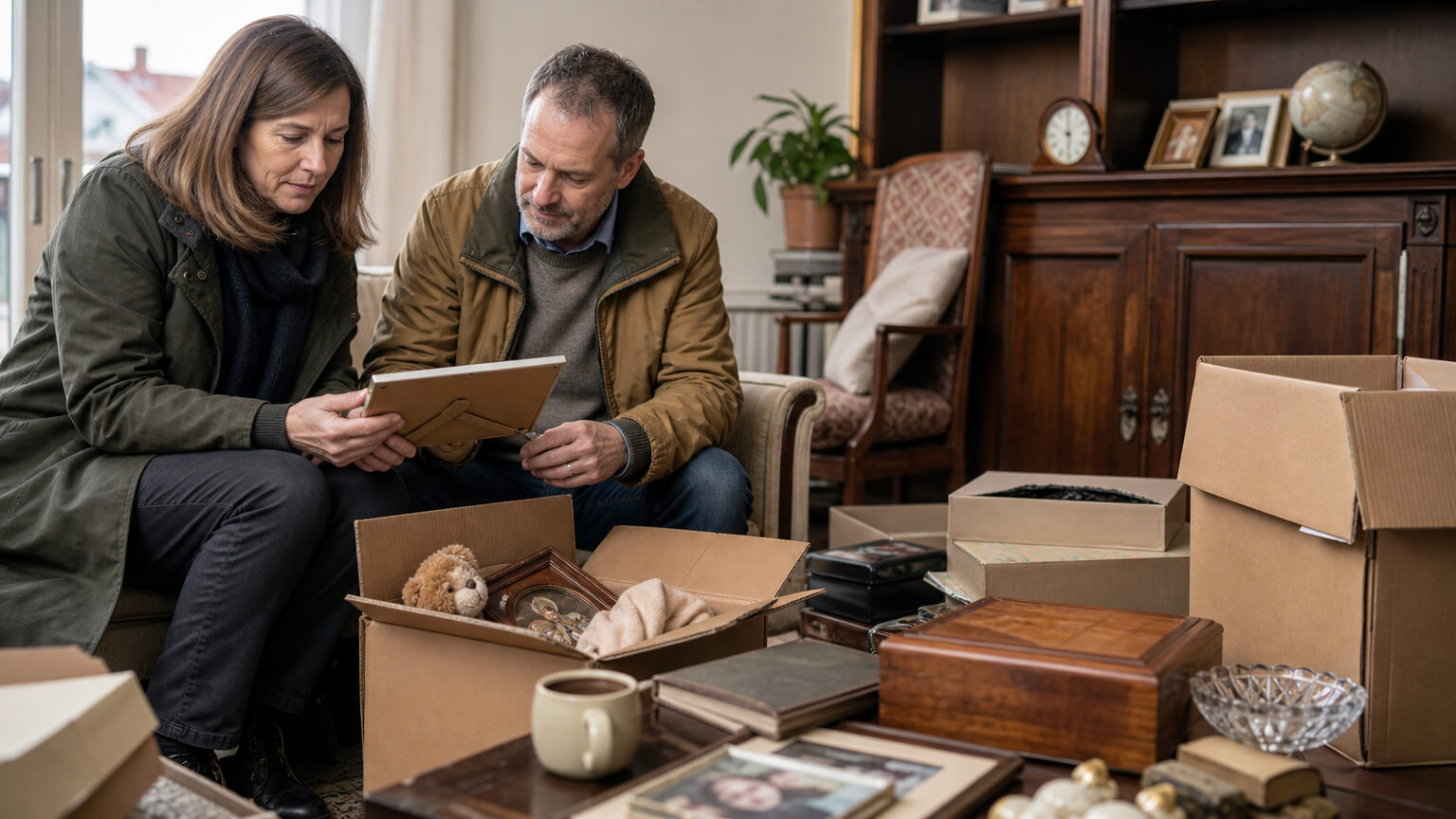
This is the part worth bookmarking. Building on guidance from APDO, the UK’s trade body for the organising profession, here’s a three branch framework that turns a vague, guilt-laden pile into three concrete questions, and it’s the one we point every customer to.
| Branch | What it looks like | What happens to the object |
|---|---|---|
| Keep | Choose the items that truly represent your values, your history, or genuinely bring you joy | It gets a real, visible place in your home, not a sealed box in the loft |
| Pass On | The item has family significance, but someone else would treasure it more than you’re currently using it | Gift it now, along with its story, to the person it should go to next |
| Let Go | You’re keeping it out of guilt, not because it adds anything to your life | Releasing it doesn’t erase the memory; photograph it or write a short note first, then let the object itself go |
Keep: what earns a real place in your life. Keep is not “everything I feel something about.” It’s the handful of things that genuinely represent who you are or who someone was to you, displayed or used, not boxed and forgotten. APDO’s own advice on children’s artwork makes the point well: keep the pieces you like best, or the ones you know took the most effort, not all of them by default.
Pass on: give the item its story, not just its shelf space. This is the part most guides skip, and it matters more than the object itself. If you hand your grandmother’s writing desk to your cousin without telling them whose it was and why it mattered, you’ve passed on furniture, not sentiment. Say who it belonged to, what it meant, and why you’re giving it to them specifically. Ten minutes of conversation is what keeps the meaning alive once the object leaves your hands.
Let go without guilt: photograph it, note it, release it. Releasing an item doesn’t erase the memory attached to it. A photograph, or a single line written down about why it mattered, holds the meaning in a form that takes up no room at all. This is the release valve for the pile of things you’re only keeping because you’d feel bad putting them in the recycling.
Applying it to inherited furniture and a parent’s belongings
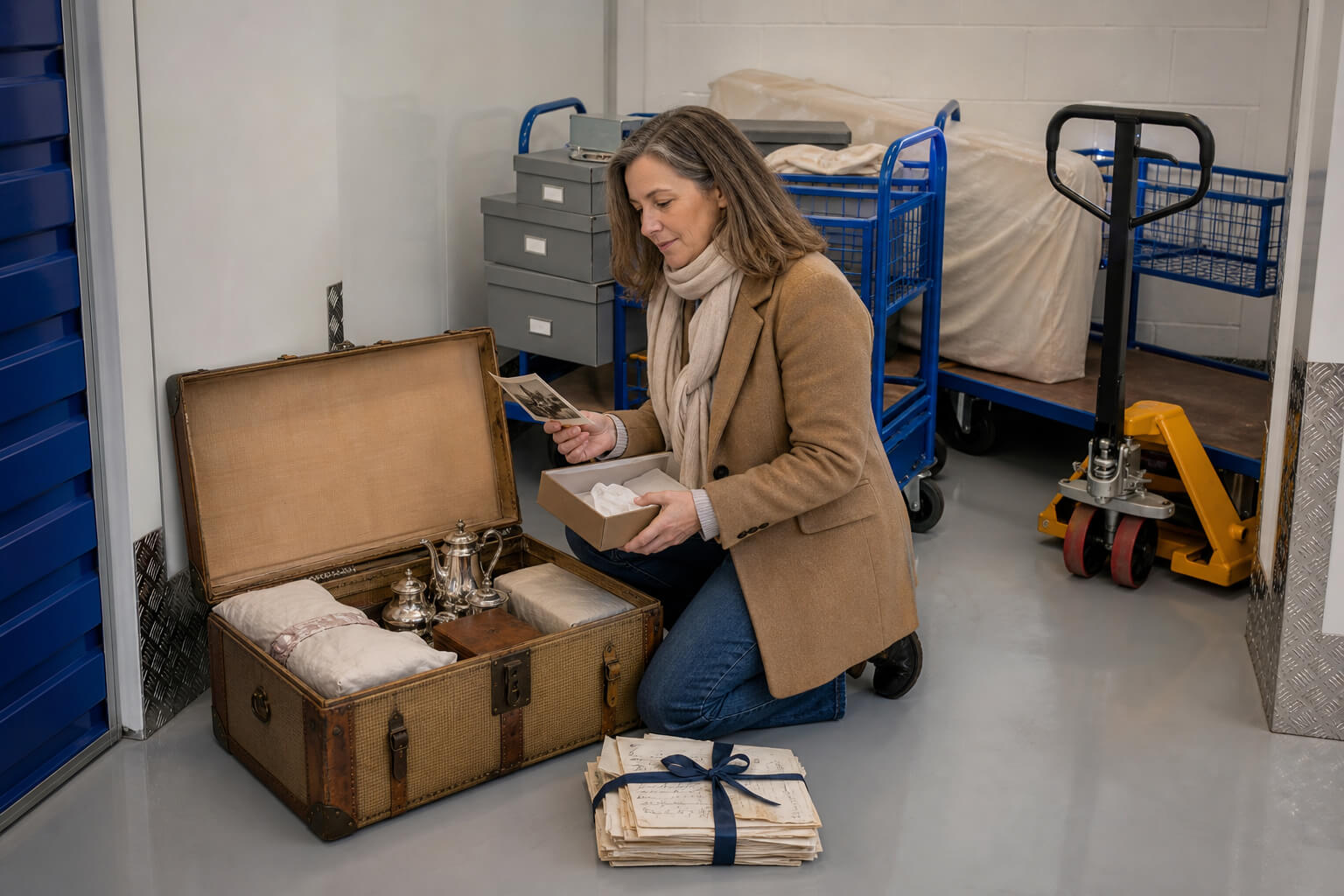
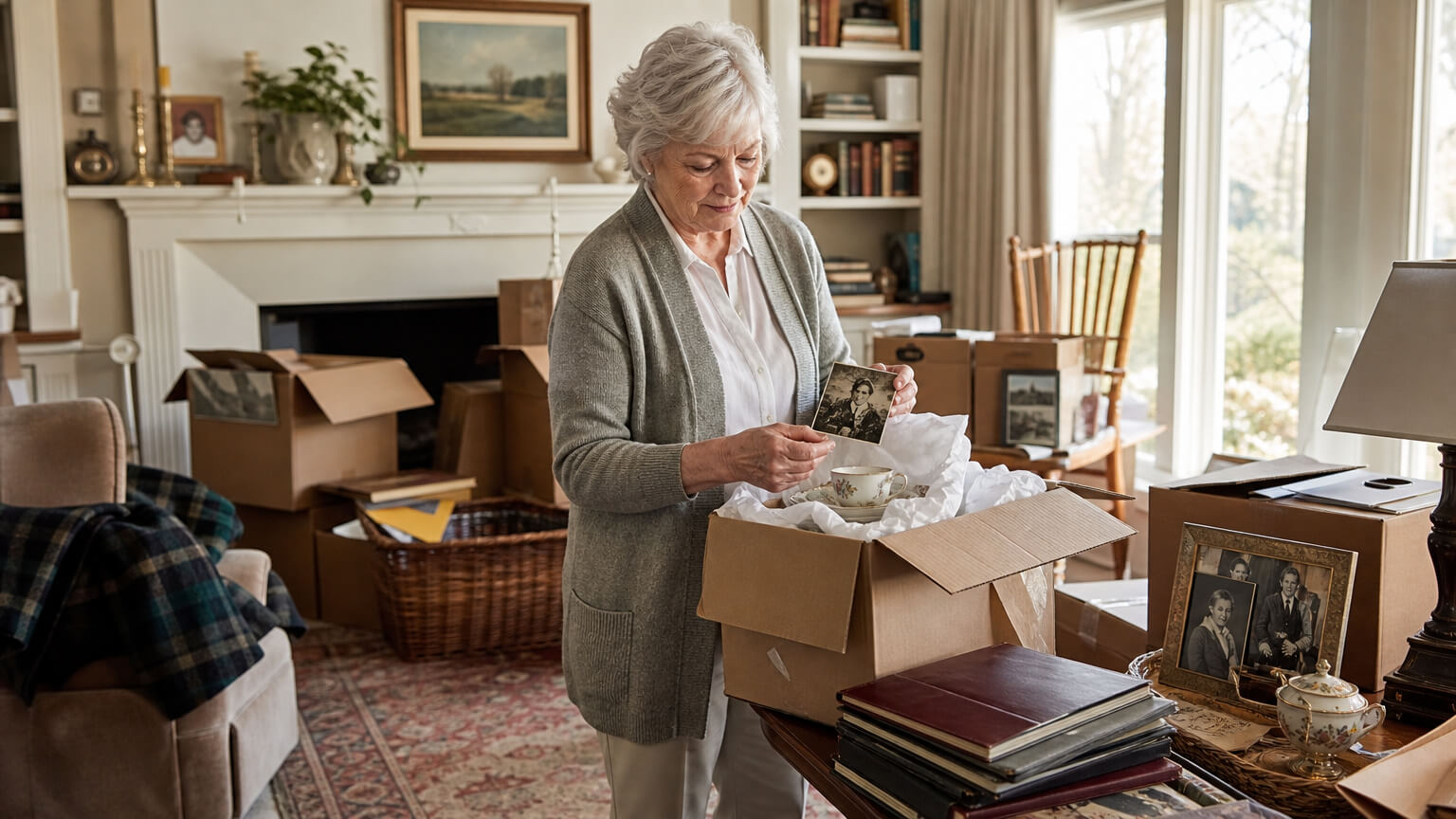
If you’re working through a parent’s or relative’s home, the one adjustment worth making is pace, and one clear distinction: separate what genuinely represents them from what was simply theirs. A dining table they ate every meal on for forty years is different from a set of paperwork that happened to be in the same drawer.
What to do with a parent’s or relative’s belongings. It’s entirely normal to feel uneasy about throwing away a parent’s things, and it’s worth saying plainly: it’s fine. Decluttering after a death asks the same question this whole framework rests on: what precisely are you sentimental about? Usually it’s the association with the person, not the object itself, and choosing one or two keepsakes to represent someone lets you release the rest with a clear conscience. If there’s an estate to settle alongside the sorting, that’s a legal and financial process, not a decluttering one, so bring in a probate professional or solicitor for that side of things.
When a piece of furniture is genuinely worth keeping the object itself. The triage isn’t a rule that says photograph everything and keep nothing physical. A genuine heirloom, something with real history, craftsmanship or provenance behind it, can legitimately earn a place as the object itself, not just an image of it. The test is the same as anywhere else here: does it bring you real joy or use, or are you keeping it because letting go feels disloyal? Only the first answer earns it a permanent spot.
Applying it to children’s artwork and school memorabilia
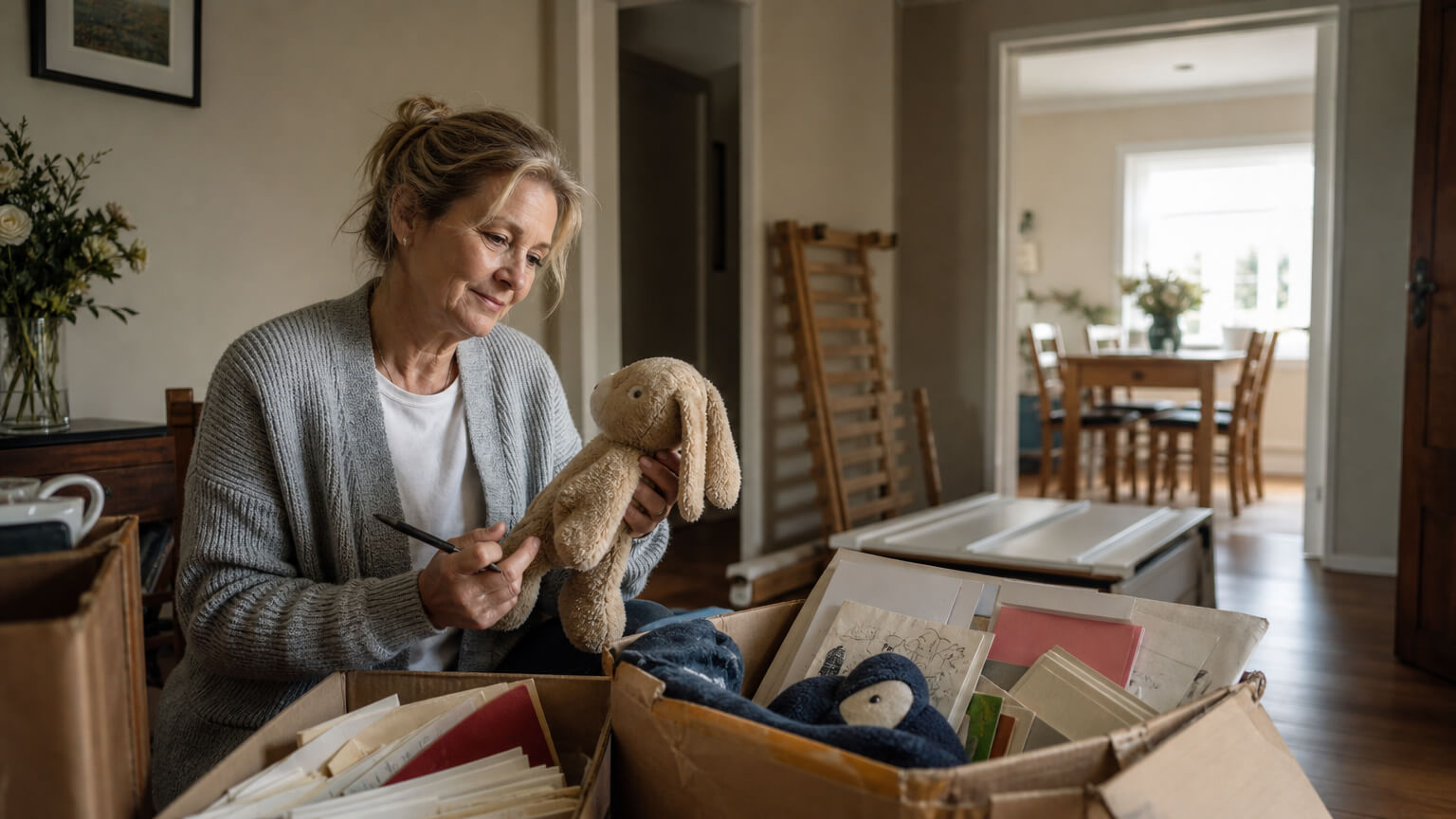
The volume problem is different here, but the answer is the same shape: choose the best, not all of it. Plan on keeping roughly half of what you’re looking at on a first pass, and don’t feel you have to make a final call on the rest today.
Choosing the pieces that actually represent them. Out of a box of twelve years of school books and pictures, a handful will genuinely stop you in your tracks: the drawing that shows real effort, the story that sounds exactly like them at seven years old. Keep those, displayed or in a proper memory box. Keep everything, and the pieces that actually mattered get lost in the pile with the rest.
What to do with the rest: photograph, repurpose, or pass on. Photograph what you’re not keeping physically and store the images together, or have a small run of favourites turned into a printed book, which several companies do affordably. Some parents send a batch to grandparents who’d love a piece with its story attached; younger schoolwork sometimes makes genuinely nice wrapping paper rather than landfill.
Here’s how that plays out. Say you’re clearing a parent’s home and find a wedding photo album, a set of good china used twice a year, forty boxes of old greetings cards, and a writing desk with no room for it at home. Run each through the four questions: the album is an instant keep, on display. The good china is a keep too, boxed between the two occasions a year it’s used. The cards get photographed for the handful with real messages, and the rest recycled without guilt. The desk goes to whichever sibling has room, or into storage for a few months while the family decides.
Skip the triage, and the desk, the china and the forty boxes of cards all end up in the same undifferentiated pile in the loft, with the album and the good china buried alongside things nobody was ever going to look at again. The framework protects the few things that matter by being honest about the many that don’t.
Where storage fits: for the pile you haven’t decided on yet
To be direct about it: storage is the answer to exactly one of the four questions, the “I genuinely can’t decide yet” one. It isn’t the first move, and it isn’t meant to be permanent. If you’ve triaged honestly and there’s still a pile you’re not ready to make a call on, that’s what it’s for, with a date set to come back to it.
A single labelled box, or a small unit, with a date to revisit. You don’t need a full unit to hold one desk or a few boxes you’re still undecided about. A single labelled box in a small unit works just as well, and it’s worth writing the revisit date on the outside of the box itself, six to twelve months out, so “for now” doesn’t quietly become “forever.”
If you’re ready to see what that costs. Wigwam’s own price guide sets out current regional rates for a small unit, so you can see roughly what holding onto that undecided pile costs before you commit to anything. A few terms are worth stating exactly: there’s no deposit, just the first four weeks upfront, a two-week minimum term, and 14 days’ notice to leave. Once that notice has been given and completed, any unused days are refunded. Sites use smart entry rather than a member of staff on the gate, are open 6am to 10pm seven days a week, and units are kept clean, dry and secure. There’s no vehicle storage and no climate control, so it suits boxes and furniture, not a car or a caravan.
A calmer way to hold what you decide to keep
Once you’ve run the triage, the goal isn’t an empty house, it’s a small set of things you’ve kept on purpose. A curated shelf of what actually matters says more about the people you loved than a sealed loft full of everything ever did.
What the framework gives you, once it’s done. A short, deliberate keep-list. Peace with everything you let go of, rather than a nagging feeling you’ll regret it later. And, over time, becoming someone who chooses what to hold onto rather than someone who’s quietly owned by boxes they can’t face. You haven’t disposed of the web those objects were part of, you’ve simply chosen the form that suits you: a photograph here, a story told at Christmas there, one desk still standing in the hallway.
If you decide some of it needs a home for now. If your triage lands on “store it” for a piece of furniture or a few boxes, our companion guide on storing sentimental items properly covers the packing and protection detail this piece deliberately leaves out, so you don’t damage the very things you decided were worth keeping.
If what’s left needs somewhere safe to sit while you finish deciding, get a quote for a small unit near you. It’s the option for whatever’s left once the hard part, the deciding, is actually done.
Frequently Asked Questions
Yes. What you’re sentimental about is almost always the person, not every individual object they owned. Choosing one or two keepsakes to represent them, and letting the rest go, honours the memory just as well as keeping everything would. If there’s an estate to settle, get advice from a probate professional or solicitor for that part specifically.
Keep the pieces that show real effort or genuinely capture who they were at that age, expect that to be roughly half of what you’re looking at on a first pass, and photograph the rest before letting the physical pieces go. A printed book of favourites, or a batch sent to grandparents, keeps the sentiment without keeping every page.
Remember that releasing an object doesn’t erase what it meant. A photograph or a one-line note preserves the memory just as well as the object does, and it’s the guilt itself, not the physical thing, that’s usually the real weight you’re carrying.
No, a single item or a small handful of boxes doesn’t need a full unit. A small unit or a labelled box within one covers a single piece of furniture or a few boxes perfectly well; you don’t need to size up just because the decision feels big.
There’s no fixed limit, but it works best with a revisit date written down, somewhere between six and twelve months out, so a “not sure yet” pile doesn’t quietly turn into permanent storage by default.
For most people it’s sentimental items specifically, precisely because the difficulty is emotional rather than practical. Every other category has a quick rule of thumb; this one asks you to weigh memory and loyalty item by item, which is why it’s worth a proper framework rather than winging it.