That renewal letter has a way of landing at the worst moment. Or maybe there was no letter at all, just the slow realisation that half the desks have been empty since the team went hybrid, and you are paying full rent on a floor nobody fills anymore. Either way, the maths says take less space. The worry that stops you signing is quieter, and harder to put a number on: somewhere in that office is the drawer, the cupboard, the filing cabinet nobody opens from one month to the next but nobody is allowed to bin either. What happens to that when the walls get smaller?
In a hurry? Pick your situation.
- Renewal notice just landed, need the cost picture fast: jump to does storage actually cost less than the office it replaces.
- Team’s gone hybrid and the office is half-empty: jump to how much space your overflow drawer actually needs.
- Worried about GDPR or client confidentiality if files move off-site: jump to who’s responsible for compliance.
- Rent or rates just went up, need to move quickly: jump to the cost section, then the commitment section.
Does downsizing your office mean losing access to what’s in it?
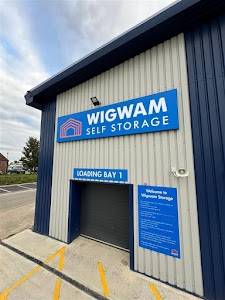
No. Moving the files and equipment you rarely touch into self-service storage does not cut you off from them. Wigwam’s business storage is unmanned and self-service: you get your own smart-entry code, you retrieve your own boxes, and you can do it between 6am and 10pm, seven days a week, with no staff involvement and no per-visit fee to arrange first.
Why downsizing gets framed as a loss
Cutting office space usually gets read as a step backwards, as if the business needs less room because it is doing less. That framing misses what is actually happening in most downsizing decisions: a lease-renewal deadline, a hybrid team, or a rent rise that has made the case to stop paying for square footage nobody uses. Shrinking the office is not a retreat. It is the decision to stop funding the drawer’s postcode while keeping everything the drawer holds exactly as reachable as it was.
What actually changes versus what doesn’t
What changes is the number on the lease and the rates bill. What doesn’t change is your ability to walk in, open the unit, and pull the file you need. The overflow drawer moves. Your access to it doesn’t.
Does storage actually cost less than the office space it replaces?

Broadly, yes, and the reasons are structural rather than a single headline number. A storage unit carries no business rates, no utilities bill, and no legal fees for taking one on or leaving one, none of which is true of leased office space.
What a storage unit removes from your overheads
Office rent rarely arrives alone. Business rates, heating, lighting, and the legal cost of signing or exiting a lease all sit on top of the headline figure. None of that applies to a storage unit. There are no business rates on it, no utilities bill, and no legal fees for taking a unit or for leaving one. That is a genuine, structural saving on the square footage you no longer need to occupy as office space, separate from whatever number you eventually agree for the unit itself. Wigwam does not publish a single headline storage price because the honest answer depends on your town and the size you need; the pricing pillar and the quote tool give you the real, local figure rather than a number that would be wrong for half the readers who see it.
What the wider market is seeing in 2026
Directionally, reports suggest flexible and serviced office desk costs in 2026 run from several hundred pounds a month in London down to a couple of hundred pounds a month in regional UK cities, so every desk you remove from the office has a real monthly cost attached to it that a storage unit simply does not carry. Treat that as a general market signal rather than a quote for your own lease. Separately, if you are weighing what happens to the office space you are giving back, England-based businesses get three months of empty property relief on business rates for a vacant unit before full rates resume; that is an England-specific rule from gov.uk, not a UK-wide one, so check it against your own jurisdiction before relying on it.
How much office space does your overflow drawer actually need?
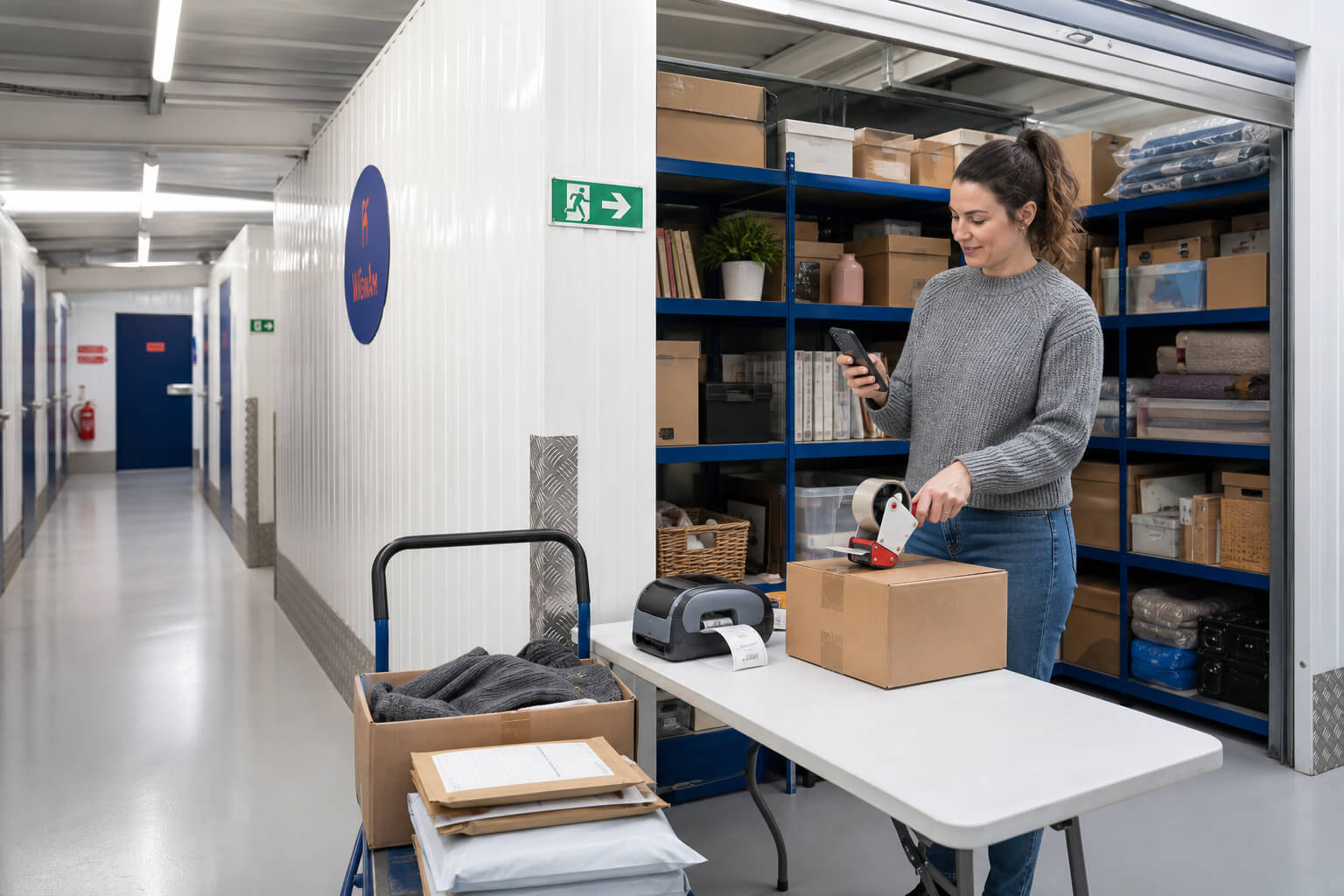
Less than you’d think. As a rough guide, a 25 sq ft storage unit holds around 40 to 50 standard archive boxes, and a 50 sq ft unit holds around 90 to 100. Most offices are keeping far more square footage aside for “just in case” than the contents actually require once they’re properly boxed.
The worked example: a 12-person practice downsizing 600 sq ft
Picture a 12-person accountancy practice moving from an 1,800 sq ft office to a 1,200 sq ft serviced suite, giving up 600 sq ft to cut desk-driven rent. That 600 sq ft currently holds four four-drawer filing cabinets of archived client records, which consolidate down to roughly 120 to 150 standard boxes, plus six spare desks and chairs from an earlier headcount, plus a pallet of stationery stock. The archive alone needs somewhere around a 50 to 70 sq ft unit. Add the furniture and stock and the whole lot fits comfortably inside a 75 to 100 sq ft unit, a small fraction of the 600 sq ft it replaces. Every box in that unit stays reachable on the practice’s own schedule, 6am to 10pm, seven days a week, with their own smart-entry code, no different in practice from opening the old filing cabinet, except the space it now sits in costs far less and carries no business rates. These figures are illustrative; confirm exact unit sizes and quantities with Wigwam before committing to a move.
| Unit size | Approx. box capacity | Typical office footprint it replaces |
|---|---|---|
| 25 sq ft | 40–50 boxes | A single filing cabinet run or small archive corner |
| 50 sq ft | 90–100 boxes | A full archive room or several filing cabinets |
| 75–100 sq ft | 150+ boxes plus furniture/stock | An entire storeroom or surplus-desk area |
What this looks like for a smaller or larger office
A smaller team with a single filing cabinet and a couple of spare desks will usually sit comfortably in the 25 sq ft band. A larger office giving up a full storeroom, several cabinets, and retired furniture will likely need the 50 to 100 sq ft range. Either way, the exercise is the same: box it, count it, then size the unit to what you actually have rather than the room you’ve always given it.
What’s the day-to-day process, booking, access, retrieval?

There’s no booking to arrange and no staff to go through. You get your own smart-entry code, and you can use it between 6am and 10pm, seven days a week, to get to your own boxes whenever you need them.
Getting a file back on your own schedule
For a hybrid team that isn’t in the office every day, this matters more than it sounds. Someone working from home who needs a contract from three years ago doesn’t need to wait for an office day or ask a colleague to dig it out. They visit the unit, enter their own code, and retrieve the file themselves. See the full access and security detail for exactly how the smart-entry system and individual unit alarms work.
What happens outside 6am to 10pm
To be straightforward about it, this is not a 24-hour facility. Access runs 6am to 10pm, seven days a week, and that’s a real boundary, not a technicality. If your business genuinely needs round-the-clock retrieval of physical files, plan around that window rather than assuming an exception exists.
Who’s responsible for GDPR compliance if files move off-site?

You are. Moving your archive into a storage unit does not transfer your GDPR responsibilities to Wigwam; you remain the data controller for the personal data in your own archive throughout.
What Wigwam is (and isn’t) responsible for
Wigwam provides the space, the smart-entry security, and the individually alarmed unit. No Wigwam staff hold keys or backup access codes to your unit, and there is no indexing, shredding, or managed chain-of-custody service on offer; this is self-service storage, not a managed records provider. What that means for compliance is simple: you are still the one who decides who can access the archive, how long records are kept, and how they’re eventually disposed of. This is general information, not legal advice; for specific compliance questions, speak to your own data protection officer or solicitor.
Why this is a strength, not a gap
It would be easy for a storage provider to imply it takes compliance off your hands, and easier still for a reader worried about GDPR to want to hear that. Wigwam doesn’t say it, because it isn’t true. Staying plain about where responsibility sits, rather than dressing up a storage unit as a compliance service, is exactly the kind of honesty that should reassure a compliance-anxious admin more than a vaguer promise would.
Self-storage versus a managed records-storage service

Self-storage keeps you in same-day, physical control of your own archive. A managed records service takes that control off your hands, and typically charges for the privilege every time you want something back.
What you give up with a managed service
Managed records providers generally charge per box stored, per retrieval, and sometimes per redelivery, with lead times commonly running 24 to 48 hours to get a single file back. You gain a “managed” label; you lose same-day access and you pay for the difference each time you need a document.
What self-service keeps you in control of
With self-service storage, there’s no per-retrieval fee, no lead time, and no third party standing between you and your own filing cabinet. Your own smart-entry code, your own schedule, 6am to 10pm, seven days a week, and the archive stays exactly as reachable as it was on your old office floor, just in a cheaper postcode.
What’s the commitment if your downsizing plan changes?

The minimum term is two weeks, and if your plans change, two weeks’ notice gets you out. Unused days and your deposit are refunded once you’ve vacated and settled the account.
The minimum term and notice period, exactly
You’re committing to two weeks minimum, and if you decide to leave, you give two weeks’ notice. That’s the full extent of the lock-in, considerably lighter than a commercial lease renewal.
How the deposit and unused days come back
This is a separate step from giving notice, not the same moment. Once you’ve vacated the unit and settled your account, any unused days and your refundable deposit come back to you. It isn’t “no deposit”, there is a deposit, and it’s genuinely refundable once that process has run its course.
See what it costs for your own overflow drawer with a quick quote before you sign anything on the smaller office.
Is this the right move for your business right now?
If your office holds an overflow drawer you touch twice a year, storage lets you shrink the lease without shrinking your access to what’s in it.
Recap: cost, access, control
No business rates or utilities on the unit, self-service access on your own schedule, and you stay the data controller for your own archive the whole way through. Three separate reassurances, all pointing the same direction: smaller footprint, same reach.
Talk to Wigwam before you sign anything
Whichever of these is driving your decision, a renewal letter, a half-empty hybrid office, or a rates rise you didn’t budget for, the sizing and the cost only become real once you’ve had a quote for your own town and your own boxes. Get a quote before you finalise the smaller lease. If you want the deeper cost mechanics, our companion article on business storage versus renting extra office space covers the full comparison, and if the question is really about how long you need to keep the records at all, our guide to how long UK small businesses need to keep financial records answers that directly rather than guessing here. For further reading on business storage generally, browse the business storage hub, Wigwam’s business storage range, or find your nearest Wigwam location.
Frequently Asked Questions
Directionally, yes: a storage unit carries no business rates, no utilities bill, and no legal fees for taking one on or leaving one, all of which apply to leased office space. There’s no single headline price because it depends on your town and the size you need, so use the pricing pillar or get a live quote rather than relying on a generic figure.
Yes, within the facility’s own hours. Access runs 6am to 10pm, seven days a week, using your own smart-entry code with no staff involvement. It is not a 24-hour facility, so plan around that window rather than assuming out-of-hours access beyond it.
You are. You remain the data controller for the personal data in your own archive; storing it off-site doesn’t transfer that responsibility to Wigwam. This is general information, not legal advice, so speak to your own data protection officer or solicitor about the specifics of your situation.
As a rough guide, a 25 sq ft unit holds around 40 to 50 standard boxes and a 50 sq ft unit holds around 90 to 100. A busy archive with furniture and stock included might need 75 to 100 sq ft, still a fraction of the office space it replaces. Confirm exact sizes and quantities with Wigwam before committing.
The minimum term is two weeks, and two weeks’ notice gets you out if plans change. Unused days and your deposit are refunded once you’ve vacated and settled the account, a separate step from giving notice, not the same moment.