Boxing up something irreplaceable and handing it over to a storage unit feels like a risk. There’s a question that stops a lot of people booking before they even get to the practical bits: will this need some special climate-controlled unit? Here’s a straight answer, not a listicle.
Just want the climate-control answer? Start below. Already know what you’re storing, whether that’s photographs, textiles, wood, metal or jewellery? Jump straight to the reference table. Still not sure what to keep, or want the full packing walkthrough for every item type? Read on to the end, where we point you to the right guide.
Do You Need Climate-Controlled Storage to Preserve Your Keepsakes?
No. The National Archives, the UK’s own archival authority, is clear that what damages sentimental items is an unstable environment, not the absence of climate control. Its guidance names attics and lofts as risky specifically because of large swings in temperature and humidity, not because they lack a thermostat. A clean, dry, secure unit that stays stable, combined with the right preparation before anything goes in a box, does the job that a loft can’t.
Why the climate-control myth exists
It’s an easy myth to fall for, because museums and archives really do control temperature and humidity to precise specifications, and it’s natural to assume your grandmother’s wedding album needs the same treatment. It doesn’t. Even the National Archives’ own guidance for people without access to a purpose-built archive points toward “cool, dry, well-ventilated conditions” as the realistic, correct target, not laboratory-grade climate control. That’s exactly what a stable self storage unit already offers.
What The National Archives actually says
Its guidance on removing risks to archives is direct: “Don’t store archives in locations where there can be large variations in the environment, such as attics,” and “a stable environment is vital.” Nothing there calls for climate control. It calls for stability. The same guidance also recommends keeping items off the floor, out of direct light, and boxed in quality materials, three practical steps anyone can take before they ever book a unit.
What Actually Damages a Keepsake
Four things do the real damage: instability, damp, light and floor-level contact. All four are named by the same National Archives guidance, and all four are things a garage or loft struggles with precisely because they’re exposed to the outside world.
Instability and temperature swings
A loft heats up under a summer roof and drops close to freezing in winter. That swing, repeated over months, is what warps wood, cracks photographs and stresses fabric. It’s the swing that does the damage, not the absence of a thermostat.
Damp, light and floor contact
Damp gets into anything left directly on a concrete floor or against an exterior wall. Light, especially direct sunlight, fades photographs and yellows paper over time. And anything stacked straight on the floor is first in line if there’s ever a flood, however unlikely. The National Archives recommends keeping shelving at least two inches off the ground for exactly this reason, and it’s a habit worth carrying into any storage unit, not just a purpose-built archive.
The Keepsake Preservation Reference
Translate that into practice and it comes down to four common item types, each with its own main threat and its own straightforward fix.
How to use this table: find your item type, then follow the “what actually protects it” column before you pack.
| Item type | Main threat | What actually protects it |
|---|---|---|
| Photographs & documents | Light, humidity swings, direct contact | Acid-free tissue or sleeves, upright in rigid boxes, kept dark and off the floor |
| Textiles & clothing | Damp, creasing, pests | Clean and fully dry before packing, breathable cotton covers (never sealed plastic), off the floor |
| Wooden furniture | Damp, cracking from swings, damage in transit | Breathable dust covers (not plastic), raised off the floor, disassembled where possible |
| Metals & jewellery | Tarnish, damp | Anti-tarnish cloth, wrapped individually, away from rubber or plastic contact |
The common thread across all four: stability, staying dry, staying out of the light, and using the right materials. None of it needs climate control. All of it needs you to do your part before the box goes in.
A Worked Example: Preserving a Family Keepsake in Bath
This is one illustrative example, not a promise your circumstances will match exactly, but it shows the principle in action.
What she did before boxing anything up
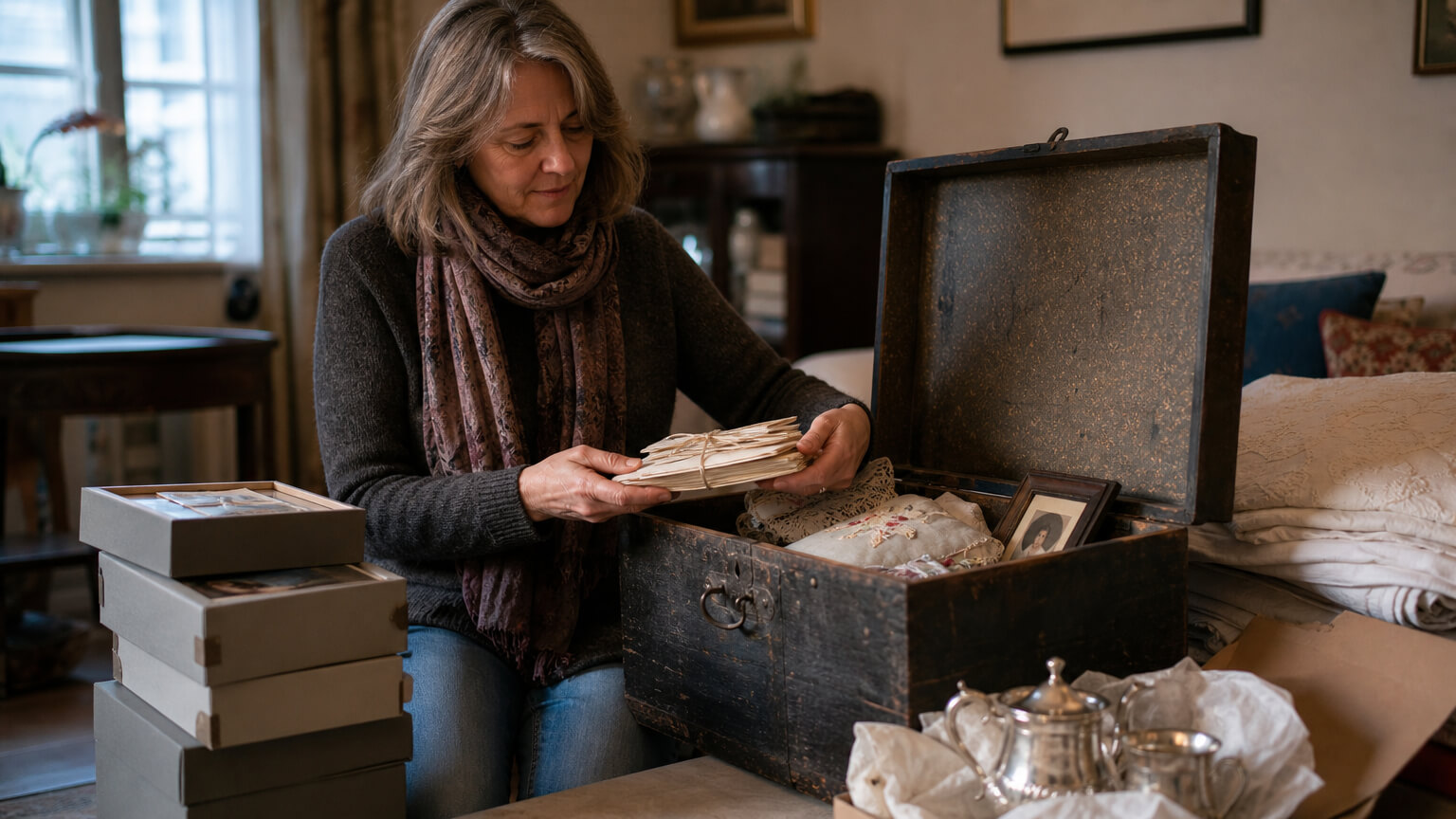
A reader storing her late mother’s wedding photo album, a box of hand-written letters and a small inherited jewellery box while she finished a house renovation did four things before anything went into a box. She let the letters air-dry fully. She interleaved the photographs with acid-free tissue and stored them upright rather than flat. She wrapped the jewellery in anti-tarnish cloth. Then she booked a small unit at Wigwam Self Storage Bath, and raised the box onto a shelf rather than stacking it directly on the unit floor.
Nothing here needed a climate-controlled unit. It needed twenty minutes of correct preparation and a stable, dry, secure space to put it in.
What would have happened in the garage instead
Left in a garage, the same items face the real threat: damp warping the letters, temperature swings accelerating the fading of the photographs, and no protection from floor-level moisture. It was never a case of “no climate control.” It was instability and no preparation, the two things a time capsule guards against and a laboratory freezer was never designed to.
Why a Wigwam Unit Is the Stable, Dry, Secure Space This Needs
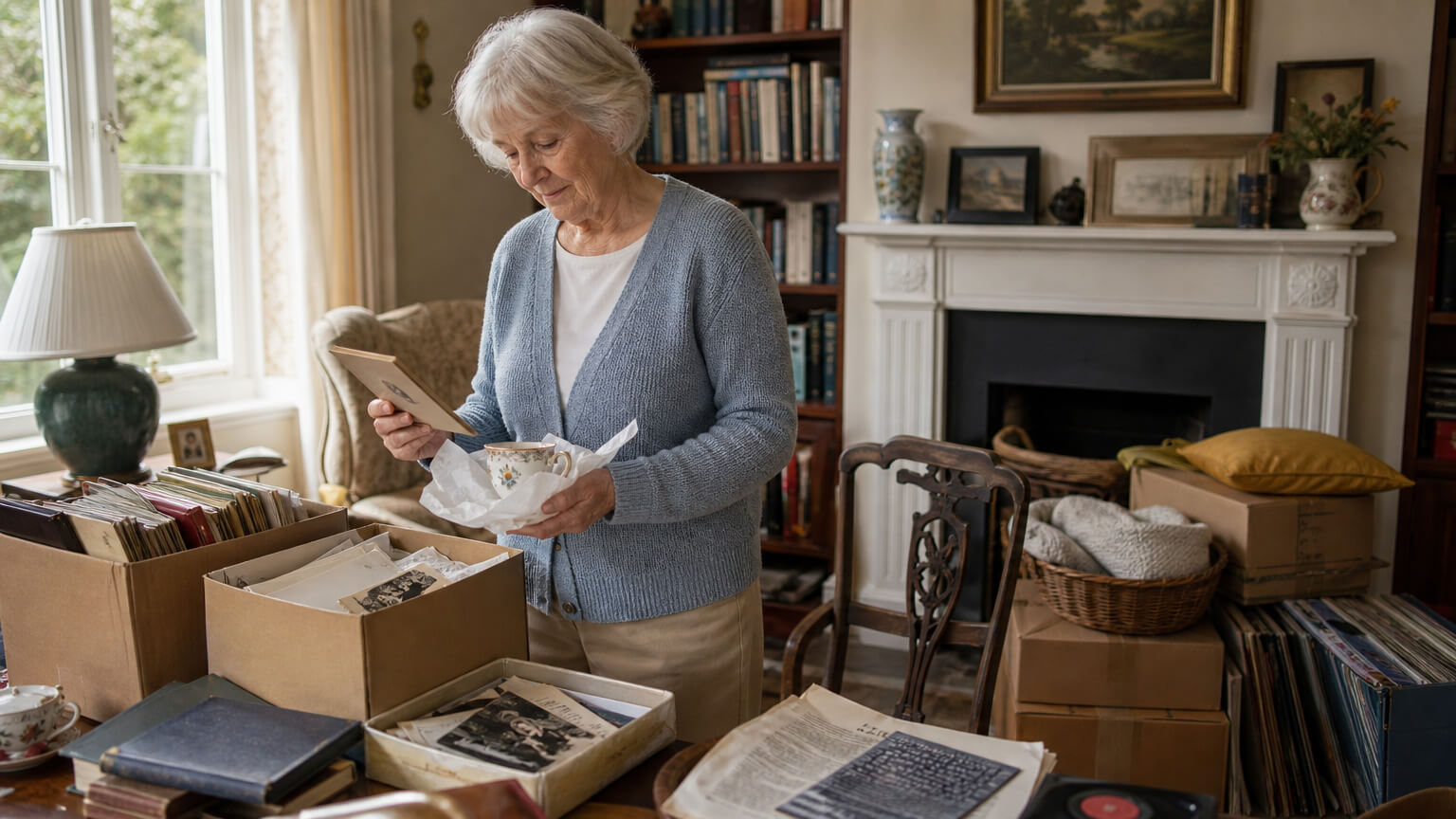
Wigwam’s units are built for exactly the four levers above: clean, dry, secure, and accessible when you actually need them.
Access when you actually need it
You can get to your unit any time between 6am and 10pm, seven days a week, using smart entry. No need to work around anyone else’s opening hours.
Notice and unused days
Two separate things worth knowing. First, no deposit is required to take out a unit, though you’ll need to give 14 days’ notice when you’re ready to leave. Second, if you’ve paid for days you don’t end up using, those are refunded. It’s worth keeping those as two distinct points rather than one blurred promise.
Individually alarmed, unmanned sites
Every unit is individually alarmed. Sites themselves are unmanned, so there’s no on-site staff wandering the corridors, which is part of how the access window stays so wide. It’s a quieter, more private way to store something sentimental than you might expect, without the trade-off in security that “unmanned” sometimes implies elsewhere.
Ready to get your keepsakes somewhere stable? Get a quote for a small unit.
When to Consider Specialist Conservation Advice
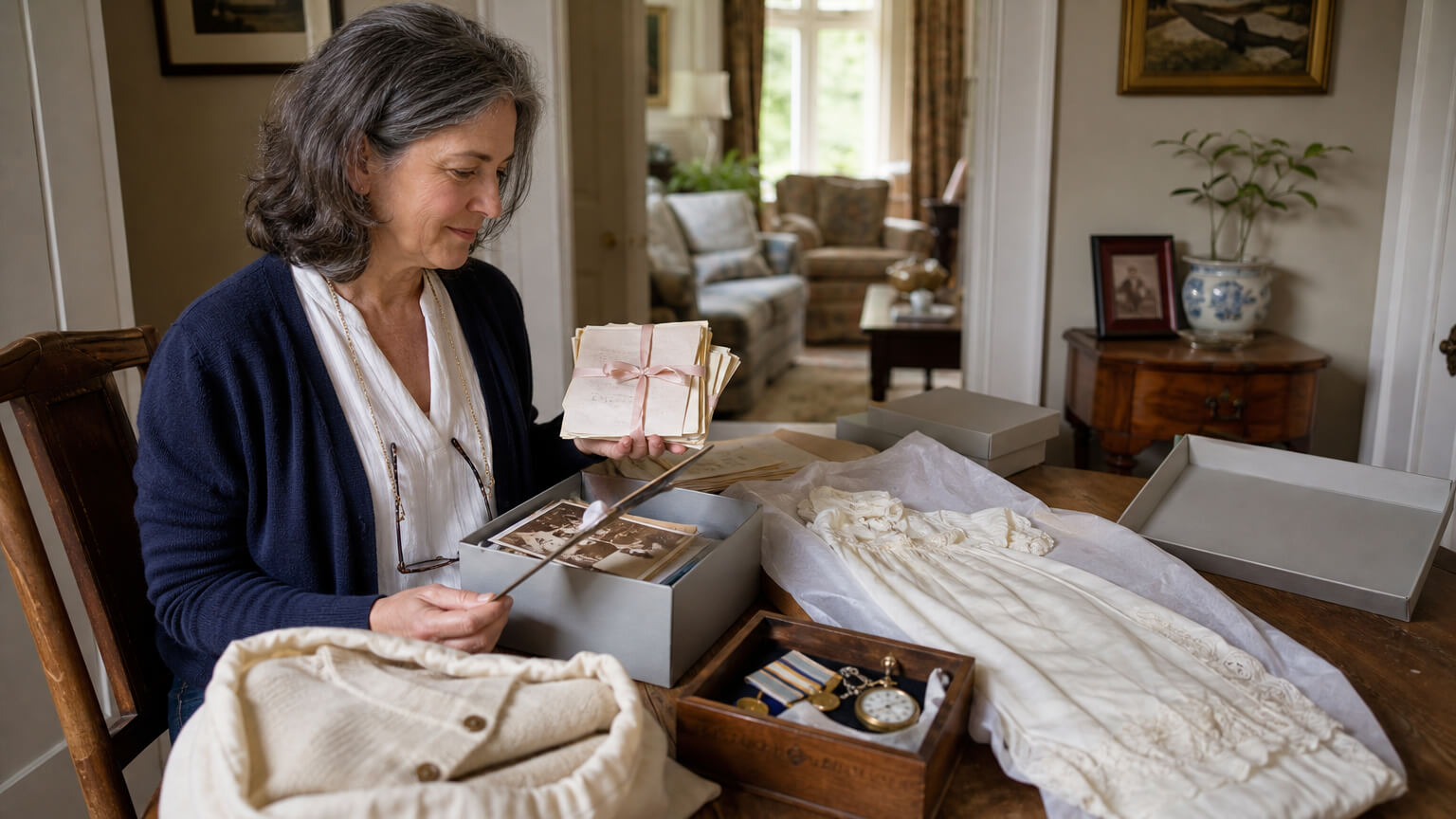
Ordinary self storage isn’t a substitute for archival-grade conservation, and for a small minority of items, that’s worth saying plainly rather than glossing over.
Signs an item may need more than storage
If what you’re storing is a genuinely rare or high-value original, a museum-grade document, or a piece of fine art, it’s worth taking specialist conservation advice alongside or instead of ordinary storage. A time capsule protects most things well. A handful of things need a museum, not a capsule, and there’s no shame in recognising which one you’ve got.
Still Deciding What to Keep, or Want the Full Packing Walkthrough?
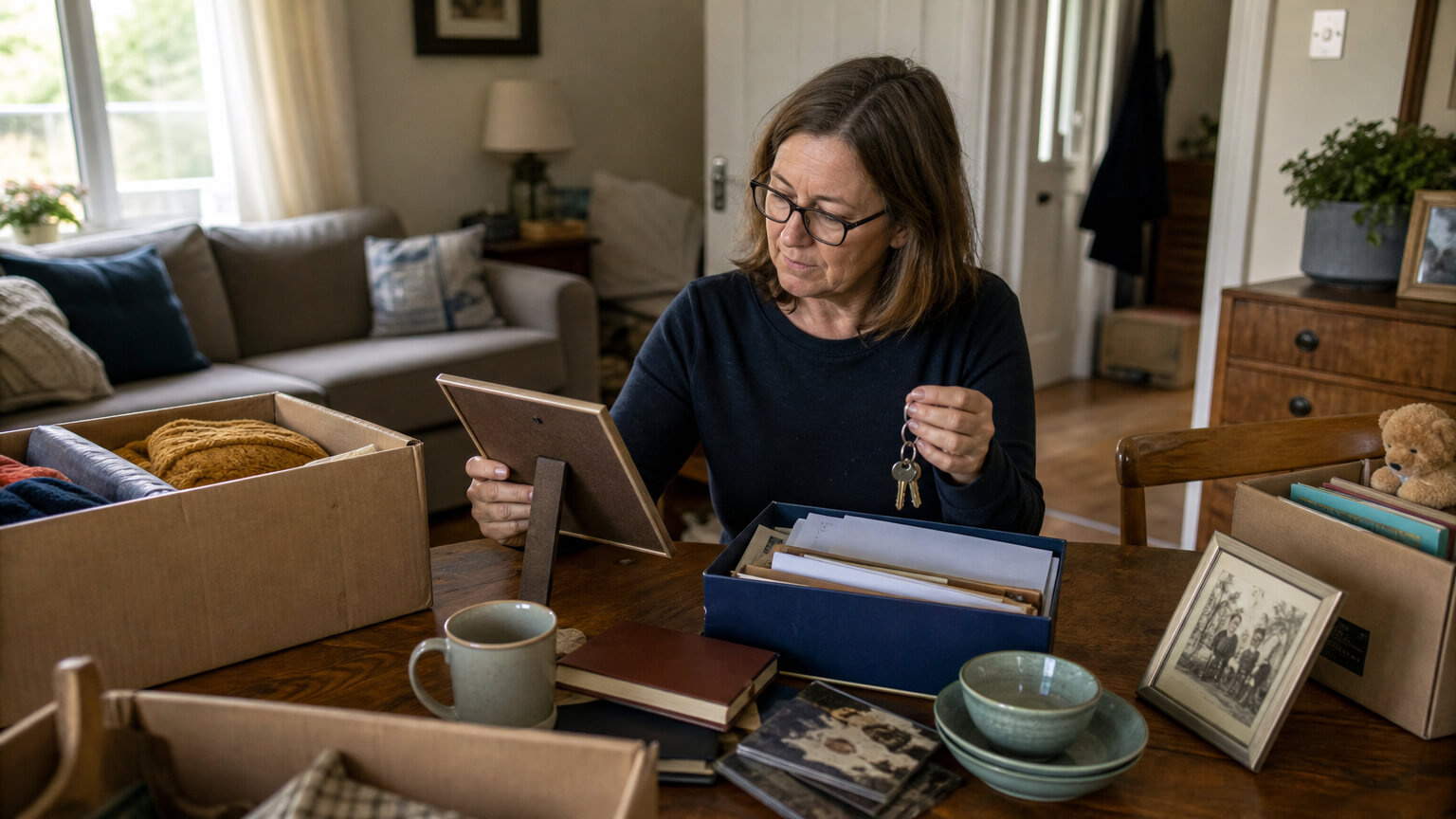
This page answers one question narrowly: how to preserve something you’ve already decided to keep. Two related questions sit just outside that scope.
If you want the full item-by-item packing walkthrough, including how storage compares with leaving things in the loft or the skip, read Self Storage For Sentimental Things (Not the Loft, Not the Skip). If you haven’t decided what to keep yet, our guide on what to do with sentimental items you can’t throw away but don’t have room for walks through that decision instead.
Get Your Keepsakes Into a Stable, Dry, Secure Space
What preserves a keepsake is stability and the right preparation, not climate control. Once you know that, the next step is simple.
Get a quote for a small unit, or if you’d rather read the full packing walkthrough first, see the complete sentimental-items storage guide.
Frequently Asked Questions
No. A stable, dry, secure unit combined with correct preparation, such as acid-free tissue and upright storage, does the job. Climate control isn’t required for ordinary family keepsakes.
Generally yes, because a unit avoids the temperature swings and damp that make lofts and garages risky in the first place. The National Archives names exactly this instability as the real threat.
Keep them out of direct light, interleave them with acid-free tissue, store them upright in rigid boxes rather than flat, and keep them off the floor.
You don’t need to fill a unit to make storage worthwhile. Wigwam offers a range of unit sizes, so you can book something appropriate to what you’re actually storing and get an exact size and quote at quote.wigwamstorage.co.uk.
You’ll need contents cover in place for anything you store, whether that’s through Wigwam’s own cover or proof of your own equivalent policy. Speak to the team about the right option for what you’re storing.