The garage is the room everyone leaves until the final week, because it’s the least homely and the most physically awkward. By then there’s no slack left if something in it turns out to be a problem. Here’s the thing worth knowing before you start: some of what’s in there, nobody is actually allowed to move.
Got fuel, paint, gas canisters or fireworks in there? Jump straight to the hazard-disposal section. Mostly tools, bikes and garden kit? Skip to packing mechanics. Whole garage heading into storage, not just the van? Jump to sizing. Not sure whether something’s allowed? Start with the sort table below.
The One Thing to Sort Before You Touch a Single Box
A removal firm and a Wigwam storage unit refuse almost the same short list: fuel, paint, solvents, gas canisters and fireworks. Deal with that list first, days before moving day, not on it.
Why the garage is different from every other room
Every other room’s packing question is how to fit things in a box. The garage’s real first question is whether you’re even allowed to move something at all, and that’s a question worth answering early, not at the van door in front of the removal crew. Most moving-day stress comes from things you didn’t see coming, and a fuel can or a tin of old paint refused at the last minute is exactly that kind of surprise, entirely avoidable if you sort it a week ahead instead.
The Garage Sort Table: What Passes and What Doesn’t
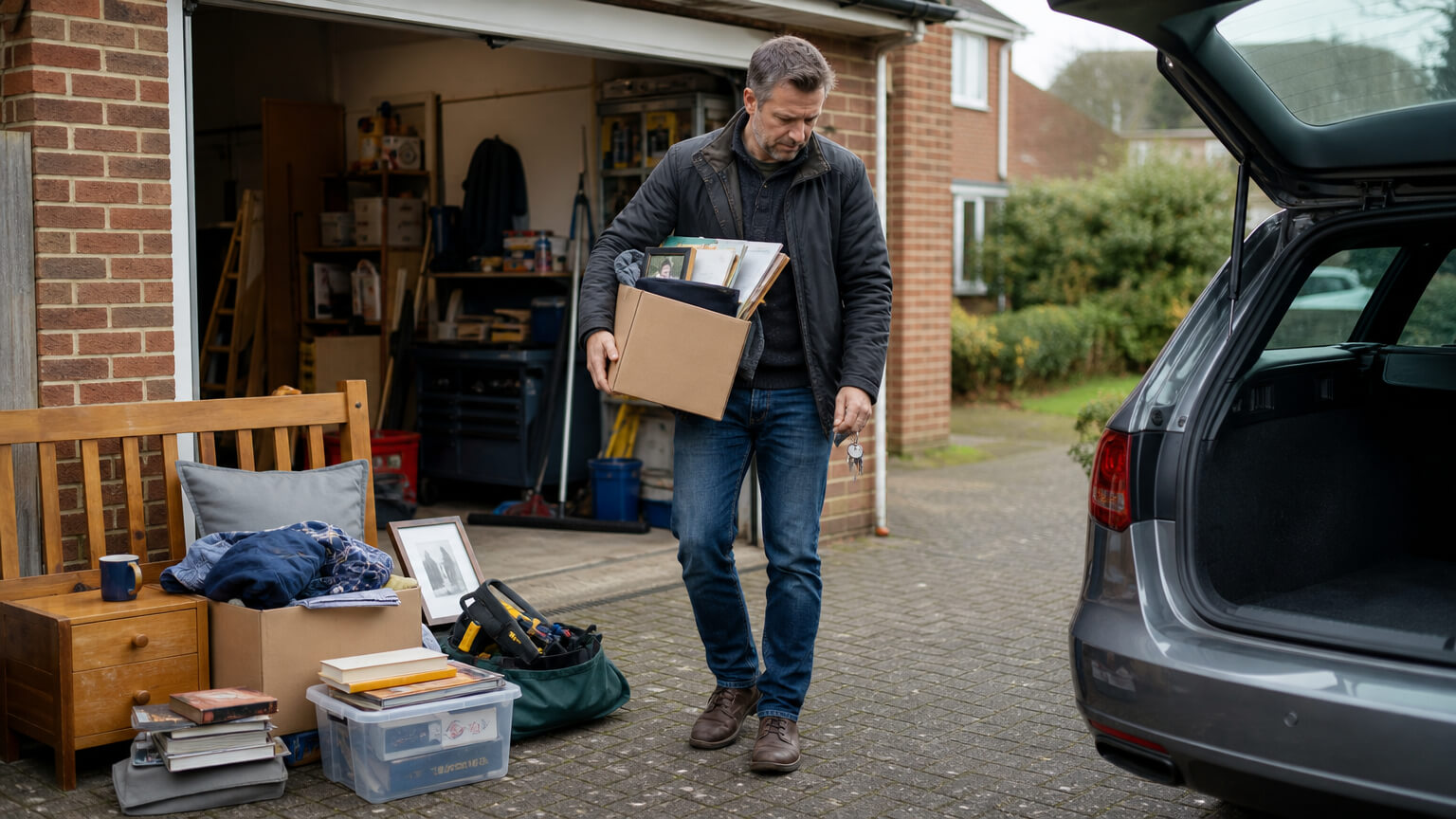
Most of a typical garage, tools, bikes, garden hand tools, sails through both the mover’s rule and Wigwam’s rule without a second thought. It’s a small, nameable handful of items that need separate handling, and this table shows which. Work down it category by category rather than trying to remember the whole list at once, it’s easier to check as you go than to hold it all in your head.
| Category | Gate check | What to do with it | Wigwam-permitted for storage? |
|---|---|---|---|
| Fuel, paint, solvents, gas canisters, fireworks | Fails, neither the removal van nor a Wigwam unit will take these | Use up, hand to a neighbour or community group, or take to the council household waste site before moving day | No, explicitly prohibited |
| Old chemicals, cleaning products, fertiliser, anything damp | Fails | Dispose via council hazardous waste guidance, don’t box it just in case | No, explicitly prohibited |
| Power tools | Passes | Remove batteries, wrap blades, box in original cases where possible | Yes |
| Hand tools, small hardware | Passes | Toolbox or heavy-duty bin, hardware bagged and labelled | Yes |
| Bikes | Passes | Loosen or turn handlebars, remove pedals if space is tight | Yes |
| Garden equipment, non-fuel | Passes | Bundle long-handled tools, wrap sharp edges | Yes |
| Garden equipment, fuel-powered | The tool is fine, the fuel inside it isn’t | Drain fuel and oil before packing or storing | Yes, once drained |
| Seasonal or DIY leftovers, paint tins, half-used adhesive | Usually fails if still liquid or wet | Use up, give away, or dispose responsibly | Depends, check before boxing |
The handful of items that need dealing with first
Fuel, paint, gas canisters and fireworks are the ones worth sorting a week out, not the night before. Once those are gone, everything else in the garage is genuinely straightforward.
Everything else: the stuff that just needs boxing
Tools, bikes and garden kit pack like anything else in the house. There’s no special hazard consideration once the handful above is out of the way.
Dealing With Fuel, Paint and Anything Else That Fails the Gate

For anything that fails the gate check, the fix is simple, but it needs to happen before moving day, not on it. Use it up, hand it on, or take it to the council’s household waste site.
Why this can’t wait until moving day
A mower with fuel still in it, or a half-tin of paint found “to sort later,” tends to surface at exactly the wrong moment, at the van door or the storage unit door, with the removal crew waiting and nowhere obvious to put it. Dealing with it a week out, with no pressure, is a different experience entirely.
Where to actually take it
Hazardous waste disposal rules vary a little by area, so check your local council’s guidance rather than assuming one process fits everywhere. It’s a five-minute search that saves a scramble later. Some councils run household hazardous waste days or a booked drop-off at the tip, others have specific collection routes for larger quantities, so it’s worth checking well before your moving date rather than the week itself, when everyone’s booking slots at once.
Packing Tools, Bikes and Garden Equipment for the Move
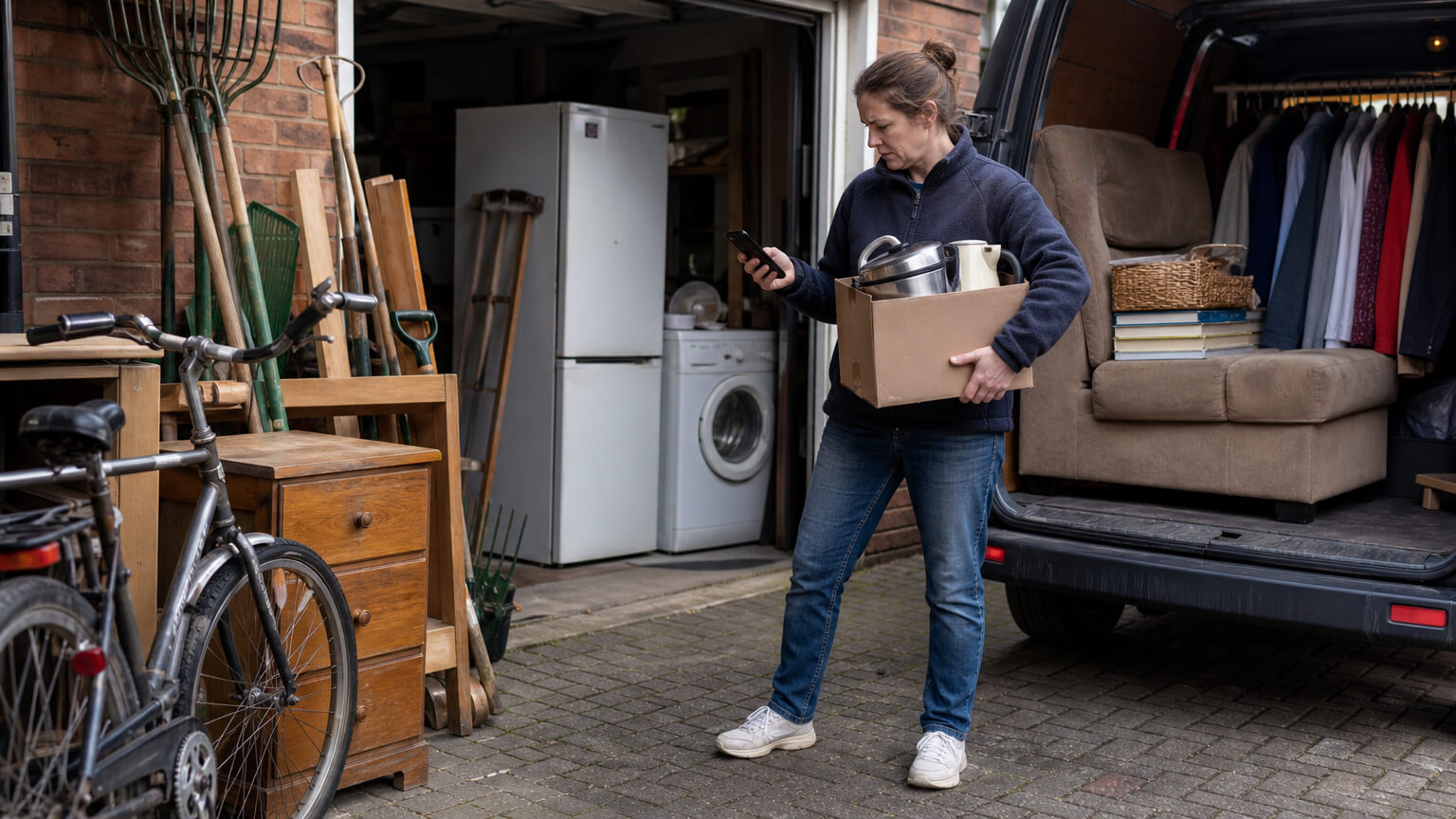
Once the hazard handful is out of the way, the rest of the garage packs like any other room. A few garage-specific handling notes make it faster.
Power and hand tools
Take batteries out of power tools, wrap blades, and box tools in their original cases where you still have them. Small hardware goes in a bag, labelled, so nothing ends up loose in a box.
Bikes
Turn or loosen the handlebars, and take the pedals off if space is tight. It makes a surprising difference to how much room a bike actually takes up.
Garden equipment
Bundle long-handled tools together and wrap anything sharp. Fuel-powered kit, mowers and strimmers, needs draining first, the same rule covered in the sort table above. Once drained, they pack and store exactly like any other tool, the fuel was the only issue, never the machine itself.
If the Garage Is Heading Into Storage, Not Just the Van

For whatever passes the gate but isn’t going straight to the new house, this is where a Wigwam unit’s specifics actually matter.
Getting in and out on your own schedule
Access runs 6am to 10pm, seven days a week, via smart entry, so you can get to your things around your own schedule, not someone else’s opening hours.
Nothing loose in a shared space
Every unit is individually alarmed, kept apart from anyone else’s belongings on site.
Not locked into more than you need
The minimum stay is two weeks. When you’re ready to leave, you’ll give 14 days’ notice, and any unused paid days on your contract are refunded. Two separate steps, not one blurred promise, and together they mean you’re not paying for months of storage you don’t actually need just because the moving process took longer than expected.
If you need somewhere for what’s not going with you today, Wigwam’s moving-house storage page is worth a look, no pressure, just there when you’re ready.
How Much Space the Garage Actually Needs

If the garage’s contents are going into storage as well as the rest of the house, that usually tips the unit size up a tier.
The 100 vs 150 square foot fork, in one line
A typical furnished three-bedroom house fits in 100 square feet. If you’re emptying the garage, clearing the loft and shifting the shed as well, 150 square feet is the right call. The full sizing guide covers the working behind that, so there’s no need to repeat it here.
Worked Example: A Garage Clear-Out in Bath
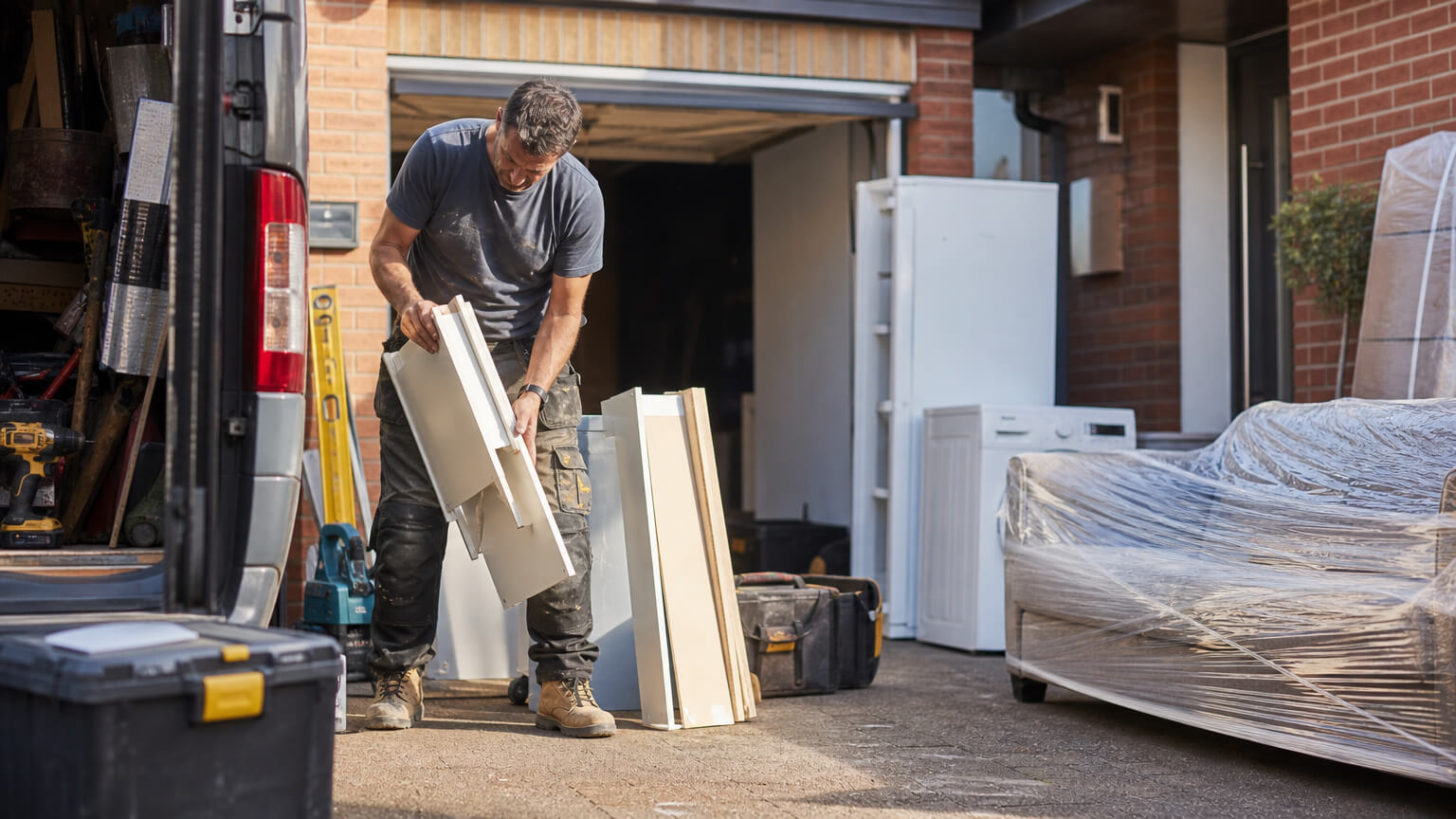
A composite example, not a real customer, but it shows the process end to end.
What they sorted first
A fuel can, a half-tin of paint and an old gas canister for a camping stove, dealt with a week out, not on moving day itself, once they knew those wouldn’t travel in the van anyway.
What went straight into boxes
Tools, bikes and garden kit, the “passes” pile, packed the way described above with no special hazard handling needed. With the handful of hazard items already out of the way, the rest of the garage took an afternoon rather than a stressful last-minute scramble.
Why Bath, specifically
Garage-typical housing, plenty of semis and detached homes with a real garage rather than a flat with none. Wigwam Self Storage Bath covers exactly this kind of clear-out.
What to Do Next
Once the hazard handful is dealt with and the rest is boxed, there are two honest options: take it with you, or store it for now.
If it’s the second, Wigwam’s moving-house storage page is the place to start, and once boxes are heading into the unit itself, how to pack a storage unit for a house move covers the next stage. For the bedroom too, see our guide to packing a bedroom for a move.
Get a quote when you’re ready, no rush.
Frequently Asked Questions
Fuel, paint, solvents, gas canisters, fireworks, and other hazardous or perishable items. Full details are on Wigwam’s what you can and can’t store page.
Yes. The tool itself is fine to store once the fuel and oil have been drained.
Usually the tier above what the rest of the house needs. Our sizing guide has the full working.
No, generally not, for the same reason a storage unit won’t. Check your local council’s hazardous waste guidance for how to dispose of them properly.