Furniture already loaded onto the van or piled in the hall, and half the internet’s tips contradict each other. Here’s what actually matters for your sofa, your wardrobe, your mattress, not a generic five-line list.
Do You Actually Need Climate Control for This?
No, not for ordinary household furniture. Technique substitutes for climate control: clean and dry before packing, disassemble what comes apart, cover with breathable materials, keep everything off the floor with airflow round it, distribute weight, and arrange for access. Climate control is for a narrower case, antique, veneered or highly humidity-sensitive pieces, or genuinely long-term storage, where humidity fluctuation, not temperature alone, is the real risk.
| Furniture type / situation | Prep and technique enough? | Worth extra care? |
|---|---|---|
| Everyday furniture (sofas, wardrobes, tables, beds), a few weeks to a year or two | Yes, clean, dry, disassembled, breathable cover, off the floor with airflow | No |
| Solid wood antiques, veneered or inlaid pieces | Technique still matters | Yes, humidity swings genuinely risk this furniture over time |
| Upholstered pieces stored more than 2-3 years | Technique still matters | Consider it, long exposure to fluctuation adds risk |
| Anything already damp, mouldy or damaged before it goes in | No, dry and treat it first | It needs treating before storage, not just prep |
This is general information, not a valuation or conservation opinion. For genuinely antique or valuable pieces, get specialist advice.
Before You Pack Anything: Clean, Dry, Sort
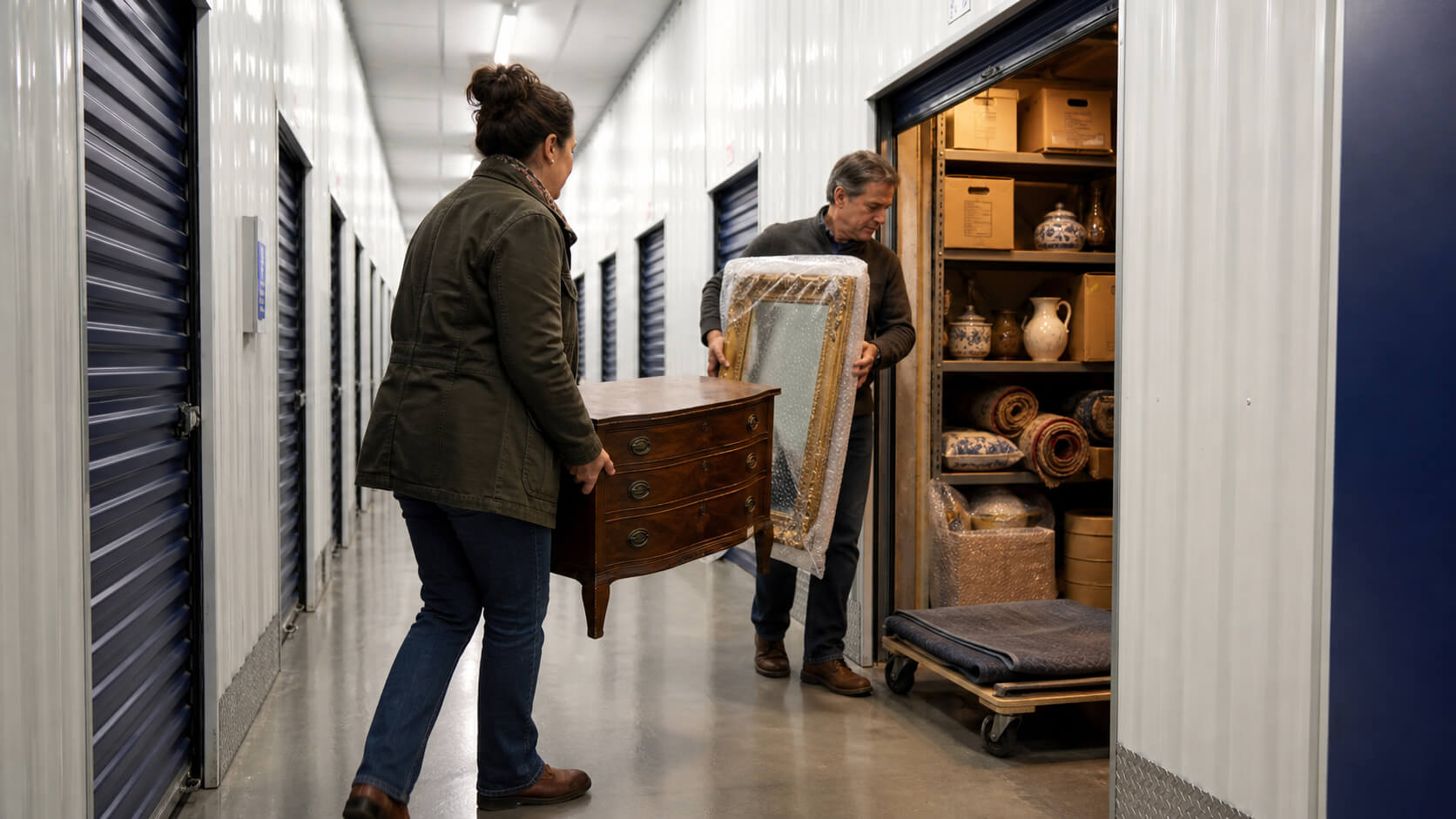
Cleaning and fully drying before packing is the single highest-leverage step against mould, damp sealed under any cover, plastic or breathable, is the real risk, not the storage unit itself.
Why damp-before-storage beats any cover choice
A damp item wrapped and boxed will mould regardless of what it’s covered in. Let everything air-dry fully first. If it rained on moving day and something got wet in transit, resist the urge to wrap it and deal with it later, dry it properly first, even if that means a delay before it goes into the unit.
Sorting what needs disassembly
Work out what comes apart before you start wrapping anything, it changes how you pack it.
Because units are individually alarmed, security isn’t a worry while items sit disassembled or drying before you pack them properly.
Wrapping and Covering Furniture the Right Way
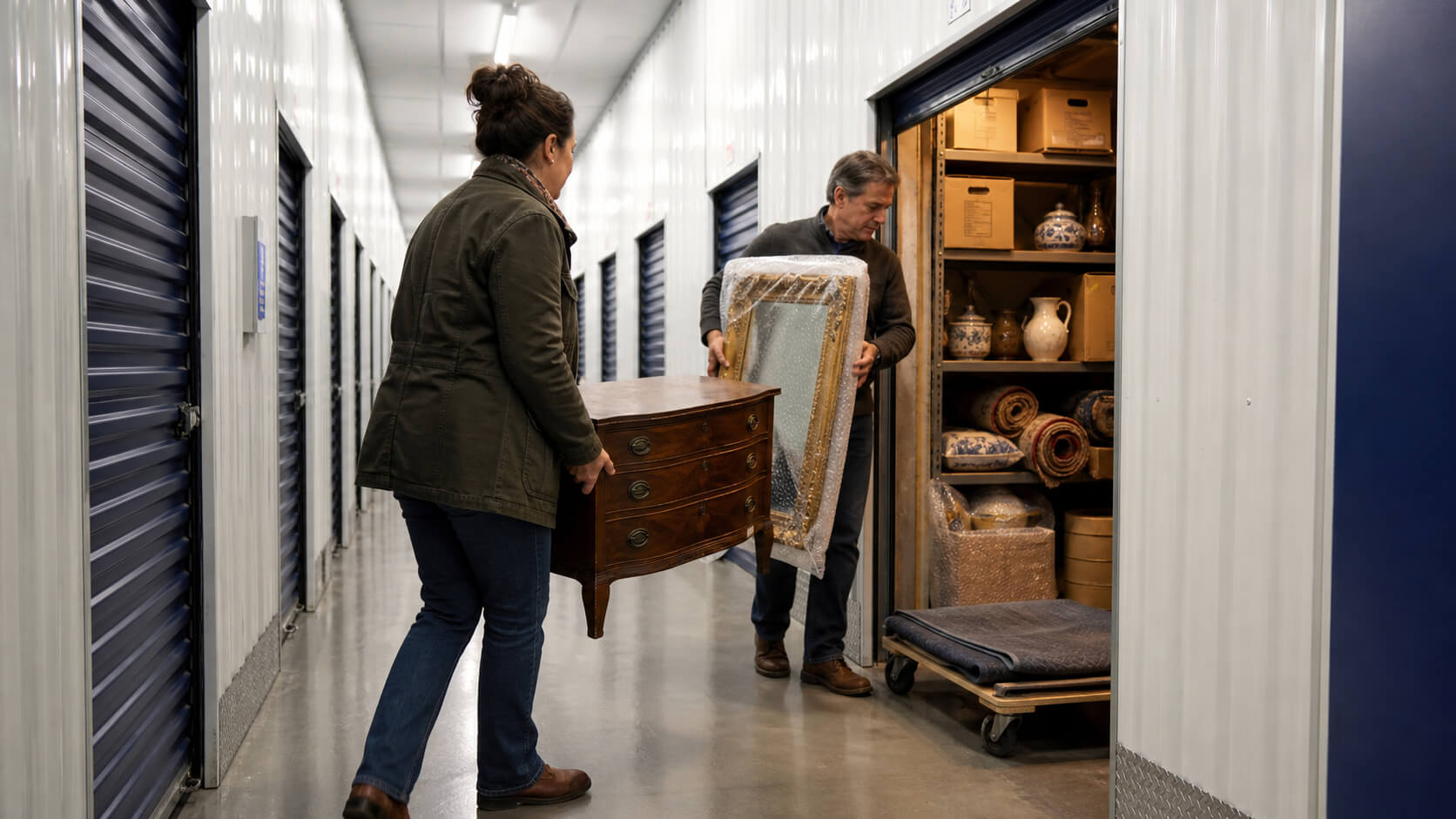
Breathable covers, cotton dust sheets, furniture blankets, ventilated covers, are correct. Tight plastic wrap is not, it traps residual moisture against the surface and starts mould within weeks.
What Wigwam’s own box shop stocks for this
Wigwam’s packaging shop stocks furniture blankets, sofa covers and bubble wrap, sized for exactly this job rather than improvising with whatever’s left over from the move.
Furniture by Furniture: Sofas and Upholstery
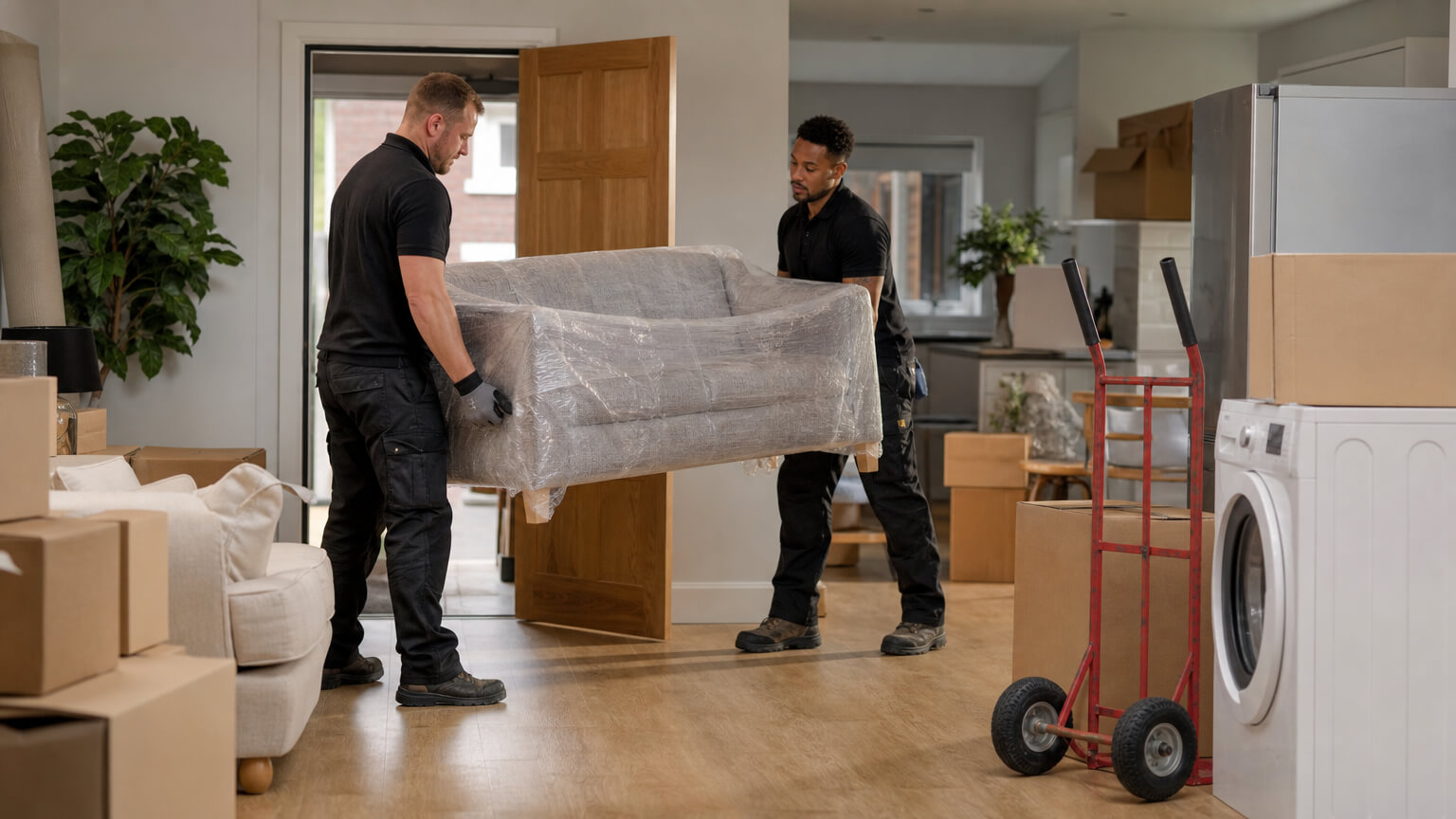
Sofas need three things beyond a cover, cleaned fabric, legs-down orientation off the floor, and an airflow gap from the wall.
Vacuum the fabric and check underneath the cushions before it goes anywhere, crumbs and spills left in place attract pests and stain over months in storage. Store it on its legs, never on its back or side, with a moving blanket or a few inches underneath so it’s off the concrete floor. Cover it with a breathable dust sheet, not tight plastic. Leave a hand’s width of gap between the sofa and the wall so air can actually move round it.
A customer moving a three-seater into a unit at Wigwam Self Storage Cheltenham follows exactly this sequence, cover, elevate, gap, and it’s what actually protects the fabric, not the unit alone.
Furniture by Furniture: Wood Furniture
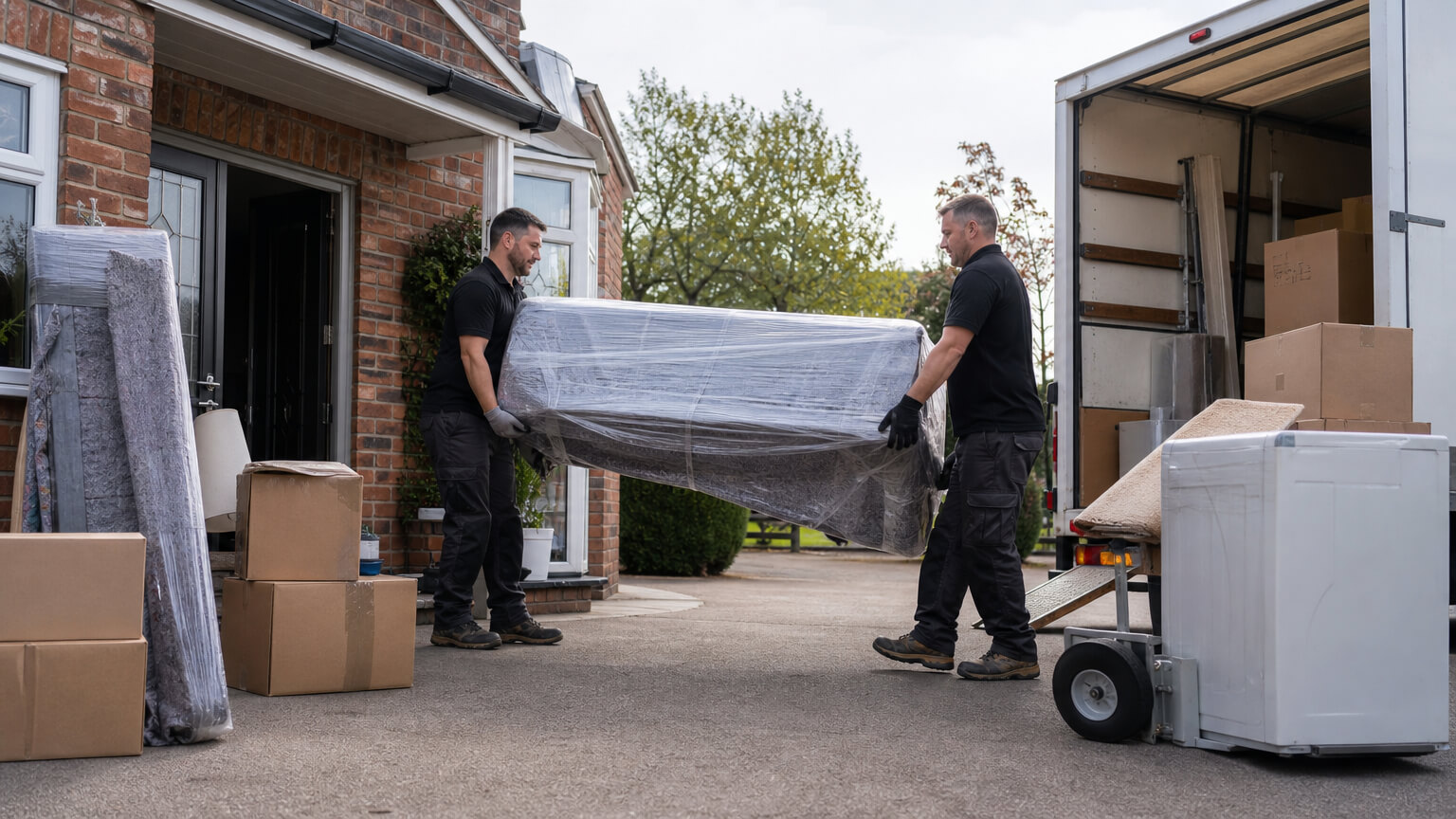
Wood furniture’s biggest risk is sealing damp wood under any cover.
Wipe wood surfaces down and let them air-dry completely before wrapping anything, damp wood sealed under plastic is a mould risk within weeks, not months. Disassemble what comes apart, shelves and back panels off a wardrobe, legs off a table, with screws and fittings bagged and taped to the frame itself so nothing goes missing. Cover with a breathable dust sheet or furniture blanket.
Because units are individually alarmed, disassembled hardware sitting loose in a bag isn’t a security worry the way it might be in a garage or a van.
Furniture by Furniture: Mattresses and Glass
Mattresses
Clean and fully air a mattress out before it’s wrapped, a mattress sealed damp is the fastest route to mould of anything on this list. Use a breathable, ventilated cover rather than tight plastic, and store it flat or on its edge, never folded, with support along its length so it doesn’t sag out of shape over a long stay.
Glass and mirrors
Wrap glass tabletops and mirrors in bubble wrap, then pack them flat-edge-down in a proper box, not loose against other furniture. Wigwam’s packaging shop stocks boxes sized for breakables rather than improvising.
Weight, Layout and Getting Back In Without a Full Unpack

Heaviest items go on the bottom so nothing crushes what’s underneath, but the real planning question is access.
Weight distribution basics
Put heavy, sturdy items at the bottom and lighter, more fragile items on top, never the reverse. Solid furniture like a chest of drawers or a dining table makes a genuinely stable base for lighter boxes on top, so plan the load in that order rather than boxing everything separately and hoping it all fits together at the end.
Planning layout around real access hours
Access runs 6am to 10pm, seven days a week. A poor layout costs you a wasted trip, not a missed slot, because the window is wide, but pack so you can actually reach what you need without unpacking the whole unit, especially if you’re dipping in and out during a renovation.
Once your furniture’s ready, get a quote for the right size unit.
Getting the Timing Right Doesn’t Have to Be a Gamble
Guessing how long you’ll need the unit isn’t a costly mistake at Wigwam.
The 14-day notice period and refund of unused days mean you’re not locked into an estimate. Contents protection is required, either Wigwam’s own RSA-backed cover or proof of your own equivalent, on a new-for-old basis.
If you’d rather start from the mistakes to avoid, our short-version guide covers that.
The real technique for storing furniture safely comes down to clean, dry, breathable, elevated, and planned for access, not a thermostat.
Frequently Asked Questions
No, for ordinary household furniture. Technique, cleaning, drying, breathable covers, elevation and airflow, covers the real risk.
Breathable materials, cotton dust sheets, furniture blankets, ventilated covers, never tight plastic, which traps moisture and starts mould.
Clean and air it out fully, use a breathable ventilated cover, and store it flat or on its edge with support along its length, never folded.